You’re grilling on a Saturday evening and a wasp starts circling the plate. Then another one shows up. By the week’s end, there are five of them patrolling your patio, and you still haven’t found where they’re coming from. That’s usually how a wasp problem starts, quietly, until it isn’t quiet anymore.
TL;DR: Wasps build nests in sheltered spots like eaves, sheds, and dense shrubs, and they’re drawn to yards with food sources like garbage, fruit trees, or sugary drinks left out. Removing those attractants and sealing off nesting spots in early spring is the most effective wasp prevention. Once a nest is established and active, it’s safer to call a licensed wasp control team than to handle it yourself.
Most people don’t notice a wasp nest until it’s already the size of a softball. By then, the colony is defensive, and a DIY spray job can turn into multiple stings fast.
Why Wasps Show Up in Your Yard
Wasps aren’t randomly passing through. They’re scouting for two things: shelter to build a nest, and food to feed the colony.
A queen wasp starts a nest alone in spring, usually in a spot that’s dry, sheltered from wind, and close to a food source. Once the first workers hatch, the colony grows fast, sometimes reaching hundreds of wasps by late summer.
Your yard becomes attractive the moment it offers both. Fallen fruit under a tree, an uncovered garbage bin, or even a forgotten soda can on the patio table sends a signal. Wasps forage aggressively for sugar and protein, and they remember reliable food spots.
Where Wasps Build Nests Outdoors
Wasp nests tend to show up in predictable places. Knowing where to look makes early detection a lot easier.
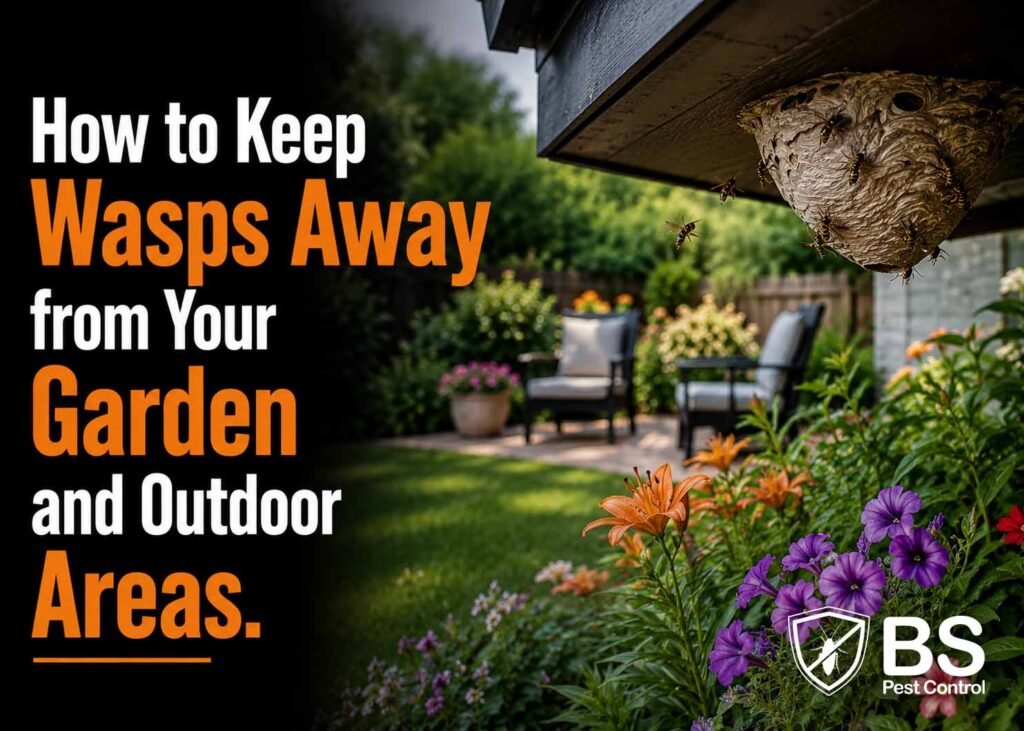
Under eaves and roof overhangs. These spots stay dry and are protected from rain, which makes them a favorite for paper wasps.
Inside sheds, garages, and playhouses. Any structure with a gap or vent gives wasps a sheltered cavity to build in.
Within dense shrubs and hedges. Ground-nesting species like yellowjackets often burrow at the base of thick vegetation.
Along fence lines and deck railings. Small crevices in wood or vinyl fencing are common starting points.
Inside wall voids and soffits. If wasps find a gap in the siding, they’ll nest inside the wall itself, out of sight until activity picks up.
Wasp Prevention Steps That Actually Help
Most wasp prevention comes down to removing what draws them in and closing off where they’d build.
Cover garbage and recycling bins tightly. Loose lids are an open invitation, especially in warmer months.
Pick up fallen fruit promptly. Apple, pear, and plum trees drop fruit that ferments and attracts wasps within hours.
Seal gaps in siding, soffits, and vents. A gap as small as a quarter inch is enough for a queen to start a nest inside your wall.
Keep sugary drinks and food covered at outdoor gatherings. This matters most in July and August when wasp colonies are at their peak.
Trim shrubs and hedges regularly. Dense, undisturbed vegetation is exactly what ground-nesting wasps look for.
Check eaves and sheds early in spring. A small nest the size of a golf ball in April is far easier to deal with than a mature colony in July.
None of this requires special equipment. It just needs to happen before the first warm week of spring, when queens are actively scouting.
Signs a Wasp Nest Is Already Forming
Even with prevention in place, it’s worth knowing what active nesting looks like.
A paper-like structure hanging under an eave, in a tree, or against a shed wall is the clearest sign. Frequent wasp sightings around windows, doors, or garbage areas usually mean a nest is nearby, even if you haven’t spotted it yet. Buzzing or faint scratching sounds coming from a wall cavity or attic space can mean the colony has moved indoors through a gap you missed.
If wasps become aggressive or chase you when you’re nowhere near their usual flight path, that’s a strong indicator the nest is close and active.
When to Stop Trying DIY and Call a Professional
A small, newly started nest can sometimes be knocked down early in the season with basic care. Once it’s established, that changes.
Wasps are territorial and will sting repeatedly when disturbed, and a colony that’s grown through spring can number in the hundreds by midsummer. Spraying a mature nest without the right protective gear often ends in multiple stings, and for anyone allergic, that’s a real medical risk.
Professional wasp control handles the nest at its source. Our licensed technicians identify the species, treat the colony safely, and remove the physical nest so it doesn’t rebuild in the same spot. That last step is what most DIY attempts miss.
FAQ
What smells or plants keep wasps away naturally?
Wasps tend to avoid strong scents like peppermint, clove, and citronella, and some homeowners plant mint or eucalyptus near patios for that reason. These help as a mild deterrent, but they won’t stop an established nest from growing.
Why do wasps keep coming back to the same spot in my yard every year?
Old nests leave behind pheromone traces that can attract new queens the following spring, especially if the original entry point was never sealed. Closing gaps in siding or sheds after a nest is removed prevents this cycle.
Is it safe to spray a wasp nest myself at night?
Nighttime spraying is less risky than daytime, since wasps are less active, but it’s still not risk-free. Ground-nesting species and nests inside wall voids are especially hard to treat safely without professional equipment.
How can I tell the difference between a wasp nest and a bee hive?
Wasp nests look papery and grey, with a honeycomb-like pattern often visible from underneath. Bee hives are typically waxy and enclosed, with a smoother outer surface. If you’re unsure, it’s safer to have it identified before attempting anything.
Do wasps serve any useful purpose, or should every nest be removed?
Wasps do help control other insect populations in a yard. That said, a nest near a doorway, patio, or play area poses enough of a sting risk that removal is usually the right call regardless of their ecological role.
Ready for a Wasp-Free Yard This Season?
Wasp nests are far easier to deal with in April than in August. If you’re seeing early activity around your eaves, shed, or garden, contact us for an inspection, or call +1 (437) 329-4500 for same-day service. Our licensed team removes the nest and helps you close off the spots wasps keep coming back to.