A flickering light that an electrician can’t explain. A breaker that trips for no obvious reason. A faint smell of something burning near an outlet, gone as quickly as it came. Homeowners chase these problems for weeks before anyone thinks to check the attic for rodents.
By then, the wiring’s already been chewed through in more than one spot.
Rodent damage doesn’t happen all at once. It builds quietly behind drywall and above ceilings, and by the time it’s visible, the repair bill has usually grown along with it.
TL;DR: Rodents chew through electrical wiring, insulation, and wood framing because their teeth never stop growing, and chewed wiring is a real house fire risk. Toronto’s older housing stock and cold winters push mice and rats indoors, making early detection critical. Professional rodent control finds entry points and nesting sites early, before the damage reaches the wiring or structure.
1. Why Rodents Chew Through Everything
A mouse or rat’s front teeth grow continuously for its entire life. If it didn’t chew, those teeth would eventually grow too long to eat with. So they gnaw. Wood, plastic, drywall, insulation, wiring — none of it is off limits, and none of it is personal. It’s just biology.
This is also why sealing a home matters more than most people assume. A rodent doesn’t need an open door. A gap the width of a dime is enough for a mouse to squeeze through, and once inside, it will keep chewing to build a path, a nest, or simply to file down its teeth.
2. Electrical Wiring: The Most Dangerous Damage
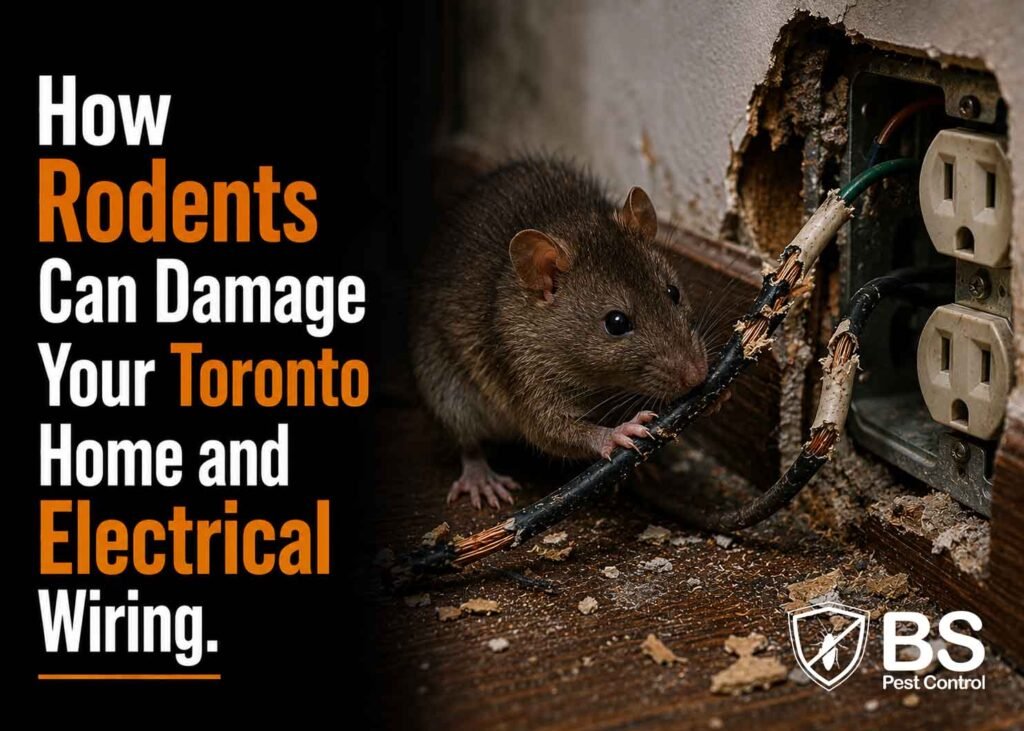
Wiring is a common target because the plastic coating is easy to chew through and wires often run through the exact spaces rodents prefer to nest in — attics, crawl spaces, and wall cavities.
Once the protective coating is gone, a few things can happen. Exposed wire can short out, which trips breakers or knocks out power to part of a home. Exposed wire can also spark, and in a space packed with dry insulation, nesting material, and wood framing, that spark has everything it needs to start a fire.
This isn’t a rare scenario. Rodent damage is consistently cited by fire investigators and insurance companies as a contributing factor in electrical fires with no other clear cause. The tricky part is that chewed wiring rarely announces itself with anything dramatic — flickering lights, a breaker that trips occasionally, or an outlet that feels warm are usually the only warning signs before something worse happens.
Anyone noticing electrical issues alongside signs of rodents in the attic should treat it as urgent, not routine.
3. Other Ways Rodents Damage a Home
Wiring gets the most attention, but it’s rarely the only casualty.
Insulation. Rodents shred insulation for nesting material, which reduces its effectiveness and drives up heating costs in a Toronto winter.
Wood framing and drywall. Constant gnawing weakens structural wood over time and leaves visible holes in drywall, especially near baseboards and corners.
Ductwork. Rodents chew through ducts to move between spaces, which lets pests, allergens, and odors spread through the HVAC system.
Insulation on pipes. Chewed pipe insulation increases the risk of frozen or burst pipes during cold snaps.
Stored belongings. Boxes, furniture, and anything stored in an attic or basement are fair game once rodents move in.
4. Signs of Rodent Activity Worth Taking Seriously
Most infestations are heard or smelled before they’re seen.
- Scratching or scurrying sounds in walls, ceilings, or attics, especially at night
- Droppings near food storage, baseboards, or attic entry points
- Gnaw marks on wood, wiring, or plastic containers
- A stale, musky odor in enclosed spaces
- Grease marks along walls where rodents repeatedly travel the same path
- Unexplained electrical issues with no clear cause
Any one of these on its own is worth a look. Two or more together usually means an active colony, not a one-off visitor.
5. Why Toronto Homes Are Particularly at Risk
A few local factors make rodent pressure higher here than in a lot of other places.
Toronto’s older housing stock, especially semis and rowhouses built decades ago, often has gaps around foundations, aging weatherstripping, and utility penetrations that were never properly sealed. Cold winters push rodents to look for warm, dry shelter, and a heated home is exactly that. Dense urban blocks with shared walls, laneways, and nearby green spaces or ravines also give rodents easy routes to move between properties.
None of this means rodent problems are inevitable. It means Toronto homes need a bit more attention to sealing and inspection than a newer build in a less dense area.
6. DIY Rodent Control vs. Professional Removal
Snap traps and store-bought bait can knock down a small, early problem. Where DIY approaches usually fall short is scale and location.
Homeowners rarely check inside wall cavities or above ceiling joists, which is exactly where nests and chewed wiring tend to be. Bait placed in the wrong spot can also draw rodents further into a home instead of out of it. And DIY control almost never includes sealing every entry point, which means new rodents move in even after the current ones are gone.
Professional rodent removal in Toronto starts with finding where rodents are getting in and where they’re nesting — not just where the droppings happen to be visible.
7. What Professional Rodent Control Actually Involves
Inspection. A technician checks the attic, basement, foundation, and utility entry points for gaps, droppings, gnaw marks, and nesting material — including areas most homeowners wouldn’t think to check.
Trapping and removal. Humane trapping methods clear the current population without relying on loose poison bait that can end up somewhere unintended.
Entry point sealing. Every gap gets closed, not just the obvious one. This is the step that actually stops new rodents from moving in.
Damage assessment. Chewed wiring, insulation, and structural wood get flagged so homeowners know what needs a follow-up repair, particularly anything involving electrical.
Sanitation. Droppings and nesting material get cleaned up, since they carry their own health risks separate from the structural damage.
Anyone dealing with an active infestation can reach out through our rodent removal service for an inspection and a clear plan for next steps.
8. Cost of Rodent Damage vs. Cost of Prevention
An early rodent control visit, focused on trapping and sealing, is a modest cost compared to what comes next if the problem sits for months. Chewed wiring can mean an electrician’s bill on top of the pest control cost. Damaged insulation means higher energy bills until it’s replaced. Structural wood damage, in bad cases, means a contractor.
The math almost always favors early action. A rodent problem caught in week two costs far less than one caught in month six, both in pest control fees and in repair work elsewhere in the home.
Pricing for professional rodent control depends on the size of the property, the number of entry points, and how established the infestation already is. Contact us for a free inspection and a quote based on the actual condition of the home, not a flat estimate.
FAQ
Can mice really cause a house fire?
Yes. Chewed electrical wiring can spark or short out, and in a space packed with dry insulation and nesting material, that’s enough to start a fire. It’s one of the more serious, underreported causes of house fires with no obvious source.
How do I know if rodent damage in my Toronto home has reached the wiring?
Flickering lights, breakers that trip without explanation, or a burning smell near outlets alongside signs of rodents in the attic are red flags. An electrician can confirm wiring damage, but a rodent inspection should happen at the same time to find the source.
Is it normal to have mice in a Toronto home during winter?
It’s common, not normal to ignore. Cold weather pushes rodents to look for indoor shelter, which is why fall and early winter tend to be the busiest season for rodent control Toronto calls.
How much does rodent removal in Toronto typically cost?
It varies based on property size, number of entry points, and how long the infestation has been active. A property-specific quote after inspection is the only accurate way to price it.
Can I just seal the holes myself instead of calling someone?
You can seal what you can see, but rodents often use more than one entry point, and gaps in attics or foundations are easy to miss. Missing even one hole means the problem can start again within weeks.
Conclusion
Rodent damage rarely stays contained to one area of a home. What starts as a chewed corner of insulation can end up as an electrical hazard a few months later. If scratching sounds, droppings, or unexplained electrical issues sound familiar, get in touch with our team for an inspection — we’ll find every entry point and deal with the problem before it reaches the wiring.