A homeowner in Toronto noticed a water stain spreading across her bedroom ceiling and assumed it was a roof leak. It wasn’t. A raccoon had torn open a roof vent months earlier, and the insulation underneath had been so compressed and soiled that it stopped doing its job entirely. The “leak” was condensation building up in a space that could no longer regulate moisture properly.
TL;DR: Raccoons are strong enough to tear open roof vents, pry up shingles, and rip through soffits to get into an attic, especially females searching for a den to raise young. Once inside, they flatten insulation, leave droppings that carry parasites, and can chew through wiring. The longer a raccoon stays, the more expensive the repair becomes, which is why fast raccoon removal matters as much as the structural fix itself.
Attics are appealing to raccoons for the same reasons they’re valuable to homeowners: they’re dry, insulated, and quiet. That overlap is exactly the problem.
How Raccoons Get Onto Your Roof in the First Place
Raccoons are strong climbers and surprisingly determined when they’ve decided a spot is worth the effort.
Overhanging tree branches are the most common route onto a roof, giving raccoons a direct path without needing to climb the siding at all. Downspouts, trellises, and even brick exteriors with enough texture can also serve as a climbing route. Once on the roof, a raccoon will test vents, soffit edges, and any spot where the roofline meets a wall, looking for weak points.
Female raccoons searching for a den in early spring are especially persistent, since they’re not just passing through, they’re looking for a safe place to give birth and raise young for several weeks.
The Damage a Raccoon Causes Getting In
Getting inside isn’t a quiet process. Raccoons use their strength and dexterity to tear, pry, and pull apart whatever stands between them and the attic space.
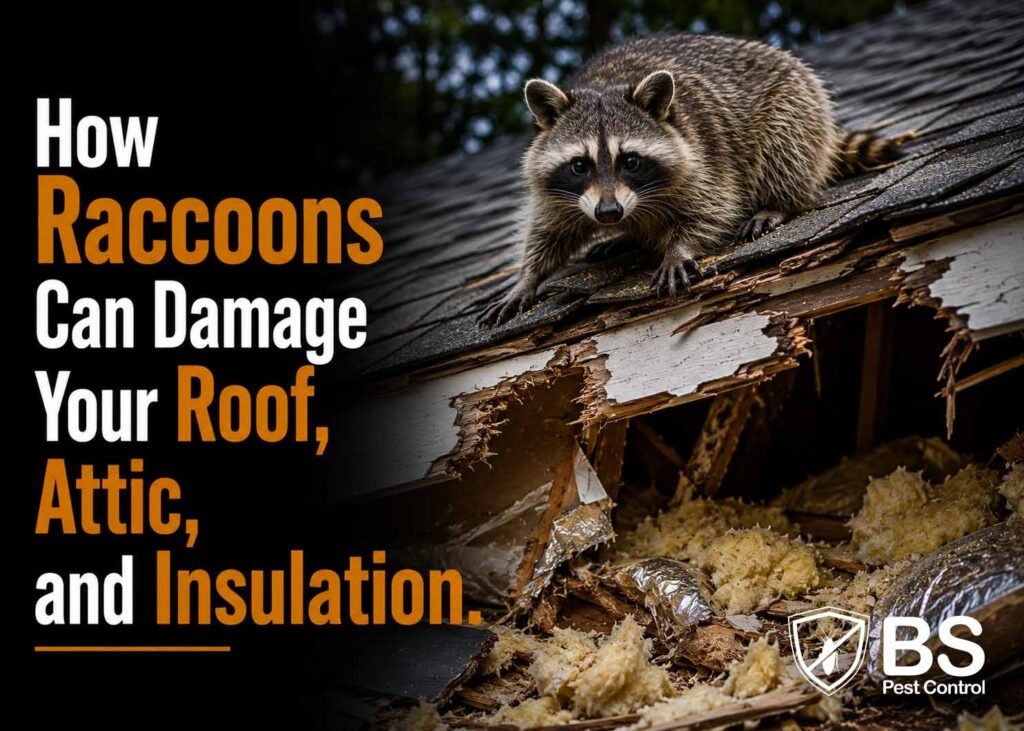
Roof vents are a common entry point, since raccoons can rip the screening or housing apart with their paws. Soffits, the panels under the roof overhang, are often chewed or pried loose, leaving a gap that’s easy to widen on repeat visits. In some cases, raccoons will lift and displace shingles directly, creating an opening that also lets in water during the next rain.
Every one of these entry points needs repair, not just sealing, or the same gap gets reopened the next time an animal tests it.
What Happens to Insulation Once Raccoons Move In
Once a raccoon is inside the attic, the insulation takes the brunt of the damage.
Raccoons flatten insulation simply by moving around and nesting in it, which reduces its ability to trap air and regulate temperature. They also urinate and defecate in consistent spots, called latrines, which soaks into the insulation and drywall below. Even after the animal is gone, contaminated insulation usually needs to be removed and replaced, since cleaning it thoroughly enough to be safe often isn’t practical.
Homeowners frequently notice the effects before they notice the cause: higher heating or cooling bills, uneven attic temperatures, or a persistent musty smell coming from upstairs rooms.
Why Attic Raccoon Damage Gets Worse Over Time
The longer a raccoon stays, the more the damage compounds.
A raccoon that’s settled in will often widen its entry point over repeated trips in and out, turning a small gap into a large one. If a mother raccoon has given birth, she’ll continue using the den for six to eight weeks while raising her young, during which the latrine area grows and the insulation damage spreads. Chewed wiring is another risk that builds with time, and in some cases, this has led to real fire hazards in older homes.
What starts as a single torn vent can turn into a multi-point repair job involving insulation replacement, drywall repair, and electrical inspection if left unaddressed through a full denning season.
Health Risks of Raccoon Droppings and Urine
Raccoon feces can carry roundworm eggs and other parasites that remain infectious even after the animal is gone, which makes DIY cleanup genuinely risky, not just unpleasant.
Disturbing dried droppings can release parasite eggs into the air, and improper cleanup without protective equipment increases exposure risk for anyone in the home. This is one of the clearer cases where calling in a professional isn’t just about convenience, it’s about avoiding a real health hazard.
What Professional Raccoon Removal and Repair Involves
A proper response to attic raccoons covers three things: getting the animal out, sealing the entry point, and addressing the damage left behind.
Our team starts with an inspection to confirm active raccoon presence and locate every entry point, since raccoons often use more than one. We use humane trapping and exclusion methods to remove the animal, timed carefully if young are present so a mother isn’t separated from her litter before they’re mobile. Once the raccoon is gone, we seal the entry point with materials strong enough to resist chewing, and we can flag areas where insulation or structural repair is needed.
Raccoon removal done this way addresses the whole problem, not just the animal in the attic.
FAQ
How do I know if it’s a raccoon and not a squirrel in my attic?
Raccoons are heavier and louder, often creating a distinct thumping or rolling sound rather than the quick scratching of a squirrel. Raccoon entry holes are also larger, typically fist-sized or bigger, compared to the smaller gaps squirrels use.
Can I just seal the hole a raccoon used to get in?
Not safely, no. If the raccoon or her young are still inside, sealing the entry traps them, which leads to worse damage and odor problems. The animal needs to be confirmed gone, or safely removed, before any permanent sealing happens.
How much does it cost to repair raccoon damage in an attic?
Cost depends on how long the raccoon was present and how much insulation and structural material needs replacing. A recently discovered entry point costs far less to fix than a den that’s been active for weeks. We provide a clear quote after inspection.
Is raccoon damage covered by home insurance?
This varies by policy and provider, so it’s worth checking directly with your insurer. Some policies cover the resulting damage but not the animal removal itself, so understanding both parts helps when filing a claim.
How long does it take to fully remove a raccoon family from an attic?
It depends on whether young are present. If there’s a litter, the process typically takes a few weeks to allow the young to become mobile enough for safe removal. A single adult raccoon can often be resolved faster.
Protect Your Roof Before the Damage Spreads
A torn vent or a few pried-up shingles rarely stay minor for long once a raccoon has decided your attic is worth staying in. Contact us for an inspection, or call +1 (437) 329-4500 for prompt raccoon control. Our licensed team handles the removal, the entry point repair, and the cleanup that follows.