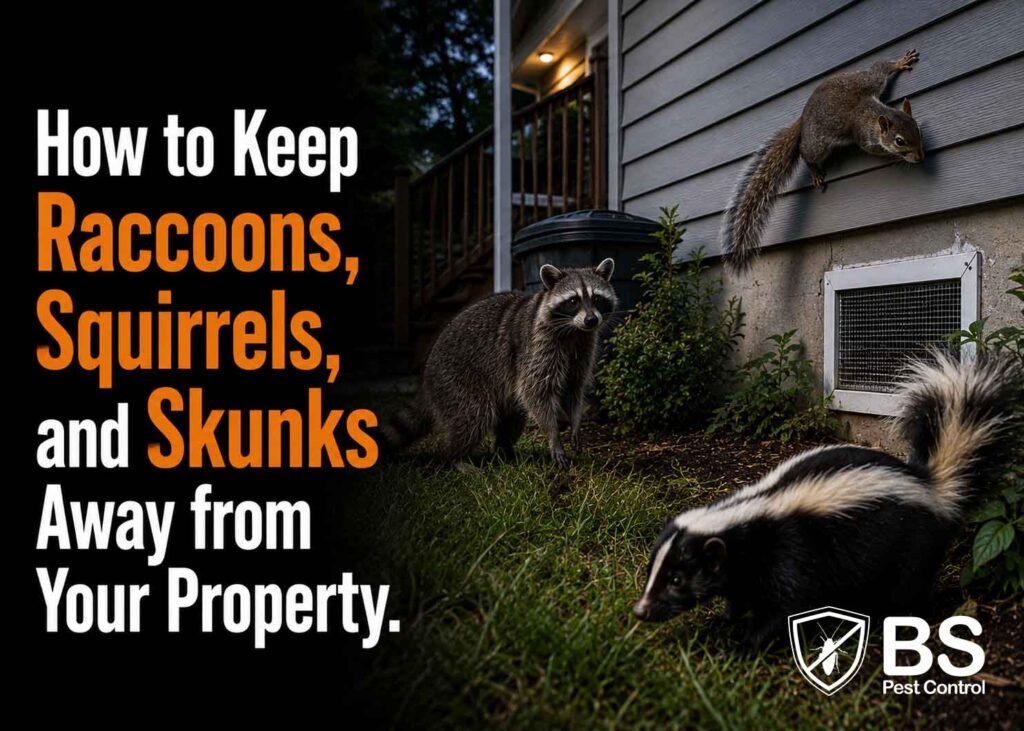
A homeowner in Mississauga called us convinced she had a raccoon in her attic. Our technician found raccoon tracks near the garage, squirrel entry damage on the roof vent, and a fresh skunk burrow under the deck, all on the same property, all within the same month. That’s more common than people think. Yards that attract one of these animals usually have what all three are looking for.
TL;DR: Raccoons, squirrels, and skunks are all drawn to the same basics: accessible food, standing water, and sheltered spots to den. Securing garbage, sealing roof and foundation gaps, and clearing brush piles addresses most of the risk for all three at once. Once an animal has settled in, professional wildlife removal is safer and more effective than DIY methods, especially with skunks and raccoons, which can carry disease.
Most wildlife problems don’t start with one dramatic encounter. They build slowly, a loose vent here, an unsecured bin there, until the yard becomes a reliable stop on an animal’s nightly route.
Why These Three Animals Show Up Together
Raccoons, squirrels, and skunks aren’t competing for the same exact resources, but they’re opportunists in similar ways. All three are nocturnal or semi-nocturnal, all three are excellent at finding gaps humans overlook, and all three will settle wherever food and shelter overlap.
A property with an unsecured garbage bin, a few structural gaps, and untrimmed vegetation is essentially advertising to every one of these animals at once. That’s why pest technicians often find signs of more than one species during a single inspection.
What Each Animal Is Actually After
Each animal has a slightly different priority, which is why prevention needs to cover a few different bases.
Raccoons want food first, shelter second. They’re drawn to garbage, pet food left outdoors, and bird feeders, and they’ll test attic vents and chimney caps as potential den sites, especially females looking for a safe spot to raise young in spring.
Squirrels are mainly after shelter, particularly in fall when they’re stocking up for winter. Roof edges, soffit gaps, and attic vents are common entry points, and once inside, they’ll chew wiring and insulation to build a nest.
Skunks focus on food in the ground. Grubs and insect larvae in a lawn are the main draw, and they’ll burrow under decks, sheds, and porches both to reach food and to create a den.
Shared Wildlife Prevention Steps That Work
A handful of steps address the risk from all three animals at once, without needing a separate plan for each.
Secure garbage and compost with tight-fitting lids. This single step removes the top food source for raccoons and reduces the draw for skunks as well.
Treat lawn grubs. Fewer grubs means less reason for skunks to dig, and it removes a secondary food source raccoons will also dig for.
Trim tree branches away from the roofline. Overhanging branches are how squirrels and raccoons access roofs and attics in the first place.
Seal gaps in soffits, vents, and foundation skirting. Use heavy wire mesh, not just caulking, since raccoons and squirrels can chew through softer materials.
Clear brush piles and dense ground cover. These make convenient den spots for skunks and hiding places for raccoons moving between yards.
Install motion-activated lights near vulnerable areas. All three animals prefer to avoid sudden bright light and tend to move to quieter properties instead.
Animal-Specific Precautions Worth Adding
Beyond the shared basics, a few extra steps target each animal specifically.
For raccoons, install a chimney cap if you don’t already have one, and avoid leaving pet food outside overnight. For squirrels, check attic vents each fall for chew marks or gaps, since this is peak nesting season. For skunks, bury wire mesh a foot deep around deck and shed perimeters to stop digging before it starts.
When One Visitor Becomes a Pattern
Occasional wildlife sightings are normal, especially in suburban areas near green space. A pattern is different. Repeated visits, active digging, chewed entry points, or sounds coming from inside a structure mean an animal has moved past scouting and into settling.
At that stage, prevention alone won’t solve it. The animal, and whatever den or nest it’s built, needs to be addressed directly.
Why Humane Wildlife Removal Matters
DIY removal of raccoons, squirrels, or skunks carries real risk. Raccoons and skunks can both carry rabies, and a mother raccoon or skunk with young nearby will act defensively if she feels cornered. Squirrels, while less of a disease risk, can cause serious damage if disturbed and left to panic inside a wall cavity or attic space.
Our team provides wildlife removal that handles all three species using safe, humane trapping and relocation. We also identify and seal the entry points that let the animal in, which is the step most DIY attempts skip, and the reason problems often come back.
FAQ
If I see a raccoon in my yard once, do I need to worry?
Not necessarily. A single sighting, especially at night, is normal in most suburban areas. Repeated visits, digging, or signs of a den forming are what signal an actual problem worth addressing.
Can squirrels and raccoons get into my attic through the same opening?
Sometimes, though raccoons need a larger gap, typically fist-sized or bigger, while squirrels can squeeze through openings as small as an inch and a half. Sealing vents with heavy-gauge mesh addresses both.
Will trimming trees really keep raccoons and squirrels off my roof?
It helps significantly. Overhanging branches are the most common route both animals use to reach a roofline, so cutting that access point removes an easy path.
Is it safe to relocate a skunk or raccoon myself if I trap one?
No. Trapping and relocating wildlife without proper licensing is both risky and, in many areas, not legal for homeowners to do themselves. It also doesn’t address why the animal came in the first place.
How do I know if it’s a raccoon, squirrel, or skunk causing damage without seeing the animal?
The type of damage is a good clue. Skunks leave small cone-shaped lawn holes, squirrels leave chewed roof vents or attic damage, and raccoons leave torn garbage, larger entry holes, and sometimes droppings near attic access points. A professional inspection can confirm which one you’re dealing with.
Keep Your Property Off the Nightly Route
Raccoons, squirrels, and skunks all look for the same easy opportunities. Closing those off is the most effective long-term wildlife control step you can take. If you’re already seeing signs of activity, contact us for an inspection, or call +1 (437) 329-4500 for prompt animal control services. Our licensed team removes the animal and helps secure the property so it doesn’t happen again.