A restaurant owner in downtown Brampton called us last July because customers were complaining about wasps near the patio seating. Turned out a nest had formed behind the dumpster enclosure weeks earlier, and by the time anyone noticed, the colony had grown large enough to send workers foraging across the entire outdoor seating area.
TL;DR: Wasps in Brampton are drawn to properties with accessible food, standing water, and sheltered gaps in structures, conditions that are common around both homes and businesses, especially restaurants and properties near green spaces. Activity typically ramps up from July through September as colonies reach full size. Spotting the early signs and addressing attractants before peak season keeps a small problem from becoming a wasp infestation that needs professional removal.
Brampton’s mix of suburban backyards, commercial plazas, and green corridors gives wasps plenty of options. Understanding what draws them in is the first step to keeping them out.
Why Brampton Properties Are Prone to Wasp Activity
Brampton’s climate plays a bigger role than most people expect. Warm, humid summers extend the active season for wasps, giving colonies more time to grow before the first frost.
The city’s layout adds to it. Properties backing onto ravines, parks, or wooded areas near Heart Lake or the Etobicoke Creek corridor tend to see more wasp traffic, since these areas offer natural nesting habitat close to residential yards. Newer subdivisions with young landscaping and thinner tree cover aren’t immune either. Wasps will use fences, sheds, and eaves just as readily as trees.
The Biggest Attractants Around Homes
Three things consistently draw wasps to residential properties in Brampton.
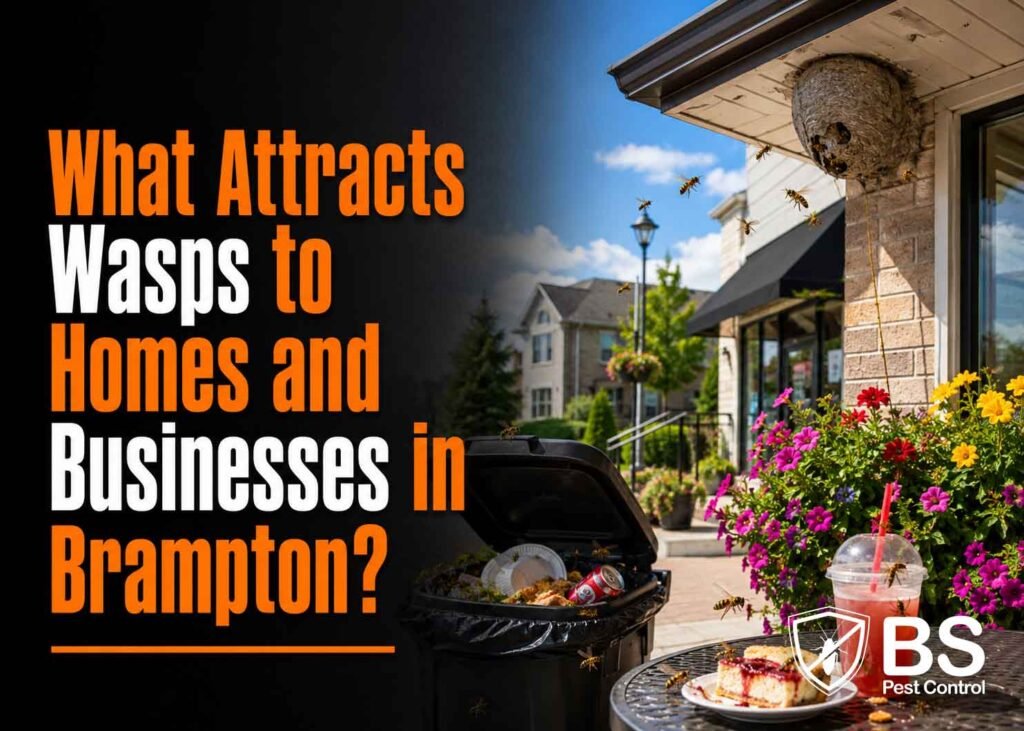
Accessible food waste. Uncovered garbage bins, recycling with food residue, and compost piles are the single biggest attractant. Wasps forage aggressively for protein early in the season and switch to sugar sources later in summer.
Standing water. Birdbaths, clogged eavestroughs, and pool covers that collect rainwater give wasps a reliable drinking source, which keeps them coming back to the same yard repeatedly.
Structural gaps. Loose siding, unscreened vents, and gaps around window frames give queens a sheltered spot to start a nest in spring, often before homeowners are outside enough to notice.
Fruit trees are another factor specific to many Brampton yards. Apple and pear trees are common in older neighborhoods, and fallen fruit left on the ground ferments quickly, drawing wasps within a day or two.
Why Businesses See Even More Wasp Traffic
Commercial properties, particularly restaurants, cafes, and food-service businesses, face a different scale of wasp pressure than a typical home.
Dumpster enclosures near kitchen exits are a near-constant food source if not sealed properly. Patio dining adds another layer, since sugary drinks and food left on tables for even a few minutes will draw foraging wasps. Retail plazas with green space or landscaped berms between units also give wasps sheltered spots to nest that go unnoticed until a tenant complains.
For businesses, a wasp infestation isn’t just a nuisance. It’s a liability. A customer stung on a patio is a real risk, and word travels fast in a tight commercial strip.
Seasonal Patterns Specific to Brampton
Wasp activity in Brampton follows a fairly predictable curve.
Queens emerge in April and May, scouting for nest sites as temperatures climb. Colonies build through June, and by July, worker populations are large enough that foraging activity becomes obvious, more sightings near garbage areas, more traffic around patios and windows. August and September mark peak aggression, since colonies are at their largest and food sources start narrowing as the season shifts. This is when most wasp exterminator calls in Brampton come in, often after a nest has already grown too large for a homeowner to handle safely.
By October, colder nights start killing off the colony naturally, though new queens will have already left to overwinter and start the cycle again next spring.
What Happens If a Wasp Infestation Goes Unchecked
A single unaddressed nest rarely stays a single nest problem for long.
As the colony grows, foraging workers range further from the nest, which means more encounters near doors, patios, and play areas. Left through a full season, some nests can house several hundred wasps, and removal at that stage carries far more risk than catching it in June. For businesses, an unchecked infestation near an entrance or outdoor seating area can lead to lost customers and, in some cases, complaints to local health authorities.
Working with a Local Wasp Exterminator
Not every wasp problem needs a same-day emergency call, but knowing when to bring in a professional saves time and reduces risk.
Our team provides wasp removal in Brampton for both residential and commercial properties. We identify the species, locate the nest even when it’s hidden inside a wall void or dumpster enclosure, and treat it using eco-conscious methods that are safe for staff, customers, and family. Once the nest is removed, we also flag the conditions that attracted it in the first place, so the same spot doesn’t get colonized again next season.
FAQ
How much does wasp removal cost in Brampton?
Cost depends on nest size, location, and whether it’s a single visit or part of an ongoing prevention plan. A straightforward exterior nest costs less than one hidden inside a wall void or attic. Call us for a free quote based on your specific situation.
Do commercial properties need a different approach than homes?
Yes, in some ways. Commercial sites often deal with dumpster enclosures, patio areas, and higher foot traffic, which changes where nests form and how urgently they need to be addressed. Our technicians adjust the approach based on property type.
Can wasps get inside my Brampton home through the same gaps as mice?
Sometimes, though wasps look for smaller openings, often just a few millimeters wide, around soffits, vents, and siding seams. Sealing these gaps helps with both wasp and rodent prevention at once.
Is it true that wasps are worse in Brampton some years than others?
Yes. Mild winters and wet springs tend to produce larger wasp populations by midsummer, since more queens survive to start colonies. Some seasons are noticeably more active than others for this reason.
How fast can a wasp exterminator get to my property in Brampton?
We offer same-day or next-day service in most Brampton neighborhoods. Call +1 (437) 329-4500 to get a technician scheduled quickly, especially if the nest is near an entrance or high-traffic area.
Get Ahead of Wasp Season in Brampton
Whether it’s a backyard nest or a colony near your business entrance, waiting rarely makes the problem smaller. Contact us for an inspection, or call +1 (437) 329-4500 for fast, local wasp control in Brampton. Our licensed team handles removal and helps close off what’s drawing wasps back.