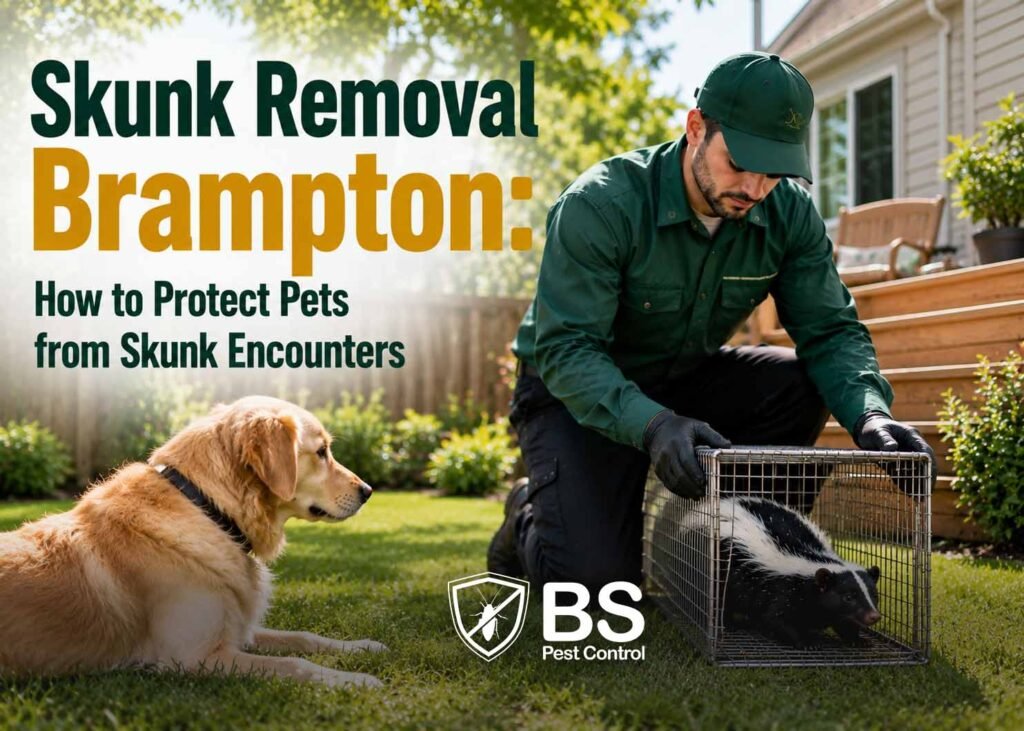
Help Brampton pet owners prevent dangerous skunk encounters, respond safely after an incident, and recognize when professional removal is necessary.
Key Takeaways
- Skunks are most active after dark, around dawn, and at dusk.
- Dogs are commonly sprayed because they chase or corner skunks.
- Outdoor pet food, unsecured garbage, and accessible spaces under decks attract skunks.
- Any pet bitten or scratched by a skunk needs immediate veterinary attention.
- Humane removal and exclusion provide better long-term protection than temporary deterrents.
Table of Contents
- Why Skunks and Pets Come Into Conflict
- Signs a Skunk Is Visiting Your Yard
- How to Prevent Skunk Encounters
- What to Do If Your Pet Gets Sprayed
- When to Contact a Veterinarian
- How Professional Skunk Removal Protects Pets
- Frequently Asked Questions
Your dog runs into the yard after dark. Seconds later, it returns rubbing its face against the ground while a strong skunk odour spreads through the air.
This is a common type of skunk encounter. Dogs often approach wildlife out of curiosity or territorial behaviour. A skunk that feels trapped may spray before the pet owner has time to react.
Professional Skunk Removal Brampton helps protect pets by removing active skunks and securing the spaces where they shelter. Homeowners can also reduce encounters by changing how pets use the yard.
Why Skunks and Pets Come Into Conflict
Skunks generally avoid confrontation. Their spray is a defence used when they feel threatened and cannot escape.
Dogs may bark, chase, or move directly toward a skunk. Cats allowed outside at night may also encounter skunks near food bowls, sheds, or fences.
Most encounters happen because both animals are using the same area after dark. A skunk may be searching for grubs, garbage, fallen fruit, or pet food while the household pet is using the yard.
The risk increases when a skunk has established a den beneath a deck, shed, porch, or addition. In that situation, the animal may defend the area when a pet approaches.
Signs That Skunk Control Brampton Is Needed
A skunk does not need to spray before it becomes a concern. Early signs can help you identify activity before your pet has a direct encounter.
A Persistent Musky Odour
A faint smell that repeatedly appears near one part of the yard may indicate a nearby den. The odour can become stronger around decks, sheds, and ground-level openings.
Small Holes in the Lawn
Skunks dig shallow, cone-shaped holes while searching for grubs and insects. Fresh holes appearing overnight suggest regular feeding activity.
Pet Reactions After Dark
Dogs may bark, pull toward one area, or refuse to enter part of the yard if they detect wildlife. Pay attention when this behaviour happens repeatedly near the same structure.
Fresh Digging Near Structures
Loose soil, tracks, or flattened grass beneath a deck or shed may indicate an active entrance. Do not allow pets to investigate the opening.
Security Camera Sightings
Outdoor cameras often reveal activity that homeowners do not see directly. A skunk following the same route several nights in a row is likely finding food or shelter nearby.
If these signs continue, arrange an inspection before allowing pets to roam freely. Professional Brampton skunk removal can confirm whether a skunk is visiting or living on the property.
How to Prevent Pets from Encountering Skunks
Good prevention starts by controlling when pets go outside and removing the conditions that attract wildlife.
Check the Yard Before Letting Pets Out
Turn on outdoor lights and scan the yard before opening the door. Pay close attention to decks, sheds, shrubs, and fence lines.
During early morning or evening bathroom breaks, keep dogs on a leash. This gives you control if a skunk appears.
Keep Pets Inside at Night
Skunks are mainly active after dark. Keeping pets indoors overnight significantly reduces the chance of an encounter.
Cats should not be allowed to roam freely at night. They may approach skunks, enter dens, or become involved in conflicts that are not immediately noticed.
Remove Outdoor Food and Water
Feed pets indoors whenever possible. Bring food bowls inside after each meal and avoid leaving water dishes outside overnight.
Skunks quickly learn where reliable food is available. Removing that food may stop repeated visits.
Secure Garbage and Compost
Store garbage in containers with tight-fitting lids. Keep bags inside a garage or secured area until collection day when possible.
Use a closed compost container and clean up spilled birdseed, fallen fruit, and food scraps.
Block Potential Denning Areas
Decks, porches, sheds, and additions should have secure barriers around their bases. Effective exclusion material must extend below the soil because skunks can dig underneath surface-level barriers.
Never seal a suspected den without confirming that it is empty. A mother and her young may be inside.
Maintain Clear Sightlines
Trim dense vegetation and remove yard debris that could conceal wildlife. A clear yard makes it easier to spot a skunk before releasing a pet.
| Risk Around the Yard | Pet-Safe Prevention Step |
| Pet food left outdoors | Feed pets indoors and remove bowls after meals |
| Dark yard areas | Use outdoor lighting and check before releasing pets |
| Open space under a deck | Arrange inspection and proper exclusion |
| Unsecured garbage | Use tight-fitting lids and secure storage |
| Off-leash nighttime activity | Keep dogs leashed during late outings |
| Fallen fruit or birdseed | Clean the area regularly |
What to Do If Your Pet Gets Sprayed
Stay calm and bring your pet away from the skunk. Do not chase or approach the wild animal.
Keep the sprayed pet outside or in a contained area until you assess the situation. Skunk spray is oily and can transfer quickly to carpets, furniture, clothing, and other pets.
Check for Injuries First
Before washing the pet, look for bites, scratches, bleeding, or signs of pain. Use care around the face because a frightened animal may react when touched.
Contact a veterinarian immediately if you find an injury or believe the skunk made physical contact with the pet.
Flush Irritated Eyes
Skunk spray can cause burning, redness, and excessive tearing. If the pet was sprayed in the face, gently flush the eyes with plenty of lukewarm water.
Seek veterinary attention if redness, squinting, swelling, or discomfort continues. Direct exposure to the eyes or mouth requires prompt professional advice.
Use a Pet-Safe Odour Remover
A commercial product made specifically for removing skunk odour from pets is usually the simplest option. Follow the label instructions and prevent the product from entering the eyes, ears, or mouth.
Avoid using harsh household cleaners. Products containing peroxide must never be applied near the eyes and may bleach dark fur.
Wash Collars and Bedding Separately
Remove the pet’s collar, harness, and clothing before bathing. Wash contaminated items separately or replace them if the odour remains.
Ventilate any indoor areas exposed to the smell. Clean surfaces carefully to prevent the spray oils from spreading further.
When Does a Skunk Encounter Require a Veterinarian?
A pet that was only sprayed may recover after careful rinsing and cleaning. Some situations require immediate veterinary care.
Contact a veterinarian if your pet:
- Was bitten or scratched by the skunk
- Has spray directly in its eyes or mouth
- Continues squinting or showing eye pain
- Experiences vomiting, breathing trouble, or heavy drooling
- Becomes weak, unusually tired, or develops pale gums
- Has an expired or uncertain rabies vaccination status
Skunk spray does not transmit rabies. However, a bite, scratch, or contact with the animal’s saliva may create an exposure risk.
Ontario requires dogs, cats, and ferrets aged three months or older to remain vaccinated against rabies. Check your pet’s vaccination records before an encounter happens, not afterward.
How Humane Skunk Removal Brampton Protects Pets
Temporary deterrents may move a skunk for a night, but they do not solve an active den or remove the conditions attracting it.
Professional Humane skunk removal Brampton begins with a full property inspection. The technician looks for den entrances, tracks, digging, food sources, and routes the skunk uses to enter the yard.
The removal plan should avoid unnecessary contact with the animal. Once the den is confirmed empty, vulnerable areas can be secured to prevent another skunk from moving in.
Effective Pet-safe skunk removal includes:
- Locating active skunk areas and den entrances.
- Choosing a humane removal method suited to the property.
- Checking for young before completing exclusion work.
- Securing access beneath decks, sheds, and porches.
- Recommending changes that reduce future wildlife activity.
BS Pest Control uses humane wildlife removal and exclusion methods designed to protect animals, families, and property. Its team can also identify yard conditions that may place pets at risk.
Why DIY Skunk Removal Can Put Pets at Greater Risk
Homeowners sometimes try lights, noises, repellents, or homemade barriers. These methods may disturb the skunk without removing it from the property.
A frightened skunk may leave one hiding place and move closer to the home. Pets can also investigate traps, repellents, or unsecured den openings.
| DIY Response | Professional Skunk Removal |
| May disturb the skunk without removing it | Uses an inspection-based removal plan |
| Can increase the chance of spraying | Limits unnecessary contact and stress |
| May leave young inside the den | Checks for young before exclusion |
| Often leaves food sources unaddressed | Identifies attractants around the property |
| May create risks for curious pets | Plans removal with household safety in mind |
Do not attempt to handle, trap, or corner a skunk yourself. Keep pets away from the area and contact a trained wildlife removal provider.
Frequently Asked Questions
Should I Let My Dog Outside After Seeing a Skunk?
Keep your dog indoors until the skunk has left. For necessary bathroom breaks, use a leash and check the yard first. Repeated sightings may indicate an active den or reliable food source.
Can Skunk Spray Harm My Pet?
Skunk spray can irritate the eyes, mouth, nose, and skin. Heavy exposure may also cause vomiting or other health concerns. Contact a veterinarian if the pet shows ongoing discomfort or unusual symptoms.
Can My Pet Get Rabies from Skunk Spray?
Rabies is not transmitted through skunk spray. The risk comes from bites, scratches, or contact with infected saliva. Seek veterinary care immediately after any physical contact.
How Can I Stop Skunks from Entering My Yard?
Secure garbage, remove outdoor pet food, clean up fallen fruit, and block access beneath structures after confirming no animals are inside. Supervise pets outdoors during dusk, dawn, and nighttime hours.
Is Humane Skunk Removal Safe for Dogs and Cats?
A professional removal plan limits contact between pets and wildlife. Pets should remain indoors or away from the work area until the technician confirms it is safe.
A skunk encounter can happen quickly, especially when pets are allowed outside after dark. If you notice repeated odours, lawn digging, or activity beneath a structure, contact BS Pest Control for a free quote. The team can inspect your property, remove skunks humanely, and help reduce the chance of another pet encounter.