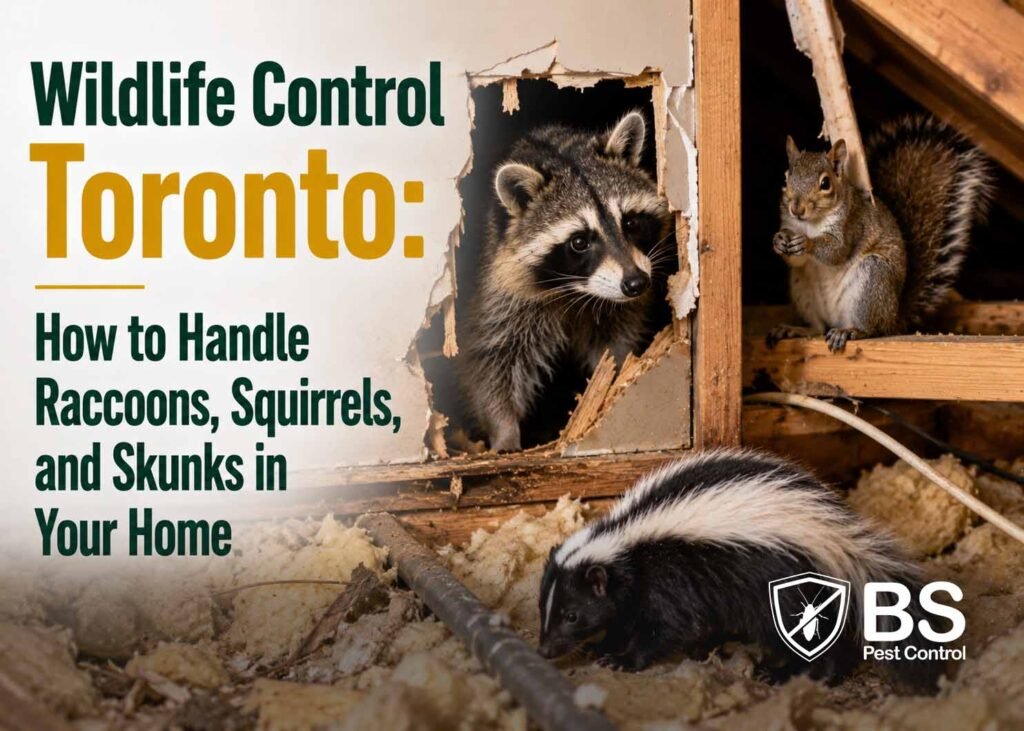
Help Toronto homeowners identify common wildlife intrusions, respond safely, and understand how professional removal and exclusion prevent animals from returning.
Key Takeaways
- Raccoons, squirrels, and skunks enter properties for food, shelter, and protected denning spaces.
- Each animal creates different sounds, damage, and removal challenges.
- Never seal a suspected entry point before confirming that no animals or dependent young remain inside.
- Repellents may disturb wildlife temporarily but do not repair entry points.
- Professional removal should combine humane methods, exclusion, and prevention.
Table of Contents
- Why Wildlife Enters Toronto Homes
- How to Identify the Animal
- Handling a Raccoon Intrusion
- Handling a Squirrel Intrusion
- Handling a Skunk Problem
- How Professional Wildlife Removal Works
- Frequently Asked Questions
Heavy footsteps wake you during the night. The next morning, you find a damaged roof vent, fresh digging beside the deck, or scattered insulation near an attic hatch.
Wildlife problems can begin with subtle signs. Raccoons, squirrels, and skunks often remain hidden until they have established a den or caused visible property damage.
Professional Wildlife Control Toronto identifies the animal, locates its entrance, and selects a humane removal method. Correct identification matters because each species behaves differently and requires a specific response.
Why Wildlife Enters Toronto Homes and Yards
Residential properties provide wildlife with reliable food and shelter. Attics, chimneys, sheds, garages, and spaces beneath decks can offer protection from weather, predators, and human activity.
Common food sources include:
- Unsecured garbage and compost
- Pet food left outdoors
- Fallen fruit and garden produce
- Spilled birdseed
- Barbecue residue
- Accessible food stored in garages or sheds
Building damage can also create convenient entrances. Loose soffits, broken roof vents, uncapped chimneys, and gaps around rooflines may allow animals to enter sheltered spaces.
Once wildlife finds a safe den, it may continue returning until the opening is properly secured.
How to Identify the Wildlife in Your Home
Sounds, entry-point locations, and property damage can help indicate which animal is present. Avoid entering an attic or approaching a den to confirm the species yourself.
| Sign | Raccoon | Squirrel | Skunk |
| Most active period | Mainly at night | Mainly during the day | Mainly at night |
| Common den area | Attic, chimney, garage | Attic, roof cavity, wall void | Beneath deck, shed, or porch |
| Typical sound | Heavy walking and thumping | Fast scratching and running | Scratching or rustling near ground level |
| Common damage | Bent vents and torn soffits | Chewed wood and widened gaps | Lawn holes and digging beneath structures |
| Other warning sign | Overturned garbage | Nesting material or gnaw marks | Strong musky odour |
Activity times provide useful clues, but they do not confirm the animal. A professional inspection is the safest way to determine what has entered the property.
How to Handle a Raccoon Intrusion
Raccoons are strong climbers capable of pulling apart weakened roof materials. They commonly enter through damaged soffits, vents, fascia boards, and uncapped chimneys.
A raccoon in the attic may produce slow footsteps, thumps, or dragging noises at night. Chirping or crying sounds can indicate that dependent young are present.
Do not seal the entrance after seeing the adult leave. A mother may be outside searching for food while her young remain hidden inside.
Professional Raccoon removal Toronto may involve a one-way exclusion door when no dependent young are present. If young are found, a family-reunification method may be required before the entrance can be repaired.
What to Do After Finding Raccoon Activity
- Keep pets and children away from the suspected entrance.
- Secure garbage, compost, and outdoor food.
- Avoid entering the attic or approaching the animal.
- Do not repair the opening before an inspection.
- Arrange professional removal promptly.
Raccoon droppings and contaminated insulation should not be handled without suitable protection. Cleanup requirements should be assessed after removal.
How to Handle a Squirrel Intrusion
Squirrels commonly enter attics through gaps around rooflines, vents, soffits, and fascia boards. Their climbing ability allows them to reach openings that are difficult to see from the ground.
Unlike raccoons, squirrels are usually active during daylight hours. Homeowners may hear quick running, scratching, or gnawing sounds during the morning and afternoon.
Squirrels frequently chew materials to enlarge an entrance or maintain access. Continued gnawing can damage wood, insulation, vents, and other building components.
Professional Squirrel removal Toronto begins with locating the active entrance and checking for young. A one-way door may then allow adult squirrels to leave while preventing re-entry.
What to Do After Hearing Squirrels
- Record when and where the sounds occur.
- Check the exterior from the ground for visible damage.
- Keep trees and climbing routes in mind during inspection.
- Do not place traps or poison inside the attic.
- Avoid sealing openings until the space is confirmed empty.
Poisons can leave animals trapped inside inaccessible areas. They also create risks for pets, children, and other wildlife.
How to Handle a Skunk Problem
Skunks usually live beneath structures rather than inside attics. Decks, sheds, porches, and additions provide the sheltered ground-level spaces they prefer.
Common warning signs include a persistent musky odour, shallow holes across the lawn, disturbed soil near a structure, and nighttime sightings.
Pets often discover skunks before homeowners do. A dog that approaches or corners a skunk may be sprayed or injured.
Professional Skunk removal Toronto confirms the den location and checks whether young are present. Once the animals have safely left, barriers can be installed to prevent future digging.
What to Do After Finding Skunk Activity
- Keep pets indoors or supervised on a leash after dark.
- Do not approach, chase, or corner the skunk.
- Remove pet food and secure garbage.
- Avoid blocking the den entrance.
- Arrange humane removal before installing barriers.
Never reach beneath a structure or attempt to force a skunk out. Disturbing the animal can lead to spraying and may separate a mother from her young.
Why DIY Wildlife Removal Often Fails
DIY methods frequently focus on making the den uncomfortable. Lights, noises, and strong smells may disturb an animal temporarily, but they do not repair the opening or confirm that all animals have left.
Sealing an active entrance creates a greater risk. Trapped wildlife may damage ceilings, walls, roofing, or vents while searching for another exit.
| DIY Response | Possible Problem |
| Sealing an entrance immediately | Traps animals or separates a mother from her young |
| Using lights or loud sounds | Temporarily moves wildlife without preventing return |
| Setting traps without inspection | May miss young or target the wrong animal |
| Applying strong-smelling repellents | Creates inconsistent, temporary results |
| Repairing only visible damage | Leaves other vulnerable openings exposed |
| Entering the den area | Risks bites, scratches, spraying, or contamination |
Reliable Toronto wildlife control addresses the active intrusion and the conditions that allowed it to happen.
How Professional Wildlife Removal Toronto Works
Professional removal starts with identifying the animal and assessing the entire property. The technician checks active entrances, vulnerable openings, den locations, contamination, and property damage.
1. Property Inspection
The inspection covers roof vents, soffits, fascia boards, chimneys, attics, garages, sheds, decks, and ground-level openings.
Tracks, droppings, fur, nesting material, and damage help confirm the species and active entrance.
2. Check for Dependent Young
Raccoons, squirrels, and skunks may have young inside the den. Their presence affects which removal methods can be used safely.
3. Select a Humane Removal Method
The technician chooses a method suited to the species, den location, and season. This may include one-way exclusion or family reunification.
4. Confirm the Animals Have Left
The entrance should not be permanently sealed until the technician confirms the den is empty.
5. Repair and Reinforce Entry Points
The primary entrance is repaired using suitable materials. Other vulnerable openings may also require protection.
6. Recommend Cleanup and Prevention
Contaminated materials, droppings, and nesting debris may require cleanup. The technician can also recommend changes to waste storage and property maintenance.
BS Pest Control provides humane wildlife removal for homes and businesses. Its approach combines inspection, safe removal, exclusion, and practical prevention.
How to Prevent Future Wildlife Intrusions
Removing available food and maintaining the exterior make a property less attractive to wildlife.
Secure Waste and Outdoor Food
Use garbage and compost containers with tight-fitting lids. Bring pet food indoors and clean up birdseed, fallen fruit, and barbecue residue.
Maintain the Roofline
Inspect vents, soffits, fascia boards, shingles, and roof intersections. Repair damage promptly before animals enlarge weak areas.
Protect Chimneys and Vents
Install suitable chimney caps and wildlife-resistant vent covers. Check them regularly for damage or movement.
Secure Ground-Level Structures
Protect accessible spaces beneath decks, porches, sheds, and additions. Barriers should extend below the soil where digging animals are a concern.
Trim Climbing Routes
Trim branches that provide direct roof access where practical. Check nearby fences, downspouts, and sheds that animals may use to climb.
Inspect the Property Seasonally
Regular inspections help identify damage before wildlife establishes a den. Pay close attention to areas where animals entered previously.
Frequently Asked Questions
What Should I Do First After Hearing Wildlife Inside?
Keep people and pets away from the suspected area. Record when the sounds occur and arrange a professional inspection. Do not seal the entrance or enter the den space.
Can I Wait for the Animal to Leave on Its Own?
Wildlife may leave temporarily to find food but continue returning to the den. Without exclusion and repairs, the intrusion can continue or another animal may use the same opening.
Is Humane Wildlife Removal Safe for the Animals?
Humane removal methods are selected according to the species, den location, and presence of young. The goal is to remove animals without unnecessary harm or family separation.
How Long Does Wildlife Removal Take?
Timing depends on the animal, entry-point location, presence of young, and required repairs. Some cases take several days, while more complex removals require additional monitoring.
Will Sealing the Main Entrance Prevent Wildlife from Returning?
The main entrance must be secured, but other vulnerable openings should also be inspected. Wildlife may target another weak area if only one opening is repaired.
Raccoons, squirrels, and skunks require different removal methods, but every successful job begins with correct identification and a thorough inspection. If you hear movement, notice property damage, or find an active den, contact BS Pest Control for a free quote. The team can remove the animals humanely and secure vulnerable areas against future entry.