You hear a thump on the deck around 11 p.m. Then the scrape of a lid. By morning, the garbage is across the lawn and the cat’s food bowl is empty.
Residential opossum control in Mississauga starts with finding where the animal sleeps and why it picked your yard. From there, you remove the food, close the entry points, and trap only when it is needed.
The City of Mississauga says wildlife can settle in attics, chimneys, and under decks and porches. It also asks residents not to trap or relocate animals themselves.
This guide covers the signs, the risks, and what a proper treatment involves. It comes from the field experience of The BS Pest Control, a licensed and insured team serving Mississauga, Brampton, and Toronto.
Key Takeaways
- Residential opossum control in Mississauga means finding the den, removing the animal humanely, sealing entry points, and cleaning up. Trapping alone does not fix it.
- Common signs are tipped garbage, missing pet food, night noises, droppings, and damaged vents.
- Opossums rarely attack. The bigger problems are droppings, parasites, and damaged insulation.
- In Ontario, a trapped animal can be released no more than 1 km from where it was caught. A trapped mother may also leave her young behind.
- The best prevention is simple: locked bins, pets fed indoors, and no gaps under decks or sheds.
- Call a licensed company if the animal is inside your home, if you think there are babies, or if it keeps coming back.
- Call +1 (437) 329-4500 for a free quote.
In This Guide
- What residential opossum control involves
- Signs of an opossum on your property
- Whether opossums are dangerous
- Why DIY trapping fails
- What professional treatment looks like
- How to stop them from returning
- How to choose a company and what it costs
- FAQs
What Is Residential Opossum Control in Mississauga, and Do You Need It?
It is a plan to remove an opossum from your property and keep others out. You need it when an animal is denning in or under your home, not when one simply crosses the yard at night.
Many people call them possums. The animal in Ontario is the Virginia opossum, and it is the only marsupial in Canada. A marsupial is an animal that carries its young in a pouch.
Opossums are about the size of a house cat. They can reach 2 to 3 feet long with the tail and weigh up to 15 pounds.
They are nocturnal, which means they are active at night. They look for warm, dry, quiet spots. A shed floor, a crawl space, or the gap under a porch fits well.
A common call goes like this. A homeowner hears scratching under the back deck for a week and assumes it will pass. Then the dog starts barking at the same spot every night, and the garbage gets torn open twice. By then, the animal has settled in.
How Do You Know an Opossum Is Living on Your Property?
Look for tipped bins, missing pet food, night noises, and droppings. One sign alone can have other causes, but two or three together point to an opossum.
Check for these:
- Garbage bins knocked over or lids pried open.
- Pet food that disappears overnight, especially food left on the porch.
- Slow, heavy steps or thumping on the roof, in the attic, or under the floor at night.
- Droppings near the patio, deck, shed, or crawl space.
- Torn screens, bent vent covers, or chewed gaps near the foundation.
- A musty smell coming from a closed-in space.
Here is a quick test. Set a phone or a cheap trail camera near the spot for two nights. Knowing the animal matters, because raccoons and skunks need a different plan.
Are Opossums Dangerous to Your Home and Family?
Not usually. Opossums are shy and prefer to run, hiss, or freeze and play dead. The real risks are the mess and the damage they leave behind.
Here is what they can cause:
- Droppings and urine that soil insulation in attics and crawl spaces.
- Parasites and bacteria in den areas.
- Raided gardens, compost bins, and bird feeders.
- Fights with pets, which can lead to bites or scratches.
Do not corner or pick one up. A frightened opossum may bare its teeth and drool. That looks scary, but it is a bluff. Give it space and an exit.
If a pet has been bitten, call your vet. If you see babies, keep everyone away and call a wildlife professional.
Why Doesn’t Trapping an Opossum Yourself Work?
Because the animal is only half the problem. If the food and the entry point stay, another opossum moves in. Add the legal rules, and DIY trapping gets risky fast.
Here is why it goes wrong:
- Another animal replaces it. An easy meal and a dry den attract the next one.
- Ontario has release rules. Wildlife can be released no more than 1 km from the capture site, and not onto private land without the owner’s permission.
- Babies are at risk. A trapped mother can leave young behind, and they will not survive on their own.
- Traps catch the wrong animal. Cats, skunks, and raccoons walk into them too.
- Mistakes can bring charges. Misusing a live trap can lead to animal cruelty charges in Ontario.
Traps also have to be checked every day. Miss a day, and the animal suffers.
What Does Professional Opossum Control Look Like?
A licensed technician inspects your property, removes the animal humanely, seals the entry points, and cleans the area. Each step prevents the next problem.
The full process looks like this:
- Inspection. The technician finds the den, the entry points, and the food source. They also check for young animals.
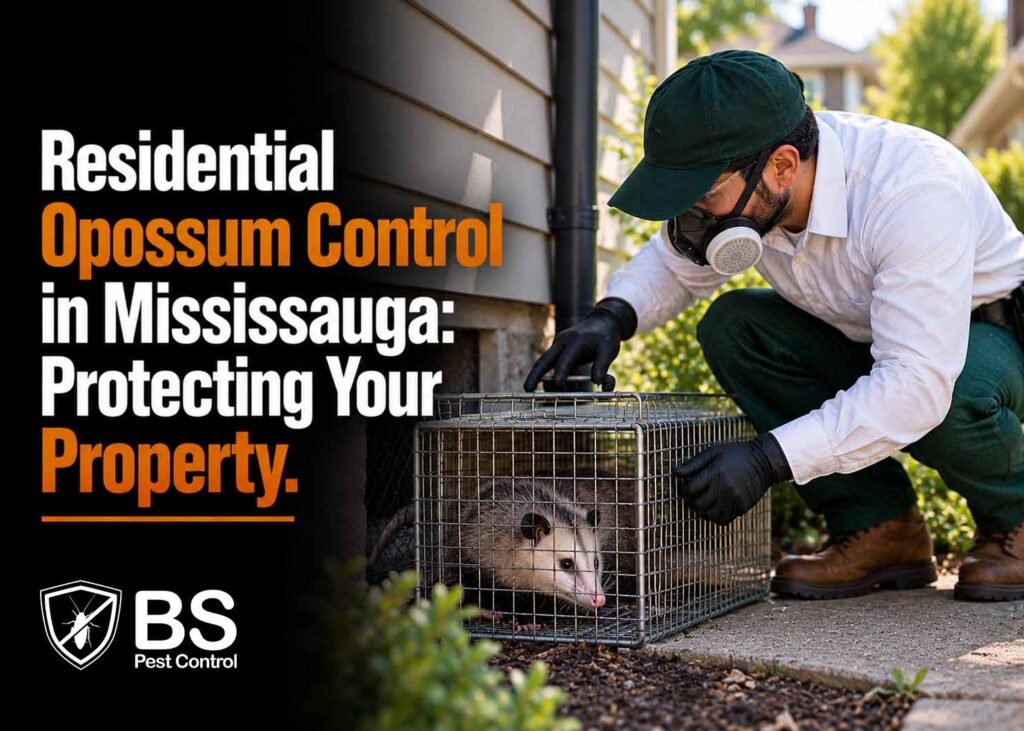
- Humane removal. Live traps go where the animal travels, such as along fences or near the den. They are checked daily.
- Exclusion. This means sealing the gaps so animals cannot get back in. It happens only after the space is confirmed empty.
- Cleanup. Droppings are removed, the area is sanitized, and damaged insulation can be replaced.
- Prevention advice. You get a short list of fixes for bins, food, and gaps, so the problem does not return.
That full sequence is what separates real opossum removal Mississauga homeowners can rely on from a one-night trap.
This is how our team handles wildlife calls. You can see the details on our opossum removal page and our wildlife removal services.
Spring needs extra care. Young animals are born in that season, so a good technician checks for babies before sealing anything.
How Can You Keep Opossums From Coming Back?
Remove the food and the shelter. Opossums stay where meals are easy and hiding spots are dry.
Try these steps:
- Use bins with tight or locked lids. Put garbage out the morning of pickup, not the night before.
- Feed pets indoors, or pick up bowls before dark.
- Clear fallen fruit and cover compost.
- Bring in bird feeders at night, or clean up the seed below them.
- Close gaps under decks, porches, and sheds with solid metal mesh.
- Trim branches that touch the roof, and cap the chimney.
- Check vents and soffits twice a year, in spring and fall.
One warning. Seal a gap only after you are sure nothing is inside. Closing in a mother or her young causes a much bigger problem.
This is also the cheapest part of opossum control Mississauga residents can do themselves. A few small habits remove most of what attracts them.
How Do You Choose an Opossum Control Company, and What Does It Cost?
Choose a licensed, insured company that inspects first, uses humane methods, and gives a written quote. Cost depends on where the animal is, how many there are, and how much damage needs fixing.
Ask these questions before you book:
- Are you licensed and insured in Ontario?
- Do you inspect before you quote?
- How do you handle babies and nursing mothers?
- Does the price include sealing entry points and cleanup?
- What happens if an animal returns?
These factors move the price:
- A yard or shed versus an attic or crawl space
- One animal versus a family
- The size of the sealing work
- The amount of cleanup or insulation repair
- The number of visits
The cheapest quote is not always the cheapest outcome. A trap-only job that skips sealing often leads to a second call.
For opossum pest control Mississauga homeowners can trust, expect the same answers every time: a clear inspection, humane steps, and a written plan. We offer free inspections, same-day or next-day service in most areas, and a satisfaction guarantee.
If you want residential opossum control in Mississauga that covers every step above, we are a call away.
Frequently Asked Questions
How do I get rid of an opossum in my yard?
Take away what draws it in: loose garbage, pet food, fallen fruit, and open gaps under the deck or shed. If it has already made a den, call a licensed professional.
Will an opossum leave on its own?
Sometimes. If it is only passing through, it often moves on within a few nights. If it has a den or babies, it will stay.
Are opossums dangerous to dogs and cats?
They avoid fights when they can. A cornered one may hiss or bite, so keep pets away and call your vet if one gets hurt.
Is it legal to trap an opossum in Ontario?
Property owners can trap nuisance wildlife on their own land when it is damaging property, but the rules are strict. Traps must be checked daily, and release must be within 1 km. A licensed company already knows these rules.
Should I block the hole right away?
No. Make sure the space is empty first. Sealing an animal inside, or separating a mother from her young, makes things worse.
Ready to Protect Your Property?
That thump on the deck will come back tomorrow night. Wildlife seldom leaves a good den on its own.
Residential opossum control in Mississauga gives you a clear plan: inspect, remove humanely, seal, and clean. Then your yard goes back to being yours.
Call +1 (437) 329-4500, message us on WhatsApp, or request a free quote. Seeing other signs of trouble? Our pest control services cover those too.