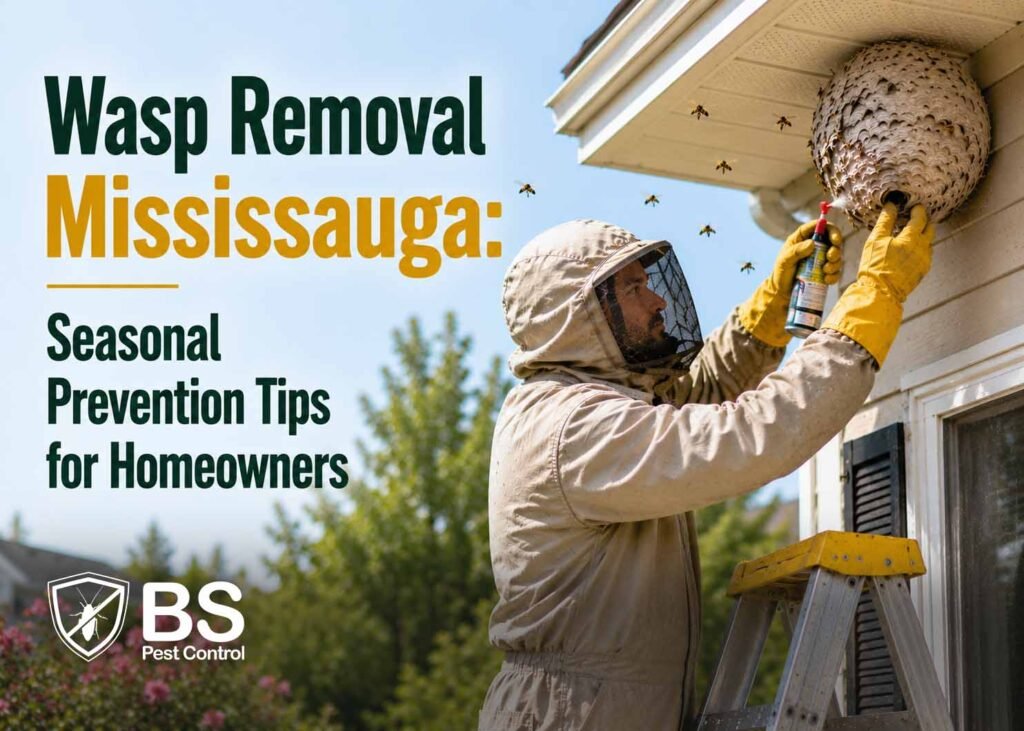
Help Mississauga homeowners prevent wasp nests by completing timely inspections, property maintenance, and food-control measures throughout the active season.
Key Takeaways
- Early spring is the best time to find and address small nest starts.
- Roof gaps, sheds, wall openings, and sheltered outdoor spaces provide common nesting sites.
- Open garbage, sugary drinks, and outdoor meals attract foraging wasps.
- Active nest entrances should never be sealed before professional treatment.
- Regular inspections make wasp problems easier and safer to manage.
Table of Contents
- Why Seasonal Wasp Prevention Matters
- Early Spring Inspection and Repairs
- Late Spring Nest Prevention
- Summer Wasp Control
- Fall Prevention and Property Maintenance
- When Professional Removal Is Necessary
- Frequently Asked Questions
A wasp nest rarely becomes large overnight. It usually begins as a small structure beneath an eave, inside a shed, or behind an exterior opening that nobody noticed during spring.
By late summer, the same nest may contain enough wasps to make a patio, doorway, or part of the yard difficult to use safely.
Seasonal prevention helps homeowners find activity before a colony becomes established. When a nest is already active, professional Wasp Removal Mississauga can control the colony without creating unnecessary risks around the property.
Why Seasonal Wasp Prevention Matters
Wasp activity changes as temperatures rise and colonies grow. Prevention steps that work well in early spring may be unsafe once a large nest becomes active.
During spring, homeowners can repair exterior gaps and identify small nest starts. Summer requires careful food management and regular observation. Fall is a useful time to inspect problem areas and complete repairs after activity ends.
A seasonal approach helps prevent:
- Nests near entrances and walkways
- Wasps entering wall voids or attics
- Repeated activity around patios
- Unexpected encounters inside sheds
- Sting risks for children and pets
- Large colonies that require more involved removal
No prevention plan can stop every wasp from entering a yard. The goal is to remove nesting opportunities and catch problems early.
Early Spring Wasp Prevention Mississauga
Early spring is the best time to inspect the exterior of the property. Wasp colonies are not yet at their summer size, making small nest starts easier to identify.
Inspect Rooflines and Soffits
Check eaves, soffits, fascia boards, and roof edges for damage or open gaps. Wasps can enter small openings that lead into sheltered structural spaces.
Look for repeated flight activity before sealing any opening. If wasps are already entering it, arrange an inspection first.
Repair Screens and Exterior Gaps
Replace damaged window screens and seal gaps around inactive vents, pipes, utility lines, and siding. Check weather stripping around doors and garage entrances.
Repairs should be completed before activity increases. Never seal a gap that wasps are actively using.
Check Sheds and Garages
Inspect corners, shelving, roof panels, and other undisturbed areas. Open storage buildings regularly during spring so new activity does not remain unnoticed.
Do not reach into dark corners or move stored materials without checking the area first.
Look Beneath Decks and Outdoor Furniture
Covered areas provide protection from wind and rain. Check beneath tables, chairs, railings, deck edges, and play equipment for early nest construction.
Small nest starts should still be approached carefully. Active wasps may defend them.
Late Spring Wasp Nest Prevention
Wasp activity becomes easier to notice as the weather warms. This is the time to monitor flight patterns and remove common food sources.
Watch for Repeated Flight Paths
A few wasps around flowers are normal. Several wasps repeatedly entering the same opening may indicate a developing nest.
Observe from a safe distance. Do not block the opening or stand directly in the flight path.
Keep Garbage Containers Closed
Use bins with secure lids and clean spills around garbage storage areas. Rinse recycling containers that held juice, soft drinks, or other sweet liquids.
Wasps may repeatedly return to a property where food is easy to access.
Remove Nesting Materials
Keep loose wood, paper waste, and yard debris properly stored or removed. Maintain sheds and fences so damaged areas do not provide protected nesting spaces.
Inspect Outdoor Play Areas
Check playhouses, swing sets, and other equipment before children begin using them regularly. Pay attention to enclosed sections and sheltered corners.
| Spring Inspection Area | What to Check |
| Eaves and soffits | Gaps, damage, and small nest starts |
| Doors and windows | Damaged screens and weather stripping |
| Sheds and garages | Activity around shelving and roof panels |
| Decks and railings | Sheltered areas beneath surfaces |
| Play equipment | Enclosed spaces and protected corners |
| Exterior vents | Repeated wasp entry and exit activity |
Summer Wasp Control Mississauga
Summer colonies can be large and defensive. Prevention during this season should focus on reducing food access and identifying active nests without disturbing them.
Cover Outdoor Food and Drinks
Keep food covered until it is served. Clear plates, cans, and glasses soon after outdoor meals.
Check drink containers before taking a sip. Wasps can enter open cans and bottles without being noticed.
Clean Patios and Barbecue Areas
Remove food scraps and wipe up sugary spills after use. Clean grease and residue from barbecue surfaces once they are cool.
Regular cleaning makes outdoor areas less attractive to foraging wasps.
Maintain Fruit Trees and Gardens
Pick up fallen fruit before it begins to decay. Harvest ripe produce and remove damaged fruit from garden areas.
Keep Pets Away from Active Areas
Move outdoor pet bowls inside after use. If wasps gather around one part of the yard, prevent pets from investigating it.
Avoid Disturbing Established Nests
Do not strike, spray, burn, flood, or knock down a large nest. Disturbing the colony can cause several wasps to respond at once.
Contact a professional if the nest is established, concealed, elevated, underground, or near an occupied area.
Fall Maintenance for Better Wasp Nest Prevention
Wasp activity generally declines as temperatures fall. However, active colonies may continue creating problems during warm autumn days.
Continue Managing Outdoor Food
Wasps may become more noticeable around food and sugary drinks later in the season. Keep garbage covered and clean outdoor dining areas promptly.
Monitor Indoor Activity
Wasps appearing repeatedly inside may indicate activity within a wall, ceiling, or attic. Do not assume cold weather will solve a concealed nest immediately.
Inspect Previously Active Areas
Record where nests or heavy activity occurred during summer. Once the colony is confirmed inactive, inspect those areas for openings that require repair.
Complete Exterior Repairs
Fall can be a suitable time to seal inactive gaps, repair damaged screens, and improve vulnerable roofline areas. Correct repairs reduce nesting opportunities the following spring.
Remove Abandoned Nests When Safe
Wasps generally do not reuse old nests. However, removing accessible inactive nests makes future inspections easier.
Never assume a nest is empty based only on the season. Confirm that activity has completely stopped before approaching it.
Which Prevention Methods Actually Work?
Good prevention removes access to food and nesting spaces. Decorative decoys, strong smells, and homemade repellents may produce inconsistent results.
| Prevention Method | Expected Value |
| Repairing inactive exterior gaps | Helps block access to concealed nesting spaces |
| Securing garbage and recycling | Reduces available food sources |
| Regular property inspections | Finds activity before colonies grow |
| Cleaning outdoor food spills | Reduces repeated foraging |
| Removing fallen fruit | Limits an accessible food source |
| Nest decoys and homemade repellents | Results may be inconsistent |
| Sealing an active entrance | Dangerous and may push wasps indoors |
Effective Wasp nest prevention requires regular attention. One spring inspection will not reveal every nest that develops later in the season.
When to Arrange Professional Wasp Removal Mississauga
Professional service is necessary when a nest cannot be addressed without placing people, pets, or the building at risk.
Contact a professional when:
- Wasps repeatedly enter a wall, soffit, or roof opening
- A nest is located high above the ground
- Wasps are emerging from an underground opening
- The colony is near a doorway, patio, or walkway
- Wasps repeatedly appear inside the home
- Someone on the property has a known sting allergy
- Previous treatment attempts have failed
- The colony behaves defensively during normal property use
BS Pest Control provides inspection-based Mississauga wasp removal for residential and commercial properties. Its technicians locate active nests, apply targeted treatments, and recommend practical prevention measures.
How Professional Treatment Supports Long-Term Prevention
Professional treatment starts with identifying the nest’s location and activity level. The technician also checks nearby openings and conditions that may contribute to the problem.
Treatment is selected according to whether the nest is exposed, enclosed, elevated, or underground. After colony activity stops, the technician can recommend repairs that reduce future nesting opportunities.
Effective Professional wasp removal Mississauga includes:
- Locating the active colony and entry points.
- Assessing risks around people, pets, and occupied spaces.
- Applying treatment suited to the nest location.
- Monitoring activity when follow-up is required.
- Recommending repairs and prevention measures.
Do not seal an active entrance before treatment. Trapped wasps may search for another route and enter the building.
Frequently Asked Questions
When Should I Begin Checking for Wasp Nests?
Begin inspections in early spring and continue throughout the warmer months. Regular checks help identify small nests and repeated activity before colonies become large.
Can I Stop Wasps from Entering My Yard?
You cannot prevent every wasp from flying onto the property. You can reduce nesting and repeated activity by securing food, repairing inactive gaps, and completing routine inspections.
Should I Remove a Small Wasp Nest Myself?
Even a small active nest can be defended. Contact a professional if the nest is difficult to reach, near occupied areas, or if you are unsure what type of insect built it.
Can I Seal an Opening After Seeing Wasps Enter It?
Do not seal an active opening. Wasps trapped inside may find another route into the home. Arrange treatment and wait until activity has stopped before completing repairs.
Do Wasps Return to Old Nests?
Wasps generally do not reuse abandoned nests. However, new colonies may build nearby if the location continues to offer suitable shelter and food.
Seasonal inspections and timely repairs can prevent a small wasp problem from becoming a large colony. If you notice repeated flight activity, an active nest, or wasps entering the building, contact BS Pest Control for a free quote. The team can inspect the property, treat the colony, and recommend practical prevention steps.