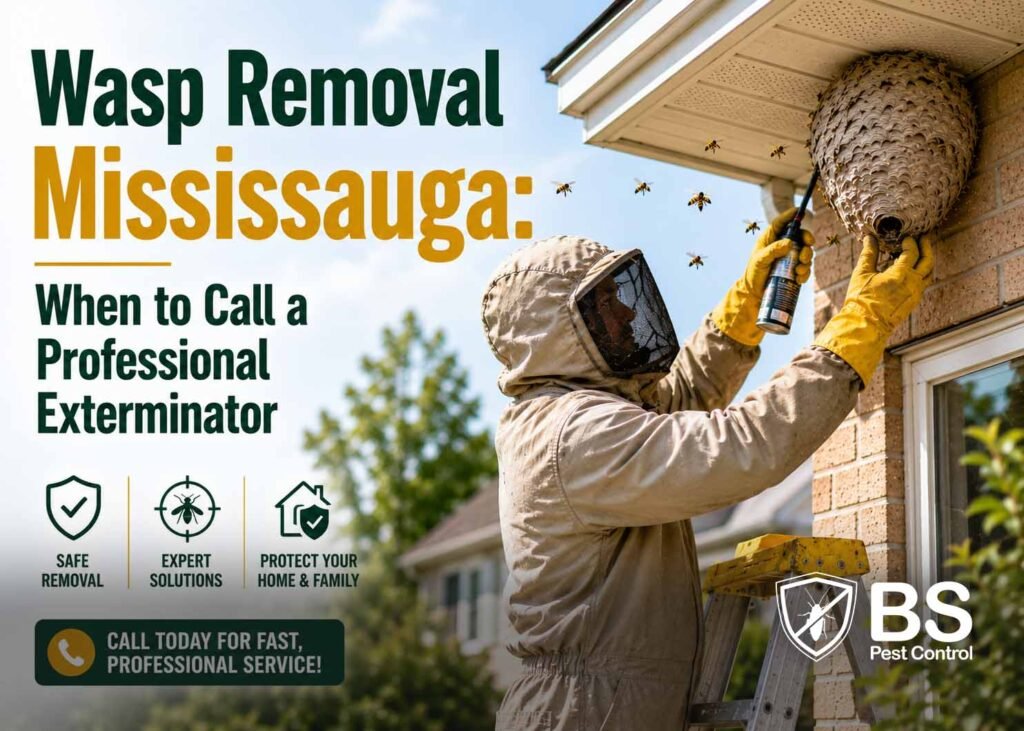
Help Mississauga property owners recognize when wasp activity can no longer be managed safely and requires professional inspection and treatment.
Key Takeaways
- Repeated wasp activity around one opening usually indicates a nearby nest.
- Nests near doors, patios, and walkways require prompt attention.
- Never seal an opening while wasps are actively using it.
- Concealed, underground, and elevated nests should be handled professionally.
- Immediate medical attention is necessary after signs of a serious allergic reaction.
Table of Contents
- When Wasp Activity Becomes a Problem
- Warning Signs That Require Professional Help
- High-Risk Nest Locations
- Why DIY Removal Can Be Dangerous
- How Professional Wasp Removal Works
- When Wasp Removal Becomes Urgent
- Frequently Asked Questions
A wasp flying through the yard is usually not a reason for concern. Several wasps entering the same opening every few minutes are different. That pattern often indicates an active nest nearby.
The longer a colony remains undisturbed, the larger and more defensive it can become. A nest near a doorway, patio, play area, or commercial entrance can quickly interfere with everyday use of the property.
Professional Wasp Removal Mississauga is recommended when the nest is active, difficult to reach, or located where people and pets may disturb it. Early treatment can reduce sting risks and prevent the colony from becoming harder to control.
When Does Wasp Activity Become a Serious Problem?
Wasps travel away from their nests to collect food and building material. Seeing one or two around flowers or outdoor food does not confirm a nearby colony.
The activity becomes concerning when wasps repeatedly use the same flight path. They may disappear beneath siding, enter a soffit gap, or travel through a hole in the ground.
A growing colony can become more defensive as the season progresses. Regular foot traffic, lawn equipment, opening doors, or moving stored items may trigger a response.
Pay attention to where wasps travel instead of trying to follow them closely. Observing from a safe distance can help a professional locate the nest later.
Warning Signs You Need a Wasp Exterminator Mississauga
Some nests are visible. Others remain hidden until activity becomes heavy or wasps begin entering the building.
Call a professional after noticing any of the following signs.
Wasps Entering One Opening Repeatedly
Steady activity around a crack, vent, soffit, or siding gap often indicates a concealed nest. Do not seal the opening while wasps are using it.
Blocking the exterior entrance can force the colony to search for another exit. That route may lead through walls or ceilings and into occupied rooms.
A Nest Growing Near a Busy Area
A small nest can expand quickly during warmer months. Removal becomes more difficult when the nest is near a door, walkway, patio, balcony, or play area.
Restrict access to the area and arrange an inspection before someone accidentally disturbs it.
Wasps Appearing Inside the Property
An occasional wasp may enter through an open door. Repeated indoor sightings can indicate a nest within a wall void, attic, ceiling, or attached structure.
This problem requires professional assessment. Spraying visible wasps indoors does not address the colony.
Increased Aggression
Wasps flying directly toward people or repeatedly circling them may be defending a nearby nest. Move away slowly and keep others out of the area.
Do not swat at the wasps or attempt to locate the nest at close range.
Previous Treatments Have Failed
Continued activity after applying store-bought spray means the product may not have reached the colony. Repeated attempts can disturb the nest and increase sting risks.
A professional can identify why the treatment failed and determine where the active colony is located.
Nest Locations That Require Professional Wasp Removal Mississauga
Nest location is one of the main reasons to call a professional. Some areas are too dangerous or difficult to treat without suitable equipment and experience.
Inside Walls, Roofs, and Soffits
Concealed nests cannot be safely removed by spraying the visible entrance. Treatment must reach the colony without driving wasps further into the building.
High Rooflines and Trees
Attempting treatment from a ladder creates two hazards at once: falling and being stung. Never climb toward an active nest.
Underground Nests
Ground nests can be difficult to notice until someone steps nearby or uses lawn equipment. These colonies may respond quickly when vibrations disturb the entrance.
Sheds, Garages, and Storage Areas
Wasps can build behind shelves, beneath roof panels, or inside rarely moved equipment. Do not attempt to clear the area before treatment.
Areas Near Vulnerable People
Professional service is strongly recommended when a nest is near children, older adults, pets, customers, or anyone with a known sting allergy.
| Nest Location | Main Risk |
| Wall or soffit | Wasps may enter occupied rooms |
| High roofline | Sting and fall hazards |
| Underground opening | Accidental disturbance from foot traffic or mowing |
| Shed or garage | Close contact when opening doors or moving items |
| Patio or entrance | Frequent exposure to residents, visitors, or customers |
Why DIY Wasp Removal Can Be Dangerous
Store-bought sprays may work on very small, exposed nest starts when activity is minimal. They are less reliable against established colonies, hidden nests, or difficult locations.
Approaching the nest places you within the colony’s defensive area. Wasps may respond before the treatment reaches them.
DIY removal can also fail because:
- The visible opening may not reveal the nest’s actual location.
- The spray may only contact a small number of wasps.
- Clothing may not provide adequate sting protection.
- Sealing an active opening can push wasps indoors.
- A ladder becomes difficult to control during wasp activity.
- The insects may be bees that require a different response.
Do not burn, flood, strike, or knock down an active nest. These actions increase danger without reliably controlling the colony.
How Mississauga Wasp Removal Works
Professional removal begins with inspection and identification. The technician studies flight patterns, locates entry points, and determines whether the nest is exposed, concealed, elevated, or underground.
1. Inspecting the Nest Area
The technician assesses the nest’s location, size, and activity. Nearby doors, windows, walkways, pets, and occupied areas are also considered before treatment begins.
2. Establishing a Controlled Work Area
Residents, workers, and pets must stay away from the treatment zone. Nearby doors and windows may need to remain closed during service.
3. Applying Targeted Treatment
The treatment method is selected according to the nest type and location. The objective is to control the colony without unnecessary disturbance.
4. Monitoring Wasp Activity
Activity may continue briefly as wasps away from the nest return. Monitoring helps confirm whether the treatment reached the colony or a follow-up visit is required.
5. Removing the Nest When Appropriate
An accessible nest may be removed after activity has stopped. Concealed nests do not always require opening walls or ceilings once the colony is inactive.
6. Preventing Future Nesting
After activity ends, damaged screens, exterior gaps, and vulnerable openings can be repaired. Sealing must happen only after confirming the nest is no longer active.
BS Pest Control provides inspection-based Wasp removal services Mississauga for homes and businesses. The team uses targeted treatment methods and provides practical recommendations for reducing future activity.
When Does Wasp Removal Become Urgent?
Some situations should not wait for a routine appointment. Restrict access to the area and request prompt professional help if:
- Wasps are entering occupied rooms.
- The nest blocks access to the home or business.
- Someone with a known allergy lives or works nearby.
- A large nest is located near children or pets.
- Wasps become aggressive during normal property use.
- An underground nest is beside a walkway or play area.
- The nest is damaged but remains active.
Call emergency medical services immediately if someone develops trouble breathing, throat or facial swelling, dizziness, fainting, widespread hives, or another severe reaction after a sting.
What Affects the Cost of Professional Removal?
The cost of Mississauga wasp removal depends on the nest’s location, accessibility, and activity. Treating a visible nest near ground level is different from reaching a concealed colony inside a roofline.
Common cost factors include:
- Number of active nests
- Size and activity of the colony
- Height and accessibility
- Exposed, concealed, or underground location
- Treatment method required
- Need for monitoring or follow-up service
- Prevention work after treatment
A professional quote should explain the planned treatment and whether follow-up service or nest removal is included.
Professional Removal Versus DIY Treatment
| DIY Treatment | Professional Treatment |
| Requires approaching the active nest | Uses suitable protective equipment |
| May treat only visible wasps | Targets the colony based on inspection |
| Can miss concealed nest activity | Identifies hidden entrances and nesting areas |
| May create ladder and fall hazards | Uses appropriate access methods |
| Can force wasps into the building | Controls activity before sealing openings |
| May require repeated attempts | Includes follow-up recommendations when needed |
Hiring a Wasp exterminator Mississauga is the safer choice when the colony is established, concealed, elevated, or close to occupied areas.
Frequently Asked Questions
Should I Call a Professional for a Small Wasp Nest?
Call a professional if the nest is active, difficult to reach, or close to people and pets. Small nests can grow quickly, so early treatment usually reduces risk.
Can I Seal the Opening Wasps Are Using?
Never seal an opening while wasps are entering and leaving. Trapped wasps may find another route into the building. Wait until a professional confirms the colony is inactive.
How Quickly Can a Wasp Nest Grow?
Nest growth depends on species, weather, food availability, and season. A small nest can develop into a large, active colony during warmer months.
Will Wasps Leave on Their Own?
Most colonies eventually die as temperatures fall, but waiting may not be safe when the nest is near occupied areas. The nest can continue creating sting risks throughout the active season.
How Can I Prevent Future Wasp Nests?
Inspect rooflines and sheds regularly, repair damaged screens, secure garbage, cover outdoor food, and seal inactive exterior gaps. Early detection makes new nests easier to address.
Wasp activity near a busy area can become dangerous without much warning. If wasps repeatedly enter one opening, appear indoors, or defend part of your property, contact BS Pest Control for a free quote. The team can locate the nest, treat the colony, and recommend steps to reduce future activity.