
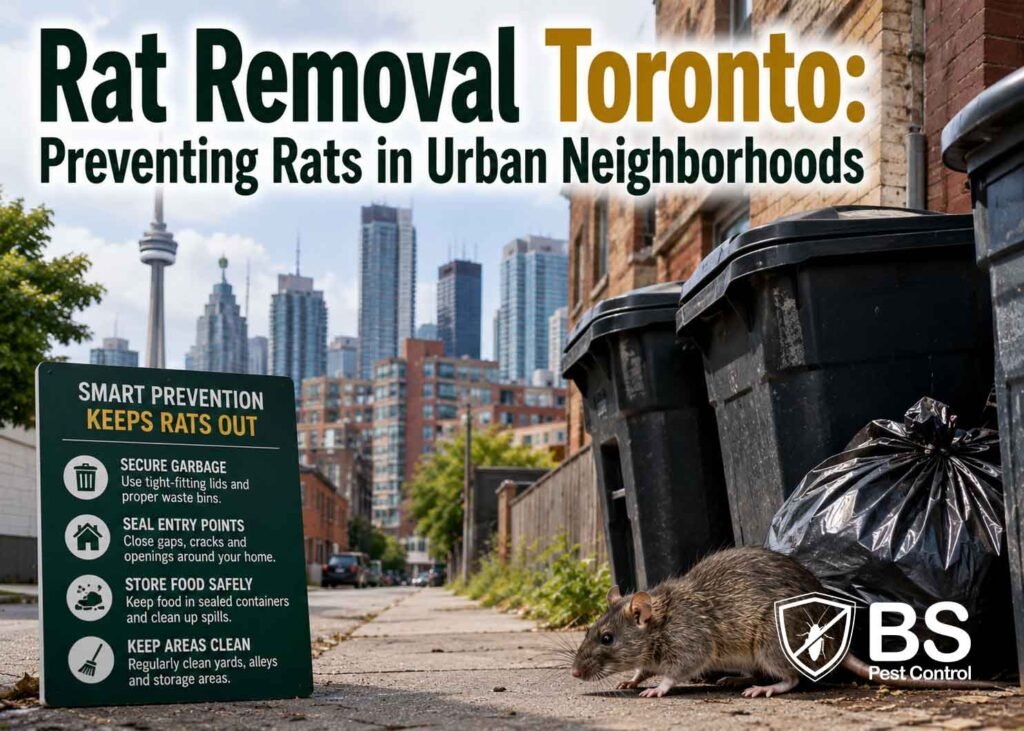
Rats are a common problem in busy city areas. They do not need much to survive. A little food, a small gap, a quiet hiding place, and steady access to water can be enough. In Toronto, where homes, restaurants, laneways, parks, construction sites, garbage areas, and older buildings sit close together, rats can move from one property to another very easily.
For homeowners, this can feel unfair. You may keep your home clean and still notice rat activity nearby. That is because urban rat problems are not always caused by one house. They are often linked to the whole neighbourhood. If rats are feeding behind a restaurant, nesting under a shed, moving through a laneway, or hiding near construction work, nearby homes can be affected too.
The good news is that prevention works. Rat removal in Toronto is not about one quick trick. It is about making your property harder to enter, harder to hide around, and less useful as a food source. When these steps are done properly, they reduce the chance of rats moving in.
Why Rats Are Common In Toronto Neighbourhoods
Toronto gives rats many opportunities to survive. Dense housing, shared walls, older foundations, garbage collection areas, alleyways, backyard sheds, compost bins, restaurants, and transit corridors can all create activity zones. Rats are good at using these spaces without being seen.
They often travel along edges. You may find them moving beside fences, walls, garden beds, garage lines, laneways, and foundation areas. They avoid open spaces when possible and look for cover wherever they can.
Construction can also disturb rat habitats. When old buildings are renovated or underground areas are disturbed, rats may move into nearby properties. This is one reason some homeowners notice sudden activity even if they never had a problem before.
This is why rodent control in Toronto needs a prevention mindset. It is not enough to remove rats once they are inside. The better goal is to make your home less attractive before they enter.
Start With Garbage Control
Garbage is one of the biggest reasons rats stay in urban neighbourhoods. Even small amounts of food waste can attract them. A loose bin lid, torn bag, overflowing garbage area, or food scraps near the side of the house can become a regular feeding spot.
Use bins with tight-fitting lids. Do not leave garbage bags outside without protection. If possible, keep bins away from doors, basement windows, and foundation walls. Wash bins when they develop strong smells, especially in warmer months.
Food waste should be sealed well before disposal. If garbage is stored outside before pickup, make sure it is not easy for rats to chew through or access.
This step may seem basic, but it is one of the most important parts of rat prevention in Toronto. If rats cannot feed easily, they are less likely to stay near your home.
Be Careful With Compost
Compost can be useful, but it can also attract rats if it is not managed properly. Food scraps, fruit peels, vegetable waste, and strong odours can bring rodents close to the property.
Use a secure compost bin with a tight lid. Avoid adding meat, fish, dairy, oily food, or cooked leftovers unless your local compost system is designed for that. Keep the compost area clean and avoid letting food waste spill around the bin.
If you notice burrows, droppings, gnaw marks, or rat activity near the compost area, take it seriously. That area may already be supporting rodents.
A professional rat exterminator in Toronto can inspect the area and help you understand whether the activity is limited to the yard or moving closer to the home.
Seal Small Openings Before Rats Find Them
Rats can enter through small gaps. They may use openings around pipes, utility lines, vents, basement windows, garage doors, damaged siding, foundation cracks, and spaces under doors.
Walk around your home and look closely at the exterior. Pay attention to lower walls, corners, vents, door frames, window wells, and areas where cables or pipes enter the building. These are common weak points.
Do not assume a gap is too small. Rats can squeeze through tight spaces and may chew weak material to make an opening larger. Soft foam, loose plastic, and weak patching are often not enough.
Sealing entry points is one of the most important parts of rat removal in Toronto because it stops the cycle. If rats cannot enter, the home is far easier to protect.
Check Garage Doors And Side Doors
Garages are common entry points. A small gap under a garage door can be enough for rats to enter, especially if the garage stores pet food, bird seed, tools, cardboard boxes, or garbage.
Check the bottom seal of your garage door. If light comes through, pests may be able to enter. Also check side doors, back doors, basement doors, and older door sweeps. A worn seal can create easy access.
Garages are often quiet and cluttered, which makes them useful hiding spaces. Keep storage off the floor when possible. Use sealed containers instead of cardboard boxes for food-related items.
If you find droppings or chewed materials in the garage, call for rodent control in Toronto before the activity spreads indoors.
Remove Outdoor Hiding Spots
Rats like cover. They feel safer when they can move without being exposed. Overgrown shrubs, wood piles, old furniture, unused materials, dense plants, and clutter around fences or sheds can all give rats places to hide.
Keep the area around your home clean and open. Trim shrubs away from the walls. Move wood piles off the ground and away from the foundation. Remove old junk, broken planters, unused bins, and stacked materials from the side of the house.
Sheds and decks should also be checked. Rats may nest underneath if there is space and cover. If you see burrows near a shed, fence, deck, or garden bed, do not ignore them.
Good prevention starts outside. The less shelter your yard provides, the less attractive it becomes.
Store Pet Food And Bird Seed Properly
Pet food and bird seed are common rat attractants. If they are stored in bags inside a garage, shed, basement, or porch, rats may chew through the packaging.
Use hard sealed containers. Do not leave pet food bowls outside overnight. If you feed birds, clean spilled seed under feeders regularly. Bird seed on the ground can become an easy food source for rats.
This is especially important in urban neighbourhoods where rats may already be moving nearby. A steady food source can bring them closer to your home and keep them there.
Watch For Burrows Around The Property
Rats may dig burrows near foundations, under sheds, along fences, under decks, beside gardens, or near garbage areas. A burrow can look like a small hole in the soil, often with smooth edges from regular use.
If you see holes around your property, do not fill them blindly without knowing what caused them. Active burrows may indicate a rat problem outside the home.
A rat exterminator in Toronto can inspect the area and confirm whether the holes are related to rats or another animal. Correct identification matters because the wrong approach may not solve the problem.
Keep Basements And Storage Areas Clean
Basements are attractive to rats because they are quiet, warm, and often full of storage. Cardboard boxes, fabric, paper, insulation, and clutter can give rats nesting materials.
Try to keep basement storage organized. Use plastic bins with lids instead of open cardboard boxes. Keep food, pet supplies, and seasonal items sealed. Check corners, furnace rooms, laundry areas, utility spaces, and wall edges for droppings or chewing.
If your basement has exposed walls, older windows, or utility openings, inspect these areas more often.
Preventing rats is easier when hidden spaces are clean and easy to check.
Fix Moisture Problems
Rats need water as well as food. Leaky pipes, dripping outdoor taps, clogged drains, standing water, and damp basement areas can make a property more attractive.
Check for leaks under sinks, in laundry areas, around water heaters, and near exterior taps. Make sure gutters and downspouts direct water away from the foundation. Remove standing water from buckets, planters, and yard items.
Moisture also attracts other pests, so fixing it helps with general pest prevention too.
Work With Neighbours When Needed
Urban rat prevention is stronger when neighbours cooperate. If one property has open garbage, outdoor food sources, or heavy clutter, rats may stay active nearby and move between homes.
This does not mean blaming anyone. Rat problems can happen in any neighbourhood. But when several homes take basic prevention steps, the area becomes less supportive for rodents.
If you notice repeated activity along a shared fence, laneway, row of garages, or connected homes, it may be worth discussing prevention with nearby neighbours or property managers.
Rat prevention in Toronto often works best when the surrounding environment is managed too.
Be Extra Careful During Construction
Construction can disturb rat nesting areas and push rodents into nearby homes. This can happen during major renovations, road work, demolition, basement digging, or utility work.
If construction starts near your property, inspect your exterior more often. Check garage doors, foundation gaps, vents, and basement openings. Keep garbage secure and reduce clutter around the house.
If you suddenly notice droppings, scratching sounds, or burrows during nearby construction, do not wait. Early inspection can prevent the issue from becoming an indoor infestation.
Know The Early Warning Signs
Prevention also means knowing what to watch for. Common warning signs include droppings, scratching sounds, chewed packaging, gnaw marks, greasy rub marks, burrows, strong odours, damaged insulation, and pets reacting to hidden areas.
If these signs appear, prevention has already become an active control issue. At that point, professional rat removal in Toronto may be needed.
Acting early is important. A small problem is easier to control than one that has spread into walls, basements, or storage areas.
Why Professional Inspection Helps
Homeowners can do a lot to prevent rats, but some signs are easy to miss. A professional technician knows where rats commonly enter, how they travel, and what conditions attract them.
Professional rodent control in Toronto can help identify hidden entry points, outdoor attractants, burrows, nesting areas, and signs of activity. A technician can also explain which prevention steps matter most for your specific property.
This is useful because every home is different. A detached home near a ravine may have different risks than a row house near a laneway or a property beside restaurants.
What To Do If Rats Are Already Active
If you already see droppings, hear scratching, or notice chewed materials, do not rely on prevention alone. At that point, you need both removal and prevention.
A proper plan should include inspection, active control, entry point recommendations, sanitation guidance, and follow-up where needed. The goal is to remove the current problem and stop future access.
Trying to seal every gap before confirming where rats are active can sometimes trap rodents in the wrong area. That is why professional advice is helpful when there are active signs.
Final Thoughts
Preventing rats in Toronto is about removing the things they need most: food, shelter, water, and access. Clean garbage areas, sealed food storage, repaired gaps, trimmed vegetation, organized basements, and proper exterior maintenance all make a difference.
Urban rat problems can be frustrating because activity may come from nearby areas. Still, homeowners can lower their risk by making their own property harder for rats to use.
If you notice signs of activity, act early. Professional rat removal in Toronto can help identify the source, remove active rodents, and build a prevention plan that fits your home and neighbourhood.
Need help preventing or removing rats from your Toronto home? Contact BS Pest Control for professional rat removal, rat prevention, and rodent control services in Toronto. Our team can inspect your property, identify entry points, reduce attractants, and provide practical solutions to help protect your home from ongoing rat problems.