Explain why raccoons are attracted to Brampton homes, how they gain access, and what homeowners can do to prevent them from settling on their property.
Key Takeaways
- Residential properties provide raccoons with food, water, shelter, and safe travel routes.
- Attics offer warm, protected spaces for female raccoons raising young.
- Garbage, pet food, birdseed, and fallen fruit encourage repeat visits.
- Weak roof vents, damaged soffits, and open chimneys provide common entry points.
- Removal must be followed by exclusion and prevention work.
Table of Contents
- Why Brampton Neighbourhoods Attract Raccoons
- Why Raccoons Choose Attics
- Common Food Sources Around Homes
- How Raccoons Enter Residential Buildings
- Signs a Raccoon Has Settled In
- How to Make Your Property Less Attractive
- Frequently Asked Questions
The garbage bin is overturned again. A few nights later, heavy footsteps begin above the bedroom ceiling. These problems may appear unrelated, but both can indicate that a raccoon has started using the property.
Brampton homes offer many of the resources raccoons need. Food is easy to find, residential structures provide shelter, and connected yards allow them to travel after dark without spending much time in open areas.
Professional Raccoon Removal Brampton addresses the active intrusion and the conditions that attracted the animal. Understanding those conditions is the first step toward preventing another raccoon from moving in.
Why Brampton Neighbourhoods Attract Raccoons
Raccoons adapt well to residential environments. They do not need an untouched natural area to survive. A neighbourhood with trees, fences, sheds, gardens, and accessible garbage can provide everything they need.
Connected backyards create convenient travel routes. Raccoons can move between properties while remaining close to fences, vegetation, and structures that provide cover.
Nearby parks, trails, ponds, and wooded spaces may also support wildlife activity. Raccoons can travel from these areas into residential streets while searching for food and shelter.
The problem is rarely caused by one feature alone. A property becomes especially attractive when it offers several resources in one place.
| What Raccoons Need | What Residential Properties May Provide |
| Food | Garbage, compost, pet food, birdseed, and garden produce |
| Water | Pet bowls, ponds, and collected rainwater |
| Shelter | Attics, chimneys, sheds, decks, and garages |
| Safe travel routes | Fences, trees, roofs, and connected yards |
| Denning space | Warm, quiet areas protected from weather |
Why Raccoons Choose Residential Attics
An attic can provide more protection than an outdoor den. It is dry, sheltered from wind, and usually free from regular human activity.
Female raccoons may enter attics to create maternity dens. The enclosed space protects their young while the mother leaves at night to find food.
A raccoon does not always need a large opening. It may enlarge a weak section around a soffit, vent, fascia board, or roof edge. Once inside, it can disturb insulation, damage ducts, and contaminate the area with waste.
Attics become more attractive when:
- Roof vents are damaged or unprotected
- Soffits have loose or weakened sections
- Chimneys do not have secure caps
- Tree branches provide access near the roof
- Previous wildlife damage was repaired with weak materials
- The attic remains quiet and undisturbed
A raccoon may continue returning to the same attic until the entrance is properly secured. Removing the animal without repairing the opening leaves the building vulnerable.
Food Sources That Lead to Raccoon Control Brampton Problems
Raccoons remember reliable food sources. A single accessible garbage bag can encourage an animal to return on the following night.
Unsecured Garbage and Compost
Loose bags and bins with weak lids are easy targets. Food odours can draw raccoons from nearby properties.
Compost containing exposed food scraps may create the same problem. Use an enclosed container with a secure lid.
Outdoor Pet Food
Pet food provides a convenient, high-value meal. Feed pets indoors and bring bowls inside immediately after use.
Water bowls should also be removed overnight when possible.
Bird Feeders
Raccoons may eat spilled birdseed or access low feeders. Clean the ground below feeders and avoid leaving large amounts of seed available overnight.
Gardens and Fruit Trees
Ripe garden produce and fallen fruit can attract wildlife. Harvest food promptly and remove damaged or fallen items from the ground.
Barbecue Residue
Grease, food scraps, and unclean barbecue tools can attract raccoons. Clean cooking surfaces and store waste securely after outdoor meals.
Repeated feeding opportunities often turn a passing raccoon into a regular visitor. Removing those opportunities is a central part of Raccoon prevention Brampton.
How Raccoons Enter Residential Homes
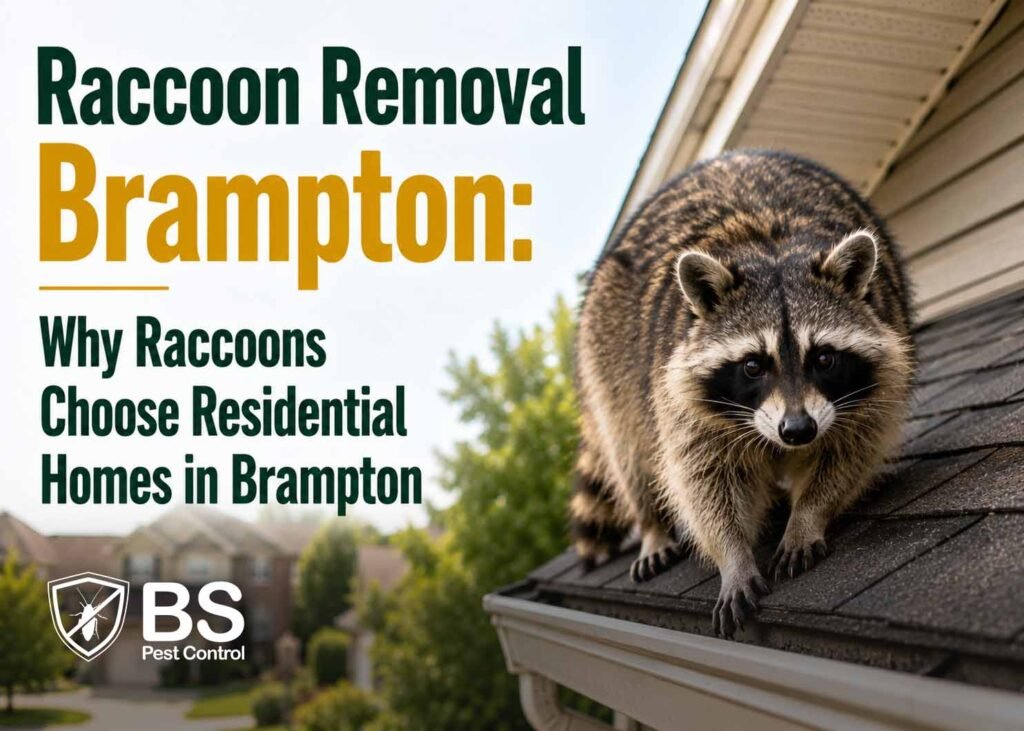
Raccoons are capable climbers and can use trees, fences, sheds, and attached structures to reach a roof.
Once there, they inspect weak points and existing gaps. An opening that appears too small may be widened using their paws and body weight.
Common entry points include:
- Unprotected roof vents
- Loose soffit panels
- Damaged fascia boards
- Open or poorly capped chimneys
- Gaps where roof sections meet
- Open garage doors
- Damaged siding near the roofline
- Spaces beneath decks and additions
Homeowners often repair the most visible damage without inspecting the surrounding area. A raccoon may then reopen the repair or use another nearby weakness.
Professional Brampton raccoon removal should include an inspection of the entire exterior, not only the suspected entrance.
Signs a Raccoon Has Settled Inside Your Home
Early signs are easy to dismiss. Raccoons are usually active while residents are sleeping, and the entrance may be hidden above ground.
Heavy Movement at Night
Raccoons create heavier sounds than mice or squirrels. Homeowners may hear slow footsteps, thumping, scratching, or dragging above the ceiling.
Sounds from Young Raccoons
Chirping, crying, or chattering can indicate that young raccoons are inside. Do not seal the entrance or attempt to remove the mother.
Roofline Damage
Bent vents, torn soffits, lifted materials, and dark marks near openings may indicate repeated entry.
Strong or Unusual Odours
Waste and nesting material can produce persistent odours. The smell may become stronger in warm weather or around one section of the home.
Activity Around Garbage and the Roof
A raccoon repeatedly feeding in the yard and climbing toward the roof may be using the home as shelter.
If these signs continue, arrange professional Wildlife removal Brampton before completing repairs.
Why DIY Deterrents Rarely Solve an Active Intrusion
Lights, noises, and strong smells may make an attic uncomfortable for a short period. They do not confirm that the raccoon has left or that no young remain inside.
A raccoon may simply move deeper into the structure or return after the disturbance stops. It may also cause additional damage while searching for another exit.
Closing the entrance creates an even greater risk. If the animal remains inside, it may tear through building materials to escape. If a mother is locked outside, she may damage the roof while trying to reach her young.
| DIY Response | Possible Result |
| Sealing the entrance immediately | Traps animals or separates a mother from her young |
| Using lights or loud sounds | Moves the raccoon temporarily without fixing access |
| Applying strong-smelling products | Creates short-term disturbance |
| Repairing only visible damage | Leaves other vulnerable openings exposed |
| Entering the attic | Risks direct contact and disturbs the den |
Humane raccoon removal Brampton confirms the animal’s location and family status before exclusion work begins.
How Professional Raccoon Removal Addresses the Cause
Professional removal starts with a complete inspection of the roofline, attic, exterior openings, and surrounding property.
The technician identifies how the raccoon entered and whether dependent young are present. The findings determine which humane removal method can be used safely.
A complete removal process may include:
- Inspecting the building and locating active entrances.
- Checking the den for dependent young.
- Using a humane removal or family-reunification method.
- Confirming that all raccoons have left.
- Repairing and reinforcing the primary entrance.
- Protecting other vulnerable openings.
- Recommending cleanup and prevention measures.
BS Pest Control provides humane wildlife removal for residential properties. Its approach combines safe removal, entry-point identification, and prevention recommendations.
How to Make Your Property Less Attractive to Raccoons
The strongest prevention plan removes easy food and blocks access to sheltered spaces.
Secure Food and Waste
Use garbage and compost containers with tight-fitting lids. Avoid placing loose bags outside overnight.
Bring pet food indoors, clean barbecue residue, and remove fallen fruit regularly.
Inspect the Roofline
Check vents, soffits, fascia boards, and roof edges for damage. Complete repairs promptly before wildlife enlarges weak areas.
Install Suitable Protection
Chimney caps and wildlife-resistant vent covers can protect common entry points. Materials should be strong enough to resist pulling and chewing.
Control Roof Access
Trim branches that provide easy access to the roof where practical. Inspect nearby fences, sheds, and attached structures that raccoons may use as climbing routes.
Keep Garages and Sheds Closed
Close doors after use and check for damaged panels or ground-level openings. Avoid storing pet food or accessible garbage inside an unsecured shed.
Frequently Asked Questions
Why Does a Raccoon Keep Returning to My Property?
The property likely provides reliable food, shelter, or a familiar travel route. Securing waste, removing outdoor food, and protecting entry points can reduce repeated activity.
Why Do Raccoons Prefer Attics?
Attics are warm, dry, quiet, and protected from predators. They can provide suitable denning space, especially for mothers raising young.
Can a Raccoon Enter Through a Roof Vent?
Yes. Raccoons can damage weak or unprotected vents to access an attic. Wildlife-resistant vent protection can help prevent entry.
Should I Seal an Opening After Seeing a Raccoon Leave?
No. The raccoon may return, and dependent young could remain inside. Arrange an inspection before sealing any suspected wildlife entrance.
Will Removing Outdoor Food Make the Raccoon Leave?
Removing food may reduce visits, but it will not remove a raccoon already living inside the home. An active intrusion requires professional assessment and exclusion.
Homes provide raccoons with shelter and dependable access to food. If you hear movement in the attic, notice roof damage, or see repeated activity around your property, contact BS Pest Control for a free quote. The team can identify the cause, provide humane removal, and help protect vulnerable entry points.