
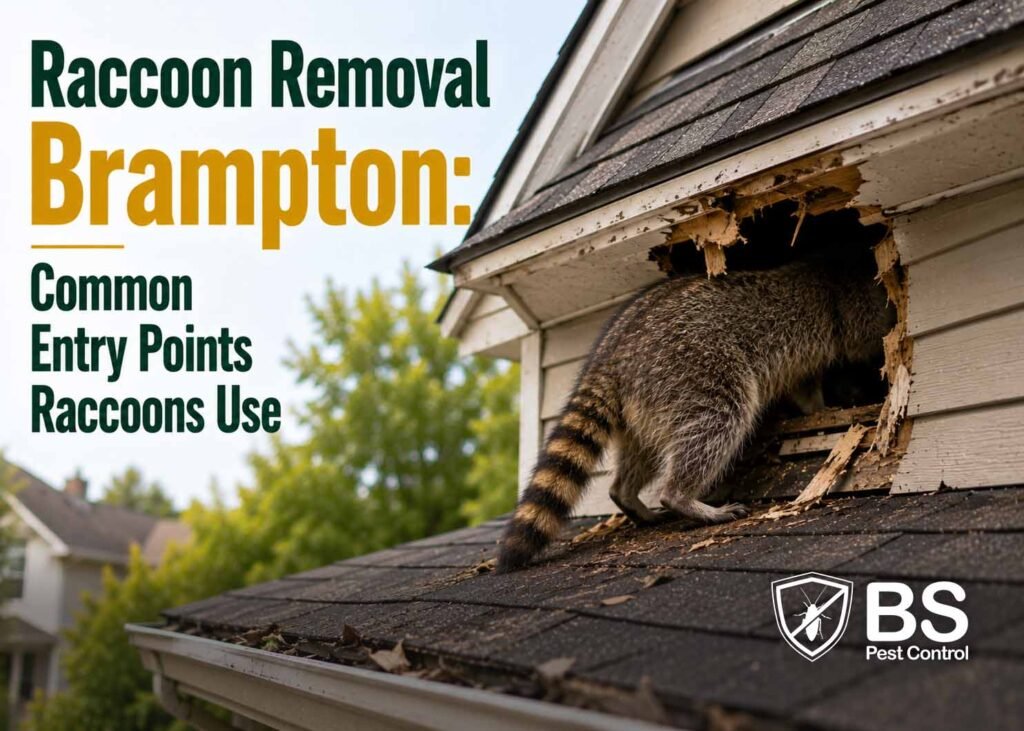
Help Brampton homeowners identify common raccoon entry points, recognize early signs of an intrusion, and understand how professional removal and exclusion protect the property.
Key Takeaways
- Roof vents, soffits, fascia boards, and uncapped chimneys are common raccoon entry points.
- Raccoons can enlarge small openings by pulling apart weakened materials.
- Heavy nighttime noises and roof damage may indicate an active intrusion.
- Never repair or seal an opening before confirming that no raccoons remain inside.
- Lasting raccoon control requires humane removal and durable exclusion work.
Table of Contents
- How Raccoons Enter Brampton Homes
- Common Raccoon Entry Points
- Signs an Entry Point Is Active
- How Professionals Inspect a Property
- Why Immediate DIY Repairs Are Risky
- How to Prevent Future Entry
- Frequently Asked Questions
A loose soffit panel may look like a minor maintenance issue. To a raccoon searching for shelter, it can provide a direct route into a warm attic.
Raccoons are strong climbers with capable paws. They can reach rooflines using trees, fences, downspouts, and attached structures. Once there, they may pull apart weakened materials to create a larger opening.
Professional Raccoon Removal Brampton identifies how the animal entered before removal begins. Finding and securing every vulnerable opening is necessary to prevent another raccoon from moving into the same space.
How Raccoons Gain Access to Residential Properties
Raccoons regularly inspect buildings while searching for safe denning spaces. They are particularly interested in quiet, dry areas protected from weather and predators.
An existing opening makes entry easier, but a raccoon does not always need a large gap. Damaged roof components, loose panels, and weak repairs can often be pulled apart.
Residential properties may also provide several climbing routes. A raccoon can travel along a fence, climb a nearby tree, cross a garage roof, and reach the main roofline without approaching from the ground.
Once a raccoon finds a suitable entrance, it may use the same route repeatedly. Scratches, fur, dark rub marks, and displaced materials can develop around an active opening.
Common Raccoon Entry Points Around Brampton Homes
A complete inspection must cover the entire exterior. Repairing only the most obvious damage can leave other weak areas available.
Roof Vents
Plastic or lightweight roof vents can become brittle or damaged over time. Raccoons may pull off vent covers or break through weakened sections to enter an attic.
The opening beneath a damaged vent provides direct access to the roof cavity. Wildlife-resistant covers can protect these areas after the attic is confirmed empty.
Loose or Damaged Soffits
Soffits cover the underside of roof overhangs. Loose panels, water damage, and poor repairs can create openings that raccoons can enlarge.
Soffit entry points may be difficult to see from the ground. Damage often appears near roof intersections, gutters, and lower roof sections.
Fascia Boards and Roof Edges
Rotten wood and gaps along the roof edge provide another route into the building. A raccoon may pull at weak fascia boards until it creates enough room to enter.
Regular roof maintenance helps identify these problems before wildlife finds them.
Uncapped Chimneys
An open chimney provides a sheltered vertical space that may attract a female raccoon looking for a den. Attempting to light a fire or remove the animal from below creates serious risks.
A suitable chimney cap can help prevent entry after professionals confirm that the chimney is empty.
Roof Intersections
Areas where two roof sections meet may contain gaps or weak materials. These spaces can be difficult to inspect and may remain unnoticed until noises begin inside.
Damaged Shingles and Roof Decking
Loose shingles alone may not provide enough room for entry. However, damaged roofing combined with weak decking can allow a raccoon to enlarge the opening.
Open Garage Doors
A garage door left open overnight gives raccoons easy access to stored food, garbage, and sheltered areas. From the garage, they may enter wall spaces or the attic through additional openings.
Spaces Beneath Decks and Additions
Ground-level gaps beneath decks, porches, sheds, and home additions can provide protected denning areas. Raccoons may dig beneath shallow barriers to gain access.
| Entry Point | Why Raccoons Use It |
| Roof vents | Weak covers provide direct attic access |
| Soffits | Loose panels can be pulled apart |
| Fascia boards | Rot and damage create openings |
| Chimneys | Provide enclosed, sheltered denning space |
| Roof intersections | Gaps may remain hidden from ground-level view |
| Garages | Open doors provide access to food and shelter |
| Decks and additions | Ground-level spaces offer protected dens |
Signs That Raccoon Entry Points Are Active
Finding an opening does not confirm that a raccoon currently uses it. Professionals examine the surrounding area for signs of recent activity before completing repairs.
Fresh Damage or Displaced Materials
Bent vents, torn soffits, lifted shingles, and newly exposed wood can indicate recent entry. Materials may appear pushed inward or pulled away from the building.
Tracks and Dark Rub Marks
Repeated use can leave paw prints, scratches, fur, or dark marks around an entrance. These signs may be visible on siding, gutters, downspouts, or roof surfaces.
Heavy Nighttime Noises
Slow footsteps, thumping, scratching, and dragging sounds above the ceiling may indicate a raccoon. Chirping or crying sounds can suggest that young are also present.
Droppings or Strong Odours
Waste and nesting material can create noticeable odours. Avoid touching droppings or contaminated insulation because professional cleanup may be required.
Repeated Roof Activity
Security cameras may capture raccoons climbing onto the roof or approaching the same section each night. This can help identify an entrance that is difficult to see from the ground.
If you notice these signs, arrange Wildlife removal Brampton before sealing or repairing the suspected opening.
How Professional Brampton Raccoon Removal Inspections Work
A proper inspection looks beyond the visible hole. The technician examines the building, nearby climbing routes, and other areas that may allow future entry.
The inspection commonly includes:
- Checking roof vents, soffits, fascia boards, and chimneys.
- Locating damaged roofing and weak exterior materials.
- Identifying tracks, droppings, nesting material, and rub marks.
- Determining whether dependent young are present.
- Finding secondary openings that may require protection.
- Assessing contamination and property damage.
- Creating a humane removal and exclusion plan.
The technician may also inspect decks, sheds, garages, and ground-level openings. Raccoons can use more than one part of a property for shelter.
Accurate inspection is central to effective Raccoon control Brampton. Without it, repairs may trap animals inside or leave another entry point exposed.
Why Sealing an Entry Point Immediately Is Risky
Finding an opening often makes homeowners want to close it immediately. That response can create more damage if raccoons remain inside.
A trapped adult may tear through walls, ceilings, roofing, or vents while trying to escape. If a mother is locked outside, she may damage the repaired area while attempting to reach her young.
Immediate sealing can also lead to:
- Dependent young being trapped inside
- Strong odours from animals or waste
- Damage to interior ceilings and walls
- Raccoons creating a second exit
- Separation of a mother and her young
- Unnecessary stress and harm to the animals
Professional removal confirms that every raccoon has left before permanent exclusion begins.
How Humane Removal and Exclusion Work Together
Removal addresses the animals currently inside. Exclusion protects the building after they leave. Both steps are needed for lasting results.
A one-way exclusion door may be used when an adult raccoon is present without dependent young. The device allows the raccoon to leave but prevents it from returning through the same entrance.
When young are present, a trained professional may use a family-reunification method. The young are placed safely near the entrance so their mother can retrieve and relocate them.
After the property is confirmed empty, the entrance can be repaired and reinforced. Other vulnerable areas may also require protection.
Professional Brampton raccoon removal should never rely on sealing the visible hole alone.
How to Prevent Raccoons from Entering Again
Routine exterior maintenance helps prevent small weaknesses from becoming wildlife entrances.
Protect Roof Vents and Chimneys
Install wildlife-resistant vent covers and a suitable chimney cap. Inspect them regularly for damage or movement.
Repair Soffits and Fascia Promptly
Replace damaged or rotten materials before raccoons can pull them apart. Temporary patches may not withstand repeated wildlife pressure.
Trim Roof Access Routes
Trim branches that provide easy access to the roof where practical. Check nearby fences, sheds, and downspouts that may also serve as climbing routes.
Secure Ground-Level Openings
Use suitable exclusion barriers around decks, sheds, and additions. Barriers should extend below ground to prevent digging underneath.
Remove Food Sources
Secure garbage and compost containers. Bring pet food indoors and clean up birdseed, barbecue residue, and fallen fruit.
Inspect the Exterior Seasonally
Check the roofline and ground-level structures during spring and fall. Early repairs are usually simpler than addressing an established wildlife intrusion.
Frequently Asked Questions
What Is the Most Common Raccoon Entry Point?
Roof vents, damaged soffits, and weak roof edges are common access points. The exact entrance depends on the building’s condition and available climbing routes.
Can Raccoons Enter Through Small Openings?
Raccoons can enlarge gaps by pulling apart damaged or weakened materials. Openings that appear minor should be repaired after confirming no animals are inside.
Should I Close an Opening After Seeing a Raccoon Leave?
No. The raccoon may return, and dependent young could remain inside. Arrange a professional inspection before completing repairs.
Can Raccoons Enter Through a Chimney?
Yes. Uncapped chimneys can provide sheltered denning spaces. Never use the fireplace if you suspect wildlife is inside.
Will Repairing the Main Entrance Prevent Another Intrusion?
Repairing the primary entrance is essential, but other vulnerable areas should also be protected. A raccoon may target a nearby weak point if only one opening is secured.
Raccoons often enter through small weaknesses that remain unnoticed until damage or nighttime noises begin. If you suspect an active entry point, contact BS Pest Control for a free quote. The team can inspect the property, provide humane removal, and reinforce vulnerable areas after the raccoons have left.