A lot of homeowners assume “eco-friendly pest control” means weaker results. Spray something mild, hope for the best, call back in three weeks when the ants are back under the sink. That assumption is outdated, and it’s costing people money on repeat visits they don’t need.
Brampton has grown fast. New builds sitting next to older neighborhoods, ravines and green spaces running through residential areas, warehouses and food businesses packed along the industrial corridors. All of that creates ideal conditions for pests to move in — and a growing number of residents who don’t want harsh chemicals sitting in their kitchens, backyards, or break rooms to deal with it.
TL;DR: Eco-friendly pest control uses low-toxicity, targeted treatments and prevention-first methods instead of heavy chemical spraying, and it works just as well when handled by trained technicians. Brampton homes and businesses are turning to green pest control for safer results around kids, pets, and food prep areas without giving up effectiveness. The key is picking a provider who backs up the “eco-friendly” label with real product choices, not just marketing.
1. What Eco-Friendly Pest Control Actually Means
Eco-friendly pest control isn’t one product or one trick. It’s an approach built around a few core ideas:
- Using low-toxicity or naturally derived products wherever they’ll actually work
- Treating the specific problem area instead of spraying an entire property
- Leaning on prevention — sealing entry points, removing food and water sources, monitoring — rather than repeat chemical applications
- Choosing humane methods for wildlife instead of poison
The goal is the same as traditional pest control: get rid of the problem and keep it gone. The difference is in what gets used to get there, and how much of it ends up in the air, on surfaces, or in a yard where kids and pets spend time.
2. Why Brampton Homes and Businesses Are Switching to Green Pest Control
Three things are driving this shift locally.
Families want fewer chemicals indoors. Parents don’t want residue on kitchen counters or nursery floors. Green pest control Brampton providers address this directly by matching the treatment to the pest instead of defaulting to the strongest option on the shelf.
Food businesses need it. Restaurants, cafes, and grocery operations in Brampton’s commercial corridors have to meet food safety standards. Harsh chemical treatments near food prep areas create compliance headaches. Environmentally friendly pest control fits those requirements without extra paperwork.
Pets and gardens matter to people. A treatment that’s fine for a bare basement isn’t necessarily fine for a backyard where a dog spends half its day. Eco-conscious methods reduce that risk.
3. How Environmentally Friendly Pest Control Works
Inspection first. A technician walks the property to find where pests are entering, nesting, and feeding. This step matters more in eco-friendly pest control than in blanket-spray approaches, because targeted treatment depends on knowing exactly where to apply it.
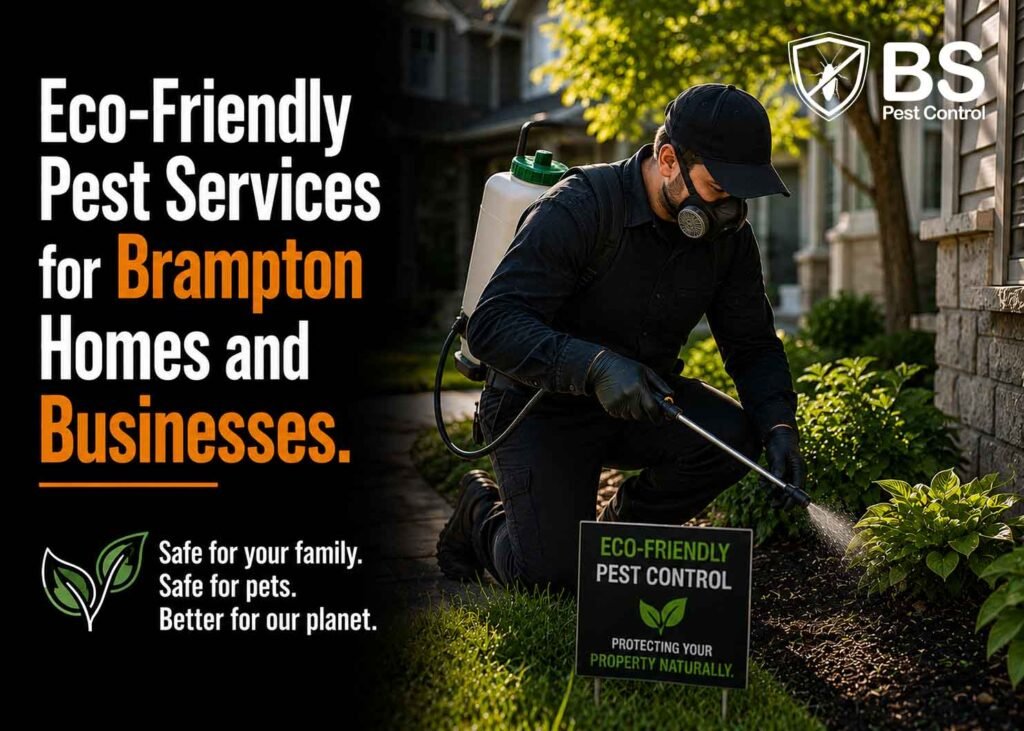
Targeted, low-toxicity treatment. Instead of fogging a whole basement, the technician treats known entry points, nests, and activity zones. Less product used, same result, less exposure for the people living or working there.
Exclusion and sealing. Gaps around foundations, vents, and utility lines get closed off. This is the step that actually stops pests from coming back, and it doesn’t involve a single chemical.
Sanitation guidance. Pests show up because of food, water, and shelter. Removing those draws — proper waste storage, fixing leaks, clearing clutter — cuts down on repeat visits far more than another round of spray ever will.
Follow-up monitoring. Ongoing plans check for new activity before it becomes an infestation again, which means less product used over the life of the account, not more.
4. Common Pests Brampton Deals With — and the Eco Approach to Each
Ants and cockroaches. Bait stations placed at activity points work better than surface spraying and use a fraction of the product.
Bed bugs. Heat treatment eliminates bed bugs at every life stage without chemical residue in the home — a genuinely eco-friendly option that also happens to be one of the most effective.
Wasps. Nest removal handled directly and safely, without blanket-spraying an entire yard or patio.
Wildlife (raccoons, squirrels, skunks, bats). Humane exclusion and relocation instead of poison, which protects the animal, the property, and anyone nearby. Our wildlife removal team handles this the same way regardless of species — safely, and without harmful bait.
Rodents. Sealing entry points and using enclosed, non-toxic trapping methods rather than loose poison bait that can end up somewhere it shouldn’t.
5. Eco-Friendly vs. Traditional Pest Control: What’s the Real Difference
| Factor | Eco-Friendly Pest Control | Traditional Pest Control |
| Products used | Low-toxicity, targeted | Broad-spectrum chemical sprays |
| Application | Specific entry points and activity zones | Often whole-property treatment |
| Safety around kids/pets | Lower risk, faster re-entry time | Longer wait times often needed |
| Effectiveness | Equal when applied correctly | Equal when applied correctly |
| Long-term results | Strong, due to prevention focus | Depends on follow-up visits |
| Best for | Homes, food businesses, families | Severe or resistant infestations in some cases |
The honest answer is that both approaches can solve a pest problem. The difference shows up in what’s left behind afterward, and in how many repeat treatments a property ends up needing.
6. What to Look For in an Eco-Friendly Pest Services Provider
The term “eco-friendly” gets used loosely in this industry, so a few direct questions separate the real thing from a marketing label:
- What specific products do they use, and are they willing to name them?
- Do they treat the whole property by default, or only active areas?
- Are technicians licensed and trained in low-toxicity application methods?
- Do they offer prevention and sealing as part of the service, not just spraying?
- Is their wildlife work humane, with no poison bait involved?
- Do they carry certifications that back up the claim?
A provider who can answer all of that without hesitation is doing eco-friendly pest control for real, not just putting it on a truck wrap.
7. Cost of Eco-Friendly Pest Control in Brampton
Pricing depends on the pest, the size of the property, and whether it’s a one-time treatment or an ongoing plan. A single-visit ant or wasp treatment costs less than a multi-visit bed bug or rodent exclusion job. Commercial properties, especially food-service locations, are usually priced around square footage and visit frequency.
Eco-friendly methods aren’t automatically more expensive than traditional treatment — targeted application often uses less product, which can offset the cost difference. The clearest way to know is a property-specific quote. Contact us for a free assessment and pricing based on the actual job, not a generic estimate.
FAQ
Is eco-friendly pest control as effective as regular pest control?
Yes, when it’s done by trained technicians who match the method to the pest. The products are gentler, but the application is more targeted, which makes up the difference.
How soon can I go back into a room after eco-friendly pest control Brampton treatment?
Re-entry times are typically much shorter than with heavy chemical sprays, often within an hour or two, though this depends on the specific treatment used.
Do eco-friendly pest services cost more than traditional treatment?
Not necessarily. Targeted application uses less product overall, which can balance out any difference in per-unit cost.
Is eco-friendly pest control safe for my vegetable garden?
Generally yes, since low-toxicity products break down faster and are applied only where needed rather than across the whole yard. It’s worth confirming with the technician if treatment is happening near edible plants.
Can eco-friendly methods handle a serious infestation, or only small problems?
They can handle serious infestations. Bed bug heat treatment, for example, is one of the most effective options available and is fully non-chemical.
Conclusion
Brampton’s mix of new development, mature neighborhoods, and busy commercial corridors means pest pressure isn’t going away anytime soon. Choosing a provider that treats the problem without loading a property with chemicals is a decision more homeowners and business owners are making every season. If that’s the direction you want to go, reach out to our team for a free quote and an inspection built around eco-conscious, effective treatment.