
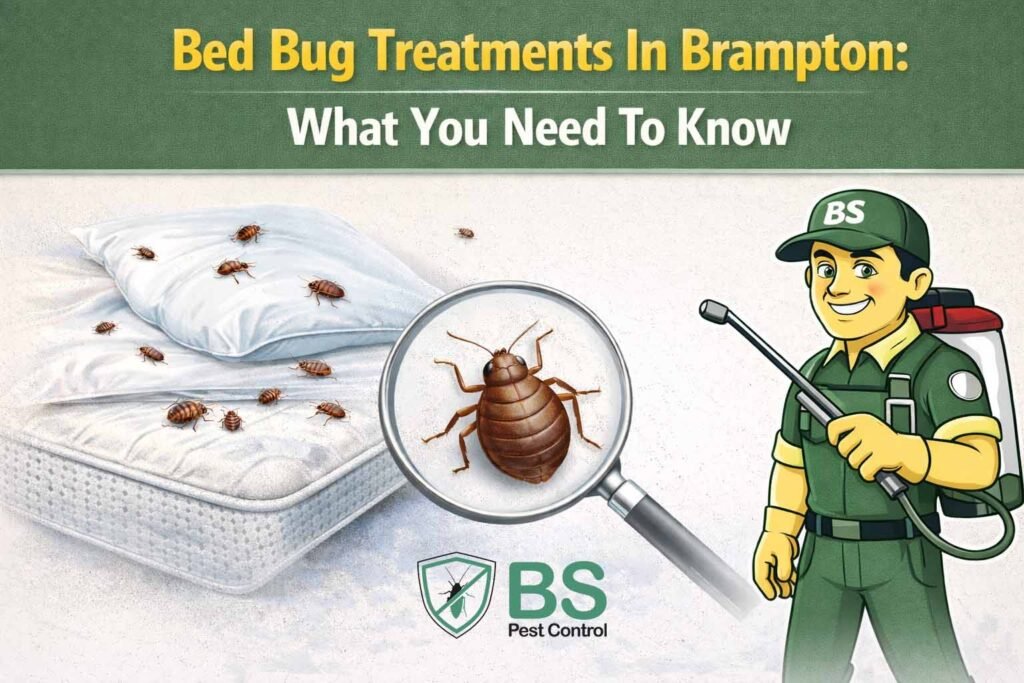
Bed bugs are one of the most stressful pest problems a person can face. They are small, hard to spot, and very good at hiding. They can get into homes through luggage, used furniture, clothing, bags, and shared walls. Health Canada says bed bugs are not known to spread disease, but their bites can appear days later and infestations can be hard to remove without proper treatment.
That is why this topic matters so much for homeowners and renters in Brampton. Bed bugs do not care if a home is clean or messy. Toronto Public Health says anyone can have a bed bug infestation, no matter their income or housing type. Peel Public Health also says people who are not sure what insect they found can contact public health for help with identification.
Objective
This blog explains how bed bug infestations start, how to spot the signs early, what treatment options work best, and what people in Brampton should know before trying to deal with the problem on their own.
Key Takeaways
- Bed bugs are not known to spread disease, but they can cause bites, skin irritation, stress, and loss of sleep.
- Bed bugs can enter any home through travel, furniture, clothing, and shared spaces.
- Health Canada recommends physical control steps like steaming, vacuuming, washing, and reducing clutter, and says heat treatments should be left to professionals.
- A full treatment plan works better than quick spray-only fixes.
Table Of Contents
- How Bed Bugs Get Into Homes
- Signs You May Have Bed Bugs
- Why Fast Action Matters
- Common Bed Bug Treatment Methods
- Why DIY Treatment Often Falls Short
- How To Prepare For Treatment
- What To Do After Treatment
- When Professional Help Makes More Sense
How Bed Bugs Get Into Homes
Bed bugs do not appear because a home is dirty. They usually arrive by hitching a ride. A person may bring them home after travel. They may come in through used furniture, second-hand mattresses, bags, boxes, or clothing. In apartments and shared buildings, they can also move through wall openings, pipes, and cracks. Health Canada recommends checking used furniture carefully, reducing clutter, and sealing cracks and crevices around walls, bed frames, baseboards, and utility entry points.
This is one reason infestations can spread faster than people expect. A single missed item can restart the problem. That is also why many people search for bed bug treatment Toronto or bed bug removal Toronto even when they live in nearby places like Brampton. They are often looking for urgent, nearby help that can stop the spread before it gets worse.
Signs You May Have Bed Bugs
Bed bugs are good at hiding during the day. They often stay in mattress seams, bed frames, box springs, headboards, furniture joints, baseboards, and cracks near sleeping areas. Toronto Public Health notes common signs such as live bugs, reddish-brown stains, black spots, and cast skins.
Common warning signs include:
- itchy bites after sleeping
- small blood spots on sheets
- dark spotting on mattresses or bed frames
- tiny shed skins near seams or corners
- a live bug seen around the bed, couch, or nearby furniture
Not everyone reacts to bites the same way. Health Canada says a bed bug bite can take up to 14 days to appear. That means a person may already have an infestation before they notice skin marks.
Why Fast Action Matters
Bed bugs multiply quickly if they are ignored. A small issue in one room can spread into furniture, clothing, and other rooms. Toronto Public Health says bed bug infestations can lead to stress, anxiety, allergic reactions, and skin infections caused by scratching.
Fast action matters for another reason. The longer bed bugs stay in a home, the more hiding places they find. That makes treatment harder. Early treatment is usually simpler, more focused, and less disruptive than waiting until the problem grows.
Common Bed Bug Treatment Methods
A proper treatment plan usually includes more than one method. Health Canada says physical methods can include steam cleaning, vacuuming, heating, freezing, washing, and throwing out some badly infested items. It also says heat treatments should be left to professionals.
The most common treatment steps include:
- careful inspection of beds, furniture, and nearby cracks
- vacuuming visible bugs and eggs
- steam treatment for seams, edges, and hiding areas
- washing and drying clothing and bedding on the right heat settings
- decluttering rooms so fewer bugs stay hidden
- sealing cracks and small openings
- targeted pesticide use where legally approved and needed
Good treatment is not about doing one thing once. It is about combining methods in the right order.
Why DIY Treatment Often Falls Short
Many people try sprays first because they want a quick fix. The problem is that bed bugs are rarely all out in the open. Spray may hit a few bugs, but eggs and hidden bugs can survive in cracks, furniture joints, and wall spaces. A Manitoba government treatment guide says pesticide use alone will not kill bed bugs at all life stages and that successful treatment depends on an integrated approach.
DIY treatment can also create delays. People may spend money on products that do not solve the source of the problem. In some cases, they may even spread bugs to new rooms while moving items around without a plan. That is why many homeowners start searching for a professional bed bug exterminator Toronto or affordable bed bug treatment Toronto option after home methods fail.
How To Prepare For Treatment
Preparation is a big part of success. Even the best treatment may fail if the home is not prepared properly. Health Canada recommends getting rid of clutter, vacuuming often, and checking hidden entry points and cracks.
Helpful preparation steps include:
- wash bedding, clothes, and soft items as instructed
- dry items fully before sealing them in clean bags
- reduce clutter around sleeping areas
- empty drawers or shelves if the treatment plan says to do so
- move furniture only as directed
- avoid taking infested items into clean rooms
Preparation must be careful and organized. Random cleaning without a plan can make the job harder.
What To Do After Treatment
Treatment does not end the same day it starts. Bed bugs may still need follow-up checks. Homes often need repeat inspection and continued cleaning steps. Vacuuming, sealed laundry handling, clutter control, and monitoring all help reduce the chance of a return. Public health guidance also supports prevention through regular inspection and reducing hiding places.
It is also important to watch for signs over the next few weeks. A treatment plan may need adjustment depending on how heavy the infestation was and where the bugs were hiding.
Choose A Smarter Way To End The Problem
Bed bug treatment works best when people act early, follow preparation steps, and use a complete treatment plan instead of relying on one quick product. The goal is not just to kill visible bugs. The goal is to stop eggs, hidden bugs, and repeat infestations too. If you are dealing with ongoing signs at home, contact BS Pest Control for clear guidance and the right next steps for safe, effective bed bug treatment in Brampton.