
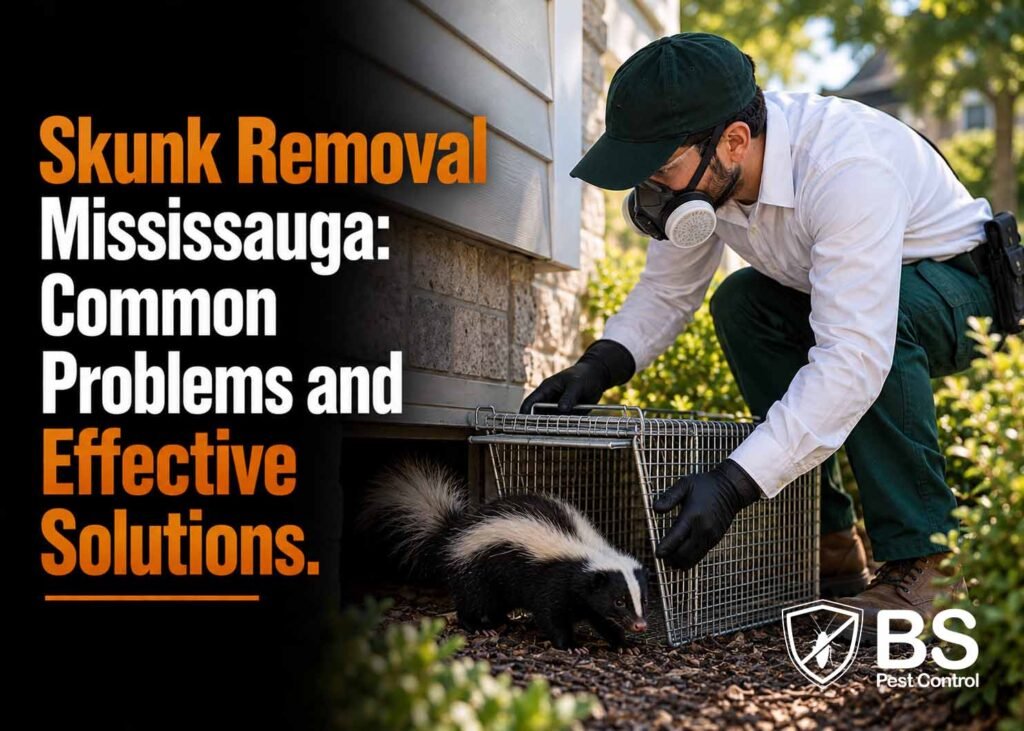
A Mississauga homeowner called us at 6 a.m. after her dog got sprayed in the backyard for the second time in a month. The first spray she’d chalked up to bad luck. The second one told her something else was going on, a skunk had moved in under the back deck and wasn’t going anywhere on its own. By the time she called, the smell had already worked its way into the deck wood and the soil underneath it.
Skunks are one of the more manageable wildlife problems, but only if they’re handled correctly. Get the approach wrong, and you’re not just dealing with a skunk anymore, you’re dealing with weeks of lingering odor on top of it.
Why Skunks Are Drawn to Mississauga Properties
Skunks look for two things: shelter and food. Mississauga’s mix of suburban yards, mature landscaping, and green corridors gives them both. Decks, sheds, and porches with gaps underneath offer exactly the kind of low, dark, protected space a skunk wants for a den.
Food sources are just as easy to find. Skunks dig in lawns for grubs and insects, raid garbage bins left unsecured, and will happily eat pet food left outside overnight. A yard with all three, shelter, grubs, and accessible food, is close to ideal for a skunk looking to settle in.
Common Skunk Problems Homeowners Deal With
Most skunk complaints in Mississauga fall into a few repeat patterns:
- Torn-up lawns. Small, cone-shaped divots across a lawn, usually overnight, are a sign of a skunk digging for grubs.
- Denning under structures. Gaps under decks, sheds, and porches attract skunks looking for a safe, enclosed space to den, especially in spring when females are preparing to give birth.
- Pet encounters. Dogs are naturally curious and often approach a skunk before realizing what it is, which is how most spray incidents happen.
- Garbage and compost raiding. Knocked-over bins and scattered garbage overnight are a common sign a skunk has found an easy food source nearby.
- Odor without a visible skunk. Sometimes the first sign isn’t a sighting at all, just a persistent musky smell near a specific part of the yard.
Why DIY Skunk Removal Usually Goes Wrong
Skunks aren’t aggressive by nature. They’d rather avoid confrontation entirely, and spraying is a last resort, not a first move. The problem is that DIY trapping often creates exactly the kind of surprised, cornered situation that triggers a spray.
A trap set without understanding the skunk’s den location or movement pattern can also miss the animal entirely, or catch it in a way that startles it right at the moment someone approaches to deal with the trap. Add in the very real chance the skunk isn’t alone, mothers often den with several young, and a DIY attempt frequently turns into a bigger mess than the original problem.
Dealing With Skunk Odor
Skunk spray doesn’t fade quickly on its own. It clings to porous surfaces like wood decking, siding, and soil, and can linger for weeks if left untreated. Standard household cleaners don’t break down the oil compounds in skunk spray, which is why the smell tends to come back on humid days even after a surface has been wiped down.
If a pet gets sprayed directly, a diluted mixture of hydrogen peroxide, baking soda, and dish soap works far better than tomato juice, which mostly masks the smell rather than neutralizing it. For odor that’s worked into a deck or the ground near a den site, professional treatment is usually needed to fully clear it.
What Professional Skunk Removal Involves
Effective skunk removal starts with locating the den, not just the animal. A skunk seen in the yard once is different from a skunk denning under a structure, and the removal approach depends on knowing which one you’re dealing with.
Professional trapping accounts for the skunk’s actual movement pattern and checks for young before removal, since separating a mother from her litter without a plan creates a bigger problem than the original one. Once the skunk is safely removed, the den site is cleaned, and entry points are sealed to stop a new skunk from finding the same spot attractive.
Our Skunk removal service handles the full process, from confirming the den location to sealing the property afterward, minimizing the risk of a spray incident throughout.
How to Prevent Skunks From Coming Back
A few changes to the yard go a long way toward keeping skunks from settling in again:
- Seal gaps under decks, sheds, and porches with heavy-gauge mesh buried a few inches into the ground
- Treat lawn grubs, since a grub-free lawn is far less appealing to a foraging skunk
- Secure garbage bins with tight-fitting lids and avoid leaving pet food outside overnight
- Install motion-activated lights near common den spots, since skunks generally avoid well-lit areas
- Check the yard periodically for fresh digging or den activity, especially in early spring
FAQ
How do I know if I have a skunk denning on my property versus just passing through?
Repeated digging in the same area, a lingering musky smell near a deck or shed, and sightings of the same animal at the same time each night all point to denning rather than a one-time visit. A skunk just passing through usually won’t leave this kind of pattern behind.
What should I do if my dog gets sprayed by a skunk?
Rinse your dog with a mixture of hydrogen peroxide, baking soda, and a small amount of dish soap, applied thoroughly and rinsed well, which breaks down the oil far better than tomato juice. Keep your dog away from the den area afterward, since a second encounter is common if the skunk hasn’t been removed.
Can I remove a skunk myself without getting sprayed?
It’s possible, but risky. Skunks spray defensively when they feel cornered or surprised, which is exactly the situation an inexperienced DIY trapping attempt tends to create. Professional skunk exterminator services handle trapping in a way that minimizes that risk.
How long does skunk odor last after the animal is removed?
Without treatment, skunk odor can linger in wood, soil, and siding for several weeks, especially in humid weather when the oil compounds reactivate. Professional odor treatment after removal speeds this up considerably compared to waiting for it to fade naturally.
Do skunks come back to the same den site after removal?
If the entry point isn’t sealed, yes, the same gap under a deck or shed remains attractive to other skunks even after the original one is gone. Sealing the den site is a necessary last step, not an optional extra, after removal.
Handle a Skunk Problem the Right Way
Skunks aren’t difficult to deal with when the den is identified early and handled by someone who knows how to avoid triggering a spray. Left alone, the same den site keeps drawing activity, and any odor that’s worked into your deck or lawn only gets harder to clear the longer it sits.
If you’re dealing with digging, denning, or that unmistakable smell in your yard, our team at The BS Pest provides skunk control Mississauga homeowners can count on, from trapping through to full odor treatment. Contact us for a free inspection.