
A Brampton homeowner noticed her dog barking at the same corner of the yard every night for a week straight. She assumed it was a raccoon until she finally caught a look under the shed with a flashlight, an opossum, curled up with a litter of babies clinging to her back. What looked like an isolated sighting turned out to be a den that had been active for weeks.
This is the pattern with opossums more than most wildlife. They’re quiet, they’re nocturnal, and they don’t announce themselves the way raccoons or squirrels do. By the time most homeowners realize there’s a den, not just a visitor, the animal has usually settled in.
Opossums in Brampton: More Common Than People Think
Opossums are North America’s only marsupial, and Brampton’s mix of ravines, backyards, and green space gives them plenty of cover. They’re drawn to properties with easy shelter, under decks, sheds, porches, and sometimes attics, along with a reliable food source like garbage, pet food left outside, or fallen fruit.
Most opossum sightings are brief and harmless. An opossum passing through a yard at night, foraging and moving on, isn’t cause for concern. The situation changes once an opossum decides a specific spot on your property is worth staying in.
Signs an Opossum Has Moved In, Not Just Passed Through
The difference between a passing visitor and a resident opossum usually comes down to repetition. Watch for:
- The same animal seen in the same spot multiple nights in a row
- A strong, musky odor near a deck, shed, or crawl space, especially if it doesn’t fade
- Flattened insulation or nesting material in an attic or crawl space
- Droppings concentrated in one area rather than scattered across the yard
- Hissing or clicking sounds coming from under a structure at night
One sighting is normal wildlife activity. A pattern building around one location usually means denning has started.
Why DIY Opossum Removal Is Riskier Than It Looks
Opossums have a reputation for being docile, and for the most part that’s accurate, they’d rather play dead or retreat than fight. The risk comes in when a homeowner tries to physically remove one, especially a mother with young, without the right approach.
A cornered opossum will hiss, show its teeth, and can bite if it feels trapped with no way out. DIY traps set without understanding opossum behavior often catch the wrong animal, fail to catch anything, or separate a mother from her young, which creates an even messier problem when the young are left behind in a den site.
There’s also a legal and practical side. Relocating wildlife incorrectly, or releasing an animal somewhere it can’t survive, isn’t just ineffective, it can also violate local wildlife regulations depending on how it’s handled.
Health and Safety Concerns With Opossums
Opossums carry a lower disease risk than many other backyard wildlife, and they’re actually known for eating ticks in large numbers, which helps rather than hurts most yards. That said, direct contact still carries risk. They can carry parasites, fleas, and in some cases bacteria that’s not safe to handle without protective equipment.
A den site that’s been active for weeks also means accumulated droppings, which need proper cleanup, not just an animal removed. This is part of why professional opossum control in Brampton includes cleanup and sanitizing, not just trapping and releasing.
What Happens During Professional Opossum Removal
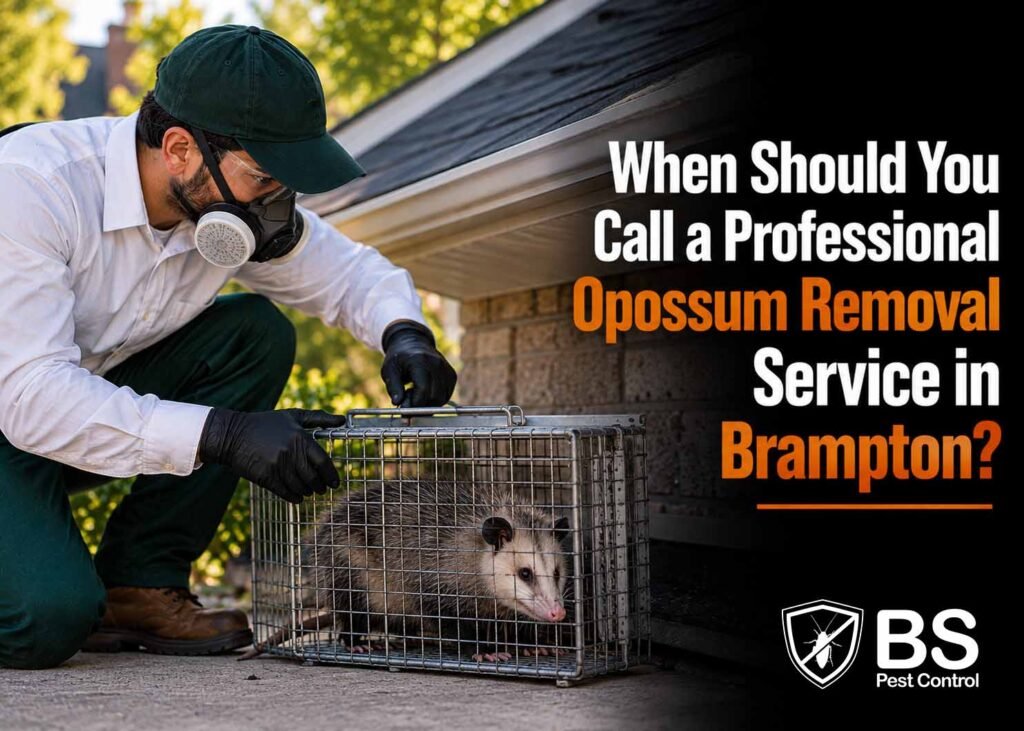
A professional opossum exterminator starts with confirming the den location and checking whether young are present, since timing and method both depend on that. Traps are placed based on the animal’s actual movement pattern, not guesswork, which is why professional trapping succeeds far more often than a store-bought trap set without that context.
Once the opossum, and any young, are safely removed, the den site gets cleaned and the entry point sealed so the same spot doesn’t attract another animal. Our Opossum Removal service handles the full process, from confirming the den to sealing the property afterward, using humane methods throughout.
When to Call Right Away vs. When to Monitor
Not every opossum sighting needs an immediate call. Here’s how to tell the difference:
Monitor if:
- You’ve seen an opossum once or twice, moving through the yard at night
- There’s no odor, droppings buildup, or repeated activity in one spot
- The animal moves on and doesn’t return over several nights
Call a professional if:
- The same opossum, or evidence of one, keeps showing up in the same location
- You notice a strong odor or droppings concentrated under a deck, shed, or in the attic
- You hear sounds coming from a specific area of the house at night
- You’ve spotted a den with visible young
FAQ
Are opossums dangerous to have in the yard?
Opossums are generally not aggressive and prefer to avoid confrontation, often playing dead when threatened rather than attacking. The main risk comes from cornering one or attempting to handle it directly, which can lead to defensive biting.
How do I know if an opossum has babies with it?
Young opossums cling to their mother’s back or ride in her pouch during early development, so spotting a mother usually means spotting the young at the same time. This is one of the biggest reasons professional removal timing matters, since separating a mother from young without a plan for the young creates additional problems.
Will an opossum leave on its own if I just wait?
Sometimes, especially if the animal is just passing through, but a den site with an established food source often won’t clear on its own. If the same signs keep appearing over multiple weeks, waiting usually just extends the timeline before removal becomes necessary anyway.
Can I use a store-bought trap for opossum removal?
You can, but store-bought traps often fail to account for den location, presence of young, or local regulations around trapping and relocating wildlife. A professional opossum wildlife removal service places traps based on the animal’s actual pattern, which is far more reliable.
Does opossum removal include repairing the damage or cleaning the area?
Professional removal typically includes sealing the entry point the opossum used and cleaning the den area, since droppings and nesting material left behind can create odor and sanitation issues. It’s worth confirming this is included when comparing services.
Get Opossums Out Safely and For Good
An opossum passing through a Brampton yard once or twice usually isn’t worth worrying about. One that’s settled in under a deck, in a shed, or inside an attic is a different story, and it rarely resolves without help. The sooner a den is identified, the easier it is to remove the animal safely and seal the property against a repeat visit.
If you’ve noticed repeated activity, an odor, or signs of denning on your property, our team at The BS Pest handles professional opossum removal across Brampton, humanely and with full cleanup. Contact us for a free inspection.