A flickering light that an electrician can’t explain. A breaker that trips for no reason. A faint burning smell behind the wall that disappears as soon as you go looking for it. These small, strange problems are often the first sign of rat damage to electrical wiring, and by the time most people notice, the damage has already been sitting inside their walls for weeks.
Rats don’t need much of an opening to get into a home, and once they’re in, wiring is one of the first things they go after. It’s not random destruction. It’s biology.
TL;DR: Rats have front teeth that grow continuously, so they gnaw on anything hard enough to wear them down, including electrical wiring. This creates a real fire risk, damages insulation, and drives up energy bills. Most home insurance won’t cover it. Catching the signs early and sealing entry points is the only reliable way to stop it before it becomes a costly repair.
Why Rats Chew Electrical Wires
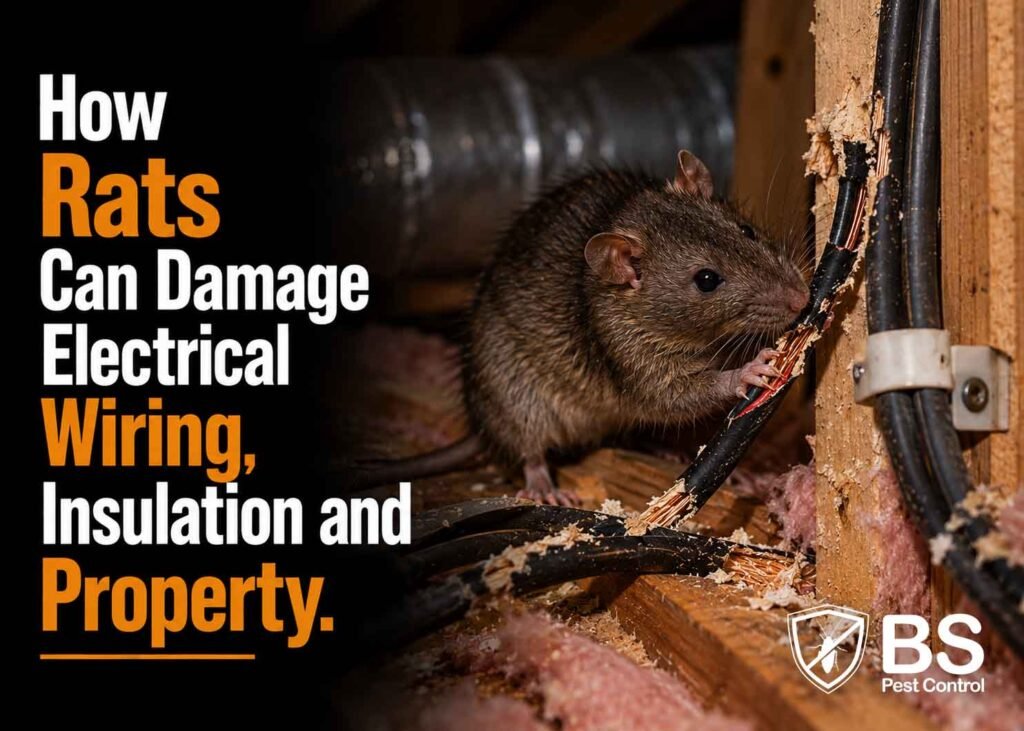
A rat’s incisors grow throughout its life. If it doesn’t wear them down, they get long enough to interfere with eating. So rats gnaw. Wood, drywall, plastic pipe, and wire insulation are all fair game, and PVC wire coating is soft enough that it’s an easy target.
This is also why rats chewing electrical wires isn’t limited to old homes with outdated wiring. New builds get hit just as often, because the wire itself, not the age of the building, is what attracts the chewing.
Walls, attics, and crawl spaces give rats cover while they work. That’s exactly where most household wiring runs, which puts the two in constant contact.
The Real Cost of Rats Chewing Electrical Wires
Exposed copper strands touching each other or a grounded surface can spark. Inside a wall cavity packed with insulation, paper, and wood framing, that spark has plenty to ignite. Fire investigators regularly list rodent damage as a contributing cause in electrical fires, particularly ones that start in attics or behind walls with no obvious source.
Beyond fire risk, damaged wiring causes:
- Circuit breakers that trip repeatedly without a clear reason
- Appliances that stop working intermittently
- Dead outlets in one part of a room but not another
- Higher electrical repair bills once an electrician has to trace the wiring back to the chewed section
Tracing and replacing damaged wiring usually means opening up drywall, which turns a rat problem into a full repair project involving both an electrical and a construction bill.
How Rat Damage to Insulation Happens
Wiring isn’t the only casualty. Rats shred fiberglass and foam insulation to build nests, flattening it and packing it with droppings, urine, and nesting material. Compressed insulation loses most of its ability to hold heat, so your furnace or air conditioner works harder to keep the temperature steady.
Homeowners often notice a jump in their heating bill before they ever spot a rat, simply because the attic insulation has been torn apart and packed into nests along the joists.
Contaminated insulation also has to be removed and replaced rather than cleaned, since rat urine and droppings carry pathogens that aren’t safe to leave in a living space.
Warning Signs of Rodent Damage to Wiring
Rats are nocturnal and stay hidden, so most people catch the damage through side effects rather than seeing the animal itself. Watch for:
- Scratching or scurrying sounds in walls or the ceiling at night
- Gnaw marks on baseboards, wire casings, or wood framing
- Dark greasy smudges along walls where rats travel the same path repeatedly
- Droppings near the furnace, in cabinets, or along the edges of the attic
- A burning or musty smell with no clear source
- Lights that flicker or outlets that stop working without explanation
If two or more of these show up at once, it’s worth having someone check the attic and crawl spaces before the problem spreads further.
Other Rat Property Damage You Might Be Missing
Wiring and insulation get the most attention because of the fire risk, but rat property damage doesn’t stop there. Rats also chew through:
- Wooden beams and floor joists, which weakens structural framing over time
- PVC and PEX plumbing lines, leading to slow leaks inside walls
- HVAC ductwork, which lets conditioned air escape into the attic instead of your rooms
- Stored boxes, furniture, and drywall, especially in basements and garages
None of this shows up on a home inspection unless someone is specifically looking for it, which is why rat problems tend to get discovered late.
How to Stop Rats From Damaging Your Home
Prevention comes down to keeping rats out and removing what’s already inside. A few things make the biggest difference:
- Seal gaps around pipes, vents, and the foundation. Rats can squeeze through an opening about the size of a quarter.
- Trim tree branches and shrubs away from the roofline, since they act as a bridge onto the house.
- Store firewood and yard debris away from the exterior walls.
- Keep garbage bins sealed and clear away pet food left outdoors overnight.
- Check the attic and crawl space twice a year for droppings, nesting material, or chew marks.
Once rats are established indoors, do it yourself traps rarely solve the whole problem, since they don’t address the entry points or the wiring damage already done. A proper inspection paired with humane Rat Removal and exclusion work closes the gaps rats are using and stops new rats from moving in behind the last ones.
FAQ
Can a rat actually cause a house fire?
Yes. A rat chewing through the insulation on a live wire can expose bare copper, which sparks against wood framing, insulation, or other wires. This is a recognized cause of electrical fires with no other obvious source.
Does home insurance cover rat damage to wiring?
Most standard homeowner policies list rodent damage as an exclusion, treating it as a maintenance issue rather than a covered peril. Some policies cover the resulting fire even if the rodent damage itself isn’t covered, but this varies by insurer, so it’s worth checking your policy wording directly.
How do I know if it’s rats and not mice or squirrels?
Rat droppings are larger, about the size of a grain of rice or bigger, and gnaw marks tend to be wider. Rats also nest lower, in basements and crawl spaces, while squirrels usually stay in the attic. A visual inspection is the most reliable way to confirm which pest you’re dealing with.
How much does it cost to fix rat damage to electrical wiring?
This depends on how much wiring is affected and how much drywall needs to come down to reach it. Costs can range from a few hundred dollars for a single damaged run to several thousand for widespread damage across multiple rooms. Getting the rats out first prevents the damage from growing while repairs are scheduled.
How long does it take rats to cause serious damage once they’re inside?
Rats can start chewing within days of moving in, and a nesting site can be fully established within a couple of weeks. The longer they stay, the more wiring, insulation, and structural material gets affected, which is why early action matters.
Protect Your Home Before the Damage Spreads
Rat damage to electrical wiring rarely announces itself clearly. It shows up as a flickering light, a strange smell, or a breaker that trips once too often, and by then the rats have usually been active for a while. Catching it early, sealing the entry points, and having the wiring checked is far less expensive than dealing with a fire or a full rewire later.
If you’re hearing noise in the walls or noticing any of the warning signs above, our team at The BS Pest can inspect your property, confirm what you’re dealing with, and handle Rodent Removal the right way, from trapping through to sealing entry points for good. Contact us for a free inspection before the damage adds up.
Written by the pest control team at The BS Pest Control, Ontario