A homeowner in Ottawa called us about a few ants in her kitchen, something she figured she’d deal with over the weekend with a store-bought spray. During the inspection, our technician found a much bigger issue: moisture damage near the foundation that had been quietly attracting carpenter ants for months. The ants in the kitchen were a symptom. The real problem was structural, and it had been building long before she noticed anything at all.
TL;DR: Pests rarely announce themselves early. Most infestations build quietly behind walls, under foundations, or in attics for weeks before visible signs appear. A regular pest inspection checks the places homeowners don’t normally look, catching entry points, moisture issues, and early activity before they turn into a full infestation. Catching problems this early is consistently cheaper and less disruptive than treating an established one.
By the time most people notice a pest problem, it’s already past the early stage. That’s what makes routine inspections worth more than most homeowners expect.
Why Pest Problems Go Unnoticed Until They’re Serious
Pests are good at staying hidden, and that’s not an accident. Survival depends on avoiding detection, so most activity happens in places people rarely check: crawl spaces, attic corners, behind appliances, inside wall voids.
A few mice can live in a wall for weeks before droppings or noise become obvious. Termites can work through structural wood for months with no visible sign beyond a slightly hollow sound when tapped. Even something as visible as a wasp nest can grow from golf-ball size to softball size in a matter of weeks if it’s tucked under an eave nobody looks at.
By the time symptoms show up in living spaces, the source of the problem has usually had a real head start.
What a Professional Pest Inspection Actually Covers
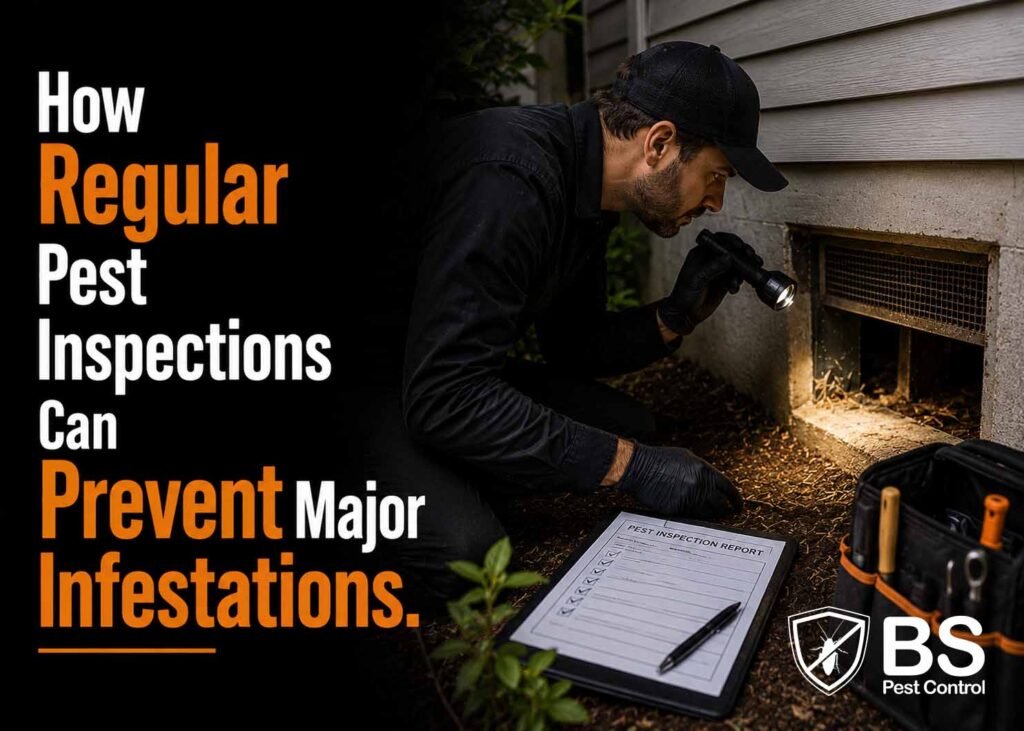
A thorough pest inspection isn’t a quick walk-through. It’s a systematic check of the spots where pests are most likely to enter or establish themselves.
Foundation and exterior walls. Cracks, gaps around utility lines, and settling issues that create entry points.
Attic and roofline. Vents, soffits, and eaves checked for chew marks, droppings, or nesting material.
Crawl spaces and basements. Moisture levels, since damp conditions attract everything from termites to carpenter ants.
Plumbing and utility penetrations. Gaps around pipes entering the home are a common, overlooked entry point for rodents.
Garage and shed structures. Often less sealed than the main house, making them an easy first foothold for wildlife and insects alike.
Each of these gets checked not just for current activity, but for conditions that would make future activity likely.
The Signs Inspectors Look For That Homeowners Miss
Trained eyes catch things that don’t register to most people during a normal week at home.
Small, uniform holes in wood trim can indicate carpenter bees rather than general wear. Faint grease marks along baseboards, easy to mistake for dirt, often mark a rodent’s regular travel path. A slightly musty smell in one corner of a basement can point to moisture conditions that haven’t caused visible mold yet but are already attractive to pests. Even subtle changes, like a door that’s started sticking, can sometimes trace back to termite activity affecting the frame.
None of these are dramatic on their own. Together, they’re exactly what an inspection is designed to catch before they add up to something bigger.
How Often You Actually Need an Inspection
Most homes benefit from an inspection at least once a year, though the right frequency depends on the property.
Spring is a strong time for a general check, since it’s when many pests become active again after winter and when wildlife like raccoons and squirrels start scouting den sites. Older homes, properties near ravines or wooded areas, and homes with a history of past infestations benefit from a second check in fall, ahead of the season when rodents and other pests look for winter shelter.
Businesses, particularly those in food service, often need more frequent checks simply because the stakes of an infestation are higher.
The Real Cost Difference Between Inspection and Infestation
An inspection is a small, predictable cost. An infestation rarely is.
Catching a rodent entry point in its first weeks might mean sealing a single gap and setting a few traps. Left through a full winter, the same problem can mean chewed wiring, contaminated insulation, and damage that spreads through multiple rooms. The same pattern holds for termites, wasps, and wildlife: early intervention is a fraction of the cost of structural repair after months of unchecked activity.
Homeowners who treat inspections as routine maintenance, rather than something to call for only when there’s a visible problem, consistently spend less over time.
What to Expect from a Home Pest Inspection
Our pest control inspections start with a full walk of the property, inside and out, checking the areas listed above along with any spots specific to your home’s layout or history. We identify current activity if present, flag conditions likely to attract pests in the future, and provide a clear rundown of what we found, with recommendations based on actual risk rather than upselling services you don’t need.
If treatment is needed, we explain exactly what it involves before starting. If it’s not, we tell you that too.
FAQ
How long does a typical pest inspection take?
Most residential inspections take between 30 and 60 minutes, depending on the size of the property and whether crawl spaces or attics need to be checked directly. Larger or older homes can take longer.
Do I need to be home during a pest inspection?
It’s helpful but not always required, since our technicians can access most exterior and attic areas independently. Being home is useful if you want to walk through findings in person or if interior access is needed.
What are the most common signs of a pest infestation homeowners miss?
Faint scratching sounds at night, small chew marks on wood or wiring, and a persistent musty smell in one part of the home are frequently overlooked. Most people notice droppings or visible pests only after the problem has grown.
Is a pest inspection worth it if I haven’t seen any pests?
Yes, especially for older homes or properties near green space. Many issues, like moisture buildup or small entry gaps, exist well before any pest activity becomes visible, and catching them early is the whole point.
How much does a home pest inspection cost?
Cost varies based on property size and scope, and we’re happy to provide a quote upfront. Many customers find the inspection pays for itself by catching a problem before it requires a much larger treatment.
Catch the Problem Before It Grows
Most infestations give warning signs long before they become obvious. A regular pest inspection is the simplest way to stay ahead of them. Contact us to schedule an inspection, or call +1 (437) 329-4500 for prompt service. Our licensed team checks what you can’t see, so small issues don’t turn into expensive ones.