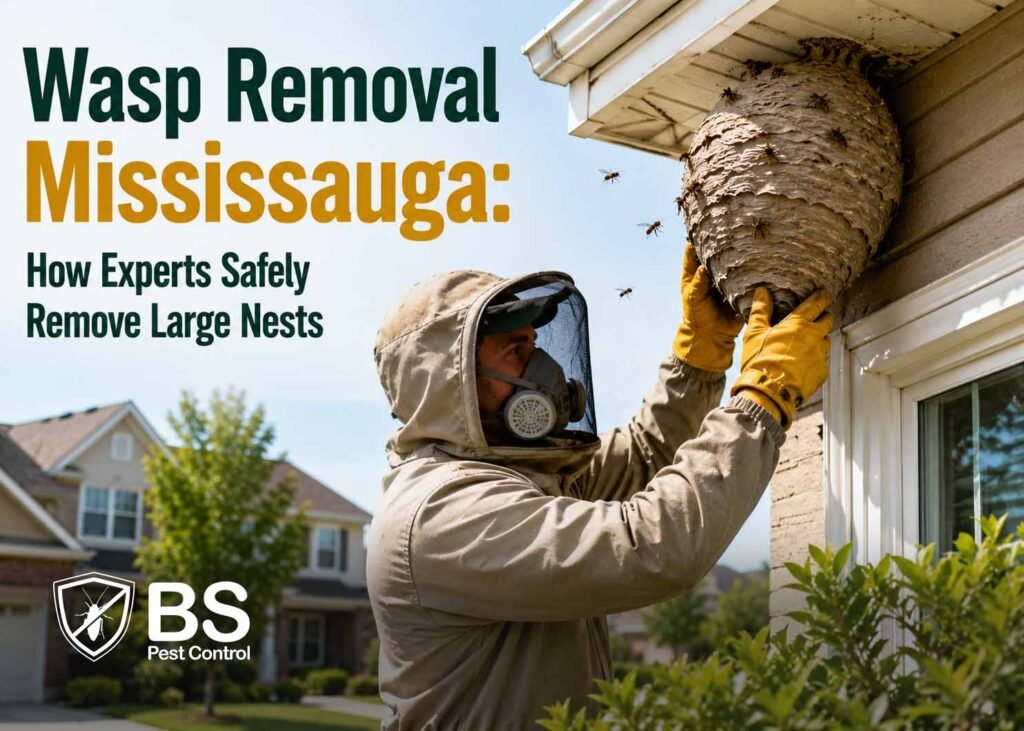
Explain how professionals assess and remove large wasp nests while reducing sting risks for Mississauga homeowners, families, pets, and workers.
Key Takeaways
- Large nests may contain hundreds or thousands of wasps.
- Disturbing a nest can trigger a coordinated defensive response.
- Nest location and wasp species determine the safest treatment method.
- Removing the visible nest without treating its activity may not solve the problem.
- Sealing entry points too early can force wasps into the building.
Table of Contents
- Why Large Wasp Nests Are Dangerous
- Where Wasps Build Nests
- Signs a Nest Requires Professional Removal
- How Experts Remove Large Wasp Nests
- Why DIY Removal Often Fails
- Factors Affecting Removal Cost
- Frequently Asked Questions
A few wasps near the patio can become a steady stream within weeks. Soon, family members avoid part of the yard, and opening the shed door feels risky.
The visible nest may only reveal part of the problem. Wasps can also build inside wall voids, attics, soffits, and other protected spaces where the colony is difficult to reach.
Professional Wasp Removal Mississauga starts by locating the nest and assessing how the wasps enter it. The removal method is then selected according to the nest’s size, location, and activity level.
Why Large Wasp Nests Require Professional Attention
Wasps defend their nests against perceived threats. Vibrations, sudden movements, blocked entrances, and direct contact can cause several wasps to respond at once.
The risk increases as the colony grows. A nest that was barely noticeable earlier in the season may contain a large, active population by late summer.
Unlike bees, many wasps can sting repeatedly. Multiple stings can cause significant pain and swelling, while people with allergies may experience a medical emergency.
Large nests also create risks when they are located near:
- Front doors and walkways
- Patios and outdoor dining areas
- Children’s play spaces
- Garden sheds and garages
- Commercial entrances
- Rooflines and maintenance areas
Keep people and pets away from the area until the nest has been assessed. Do not strike, spray, burn, flood, or block it.
Where Wasps Build Large Nests in Mississauga
Different wasp species choose different nesting areas. Some construct visible paper nests, while others use enclosed spaces or underground cavities.
Rooflines, Soffits, and Eaves
Protected roof edges provide shelter from rain and wind. Wasps may attach a visible nest beneath an eave or enter a small opening leading into the roof structure.
Wall Voids
A steady flow of wasps entering and leaving one exterior gap may indicate a concealed nest. Common entry points include openings around vents, pipes, siding, and utility lines.
Trees and Shrubs
Large hanging nests can remain partly hidden by leaves. Trimming a branch without noticing the nest can trigger defensive activity.
Sheds and Garages
Wasps frequently nest beneath shelving, roof panels, and other undisturbed areas. The colony may only become apparent when someone opens a door or moves stored items.
Underground Cavities
Some wasps use abandoned burrows or openings beneath landscaping. Lawn equipment, foot traffic, and pets can disturb these nests without warning.
A professional providing Wasp nest removal Mississauga must identify where the colony is located before choosing a treatment.
Signs You Need Professional Wasp Removal Mississauga
One wasp feeding on flowers does not necessarily mean a nest is nearby. Repeated activity around the same location is more concerning.
Heavy Activity Around One Opening
Wasps repeatedly entering and leaving a small gap usually indicate an established nest. Watch the area from a safe distance without blocking the opening.
A Rapidly Growing Visible Nest
Paper nests can grow quickly as the colony expands. Early removal is generally easier than dealing with a large nest later in the season.
Wasps Appearing Indoors
Wasps inside the home may be entering through an open door or window. Repeated indoor sightings can indicate a nest inside a wall, attic, or ceiling space.
Aggressive Behaviour Near a Specific Area
Wasps flying directly toward people near a structure may be defending a nearby nest. Stop using the area until it has been inspected.
Persistent Activity After DIY Treatment
If wasps remain active after store-bought spray is applied, the product may not have reached the colony. Continuing treatment attempts can make the area more dangerous.
How Experts Safely Remove Large Wasp Nests
Effective removal is more than knocking down a visible nest. A professional process controls the colony, manages hazards, and reduces the chance of further activity.
1. Inspect the Property
The technician identifies the nest location, visible entry points, activity level, and nearby risks. The inspection also determines whether the nest is exposed, enclosed, elevated, or underground.
Areas used by children, pets, customers, or workers receive special attention. The technician can then create a controlled work area.
2. Identify the Nest Type
Nest structure and behaviour help determine the type of wasp involved. Correct identification matters because treatment methods that work for an exposed nest may not work for a concealed or underground colony.
Professionals also distinguish wasps from beneficial pollinators. Honeybee activity may require assistance from a qualified bee-removal provider rather than wasp treatment.
3. Prepare the Treatment Area
People and pets must remain away from the work zone. Doors and windows near the nest may need to stay closed during service.
The technician uses suitable protective clothing and application equipment. For elevated nests, proper access equipment is required to prevent falls and incomplete treatment.
4. Treat the Active Colony
The treatment is applied according to the nest’s location and activity pattern. The goal is to reach the colony while limiting unnecessary disturbance.
A concealed nest may require treatment through its existing entrance. Sealing the opening before activity stops can force wasps to search for another exit, including one leading indoors.
5. Confirm Activity Has Stopped
Large colonies may require monitoring or follow-up service. The technician checks whether wasps continue using the entrance before recommending removal or sealing.
The visible nest should only be removed when it is safe and accessible. Concealed nests do not always require structural opening once activity has ended.
6. Recommend Prevention Measures
After treatment, the technician may identify gaps, damaged screens, or exposed openings that should be repaired. Prevention work must happen at the correct time to avoid trapping active wasps inside.
BS Pest Control provides inspection-based removal using targeted methods designed to protect homes, families, and outdoor spaces.
Professional Removal Versus DIY Wasp Control Mississauga
DIY treatment may appear cheaper, but approaching a large nest without proper protection creates a serious sting risk. Store-bought sprays also have limited reach and may fail to contact the active colony.
| DIY Wasp Treatment | Professional Wasp Removal |
| Often treats only the visible nest surface | Targets the colony based on nest location |
| Requires close contact with active wasps | Uses suitable protective equipment |
| May miss concealed nests | Identifies hidden entry points and activity |
| Can push wasps into the building | Controls activity before sealing openings |
| Creates fall risks around elevated nests | Uses appropriate access methods |
| May require repeated product applications | Includes monitoring or follow-up when needed |
A Wasp exterminator Mississauga can determine why previous treatments failed and select a method suited to the nest.
What Affects the Cost of Mississauga Wasp Removal?
The cost depends on the nest’s size, location, accessibility, and activity level. A small exposed nest near ground level usually requires less work than a large colony inside a high roofline.
Common cost factors include:
- Nest size and wasp activity
- Exposed, concealed, or underground location
- Height and accessibility
- Number of active nests
- Need for specialized access equipment
- Treatment method required
- Follow-up visits or prevention work
A clear quote should explain the proposed treatment and whether nest removal, monitoring, or entry-point sealing is included.
How to Reduce Future Wasp Activity
No property can be kept completely free from flying insects. However, regular maintenance can make it harder for wasps to build nests near frequently used areas.
Practical prevention steps include:
- Repair damaged screens and weather stripping.
- Seal exterior gaps after confirming they are inactive.
- Keep garbage and recycling containers closed.
- Clean food and drink spills from patios.
- Inspect sheds and rooflines regularly.
- Remove small, inactive nest starts before they grow.
- Keep outdoor food covered.
- Avoid leaving sugary drinks open outside.
| Area to Inspect | What to Check |
| Roofline and soffits | Gaps, nest starts, and repeated flight activity |
| Sheds and garages | Undisturbed corners and roof panels |
| Doors and windows | Damaged screens and open gaps |
| Patios | Food spills, open drinks, and garbage |
| Lawns and gardens | Repeated activity around ground openings |
| Trees and shrubs | Hanging nests hidden among leaves |
Frequently Asked Questions
Can I Remove a Large Wasp Nest Myself?
DIY removal is not recommended. Large colonies can respond aggressively when disturbed, and many wasps can sting repeatedly. Professional removal reduces direct contact and treats the colony properly.
Should I Seal the Hole Wasps Are Using?
Do not seal an active opening. Wasps trapped inside a wall or roof space may find another route, potentially entering the building. Seal the gap only after activity has stopped.
How Long Does Professional Wasp Removal Take?
Many treatments can be completed during one appointment. Large, concealed, or difficult-to-access nests may require monitoring or a follow-up visit.
Will Wasps Return After the Nest Is Removed?
Wasps generally do not reuse an old nest, but new colonies can build nearby if suitable shelter and food remain available. Sealing inactive gaps and regular inspections help reduce future activity.
What Should I Do If Someone Is Stung?
Move the person away from the nest immediately. Seek emergency medical help for trouble breathing, facial or throat swelling, dizziness, widespread hives, or other signs of a serious allergic reaction.
Large wasp nests become more difficult and dangerous to address as colony activity increases. If wasps are gathering near an entrance, roofline, shed, or outdoor living area, contact BS Pest Control for a free quote. The team can inspect the property, treat the active colony, and recommend practical prevention measures.