Explain why skunks repeatedly return to some Brampton properties and how professional inspection, removal, exclusion, and prevention can provide a lasting solution.
Key Takeaways
- Repeated skunk activity usually means the property provides food, shelter, or both.
- Odour treatments and repellents do not resolve an active den.
- Closing a den without checking it first can trap animals inside.
- Professional removal addresses both the skunk and the conditions encouraging its return.
- Long-term control requires exclusion work and changes around the property.
Table of Contents
- Why Skunk Problems Keep Returning
- Signs of a Persistent Skunk Problem
- Why Common DIY Methods Fail
- How Professional Skunk Removal Works
- Humane Removal and Exclusion
- Factors Affecting Service Cost
- Frequently Asked Questions
The smell disappeared for several days. Then it returned. New holes appeared across the lawn, and fresh soil collected beside the deck again.
Recurring activity usually means a skunk has found dependable food or shelter on the property. Temporary deterrents may interrupt its routine, but they rarely remove the reason it keeps returning.
Professional Skunk Removal Brampton addresses the full problem. That includes locating active dens, removing skunks safely, securing vulnerable areas, and reducing future attraction.
Why Skunk Problems Keep Returning
Skunks are practical animals. Once they find a reliable food source or protected den, they may revisit the same property night after night.
A yard can attract skunks through:
- Open garbage or compost containers
- Pet food left outdoors
- Fallen fruit and spilled birdseed
- Grubs and insects in the lawn
- Water collected in containers
- Accessible spaces under decks, porches, and sheds
Removing one food source may not stop activity if another remains. A skunk may also return after being disturbed if its den entrance remains open.
Neighbouring properties can contribute to the problem. However, securing your own yard still reduces the chance that a passing skunk will settle there.
Signs You Need Professional Skunk Removal Brampton
A single sighting does not always indicate a serious problem. Skunks travel while searching for food and may simply pass through a yard.
Repeated signs suggest that the animal is regularly using the property.
Odour Concentrated Near One Area
A strong smell that remains near a deck, shed, porch, or foundation may point to a nearby den. The odour may become more noticeable after dark or when the animal moves beneath the structure.
Fresh Lawn Damage Every Morning
Skunks dig small holes while searching for insects and grubs. New holes appearing regularly show that the yard has become a dependable feeding area.
Repeated Nighttime Sightings
Security camera footage can reveal a skunk following the same route each night. A consistent route often leads to food, water, or shelter.
Digging Beneath a Structure
Loose soil, paw prints, and an opening near the ground can indicate an active den. Repeated attempts to refill the opening will not work while the skunk continues using it.
Frequent Encounters with Pets
Dogs may bark at one area, return indoors carrying skunk odour, or refuse to approach part of the yard. These reactions can indicate wildlife activity nearby.
Why DIY Skunk Control Brampton Often Fails
Most DIY methods focus on making the skunk uncomfortable. They rarely address the den or the conditions attracting the animal.
Bright lights and loud noises may cause a skunk to leave temporarily. Once the disturbance stops, the animal may return.
Repellents also require repeated application and can lose effectiveness after rain. Some products may create risks around children, pets, gardens, or outdoor living areas.
Closing the den entrance without an inspection creates a more serious problem. The skunk may be trapped inside, or young may be separated from their mother.
| Common DIY Method | Why It Often Fails |
| Filling an entrance with soil | The skunk can dig through it again |
| Installing a surface-level barrier | Skunks can dig beneath shallow barriers |
| Using lights or noise | Activity may return once the disturbance stops |
| Applying odour repellents | Weather reduces their effect |
| Removing visible food only | Other food or shelter may remain |
| Sealing an unconfirmed den | Animals may become trapped inside |
Professional Skunk control Brampton begins by identifying the complete cause of the activity rather than reacting to individual sightings.
How Brampton Skunk Removal Services Address the Problem
Effective removal follows a clear process. Each step helps solve the current issue while reducing the chance of another skunk moving into the same space.
1. Complete Property Inspection
The technician checks the yard, structures, and ground-level openings. Signs such as tracks, digging, fur, odour, and disturbed soil help identify active areas.
The inspection also reveals attractants that may not be obvious. These can include gaps beneath sheds, damaged barriers, compost access, and lawn conditions supporting large numbers of grubs.
2. Confirmation of the Active Den
Before removal begins, the technician determines whether the opening is actively used. The area must also be checked for young skunks.
This step is essential during spring and early summer, when a mother may be caring for young inside the den.
3. Humane Removal
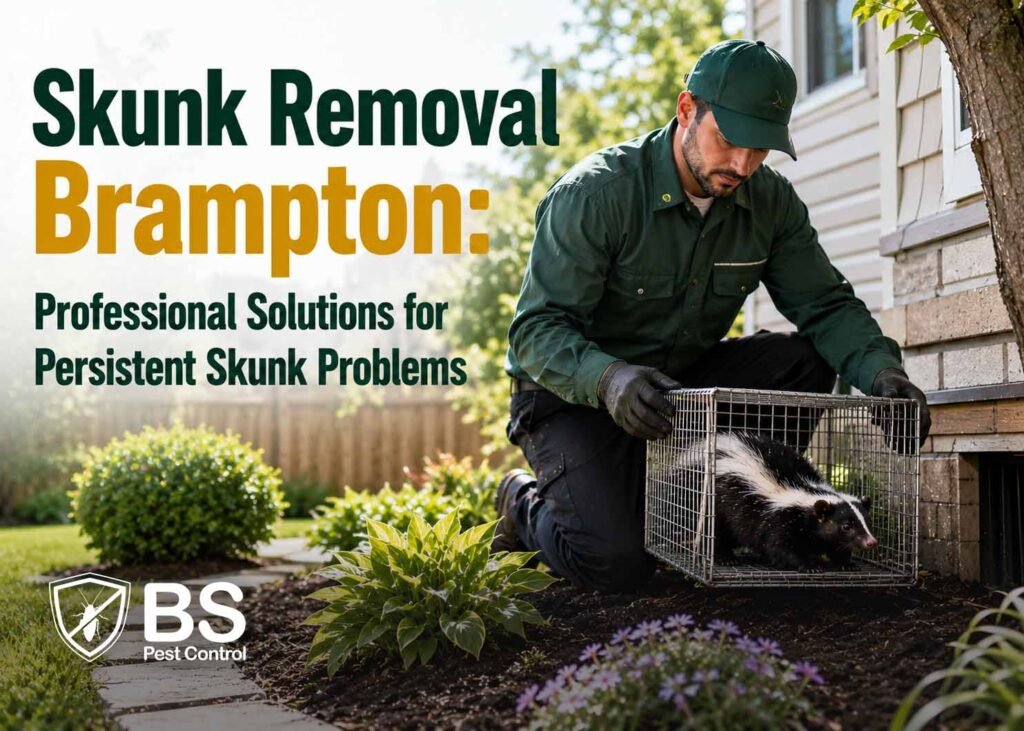
The removal method depends on the den location, property layout, and time of year. The goal is to encourage or allow the skunk to leave without unnecessary stress or direct contact.
Homeowners and pets should remain away from the work area while removal is underway.
4. Exclusion and Entry-Point Protection
Once the den is confirmed empty, vulnerable openings can be secured. Proper exclusion extends below ground because skunks are capable diggers.
Decks, sheds, porches, additions, and crawl spaces may all require protection. Surface repairs alone may not stop future digging.
5. Prevention Recommendations
Removal solves the immediate problem. Prevention keeps another skunk from replacing the first one.
Recommendations may include securing garbage, changing pet-feeding routines, cleaning spilled birdseed, removing fallen fruit, and improving lawn care.
How Humane Skunk Removal Brampton Protects Wildlife and Property
Humane removal avoids unnecessary harm while still protecting the household. It also reduces the chance of a frightened skunk spraying near people, pets, or the home.
A professional does not simply block the entrance and hope the problem disappears. The den must be assessed, the animal must be given a safe way out, and the area must be secured at the correct time.
This approach matters when young skunks may be present. Separating them from their mother can create animal welfare concerns, odours, and additional property damage.
BS Pest Control combines humane wildlife removal with exclusion and prevention. The team inspects the property, identifies entry points, and recommends practical steps based on the actual conditions found.
When Is Professional Service Necessary?
Some skunk activity can be reduced by removing outdoor food and supervising pets. Professional service becomes necessary when the problem continues or presents an immediate risk.
Arrange professional help when:
- A skunk is living beneath a deck, porch, shed, or addition
- Odours return repeatedly near the same area
- Lawn damage continues despite removing food sources
- A skunk is trapped inside a garage or enclosed space
- Pets repeatedly encounter skunks
- You suspect young skunks are inside a den
- A previous removal attempt did not solve the problem
A skunk seen during daylight is not automatically sick. However, avoid approaching an animal that appears injured, confused, unusually aggressive, or unable to move normally.
What Affects the Cost of Professional Skunk Removal?
The cost depends on the work required to remove the skunk and protect the property afterward. A simple inspection and removal will differ from a job involving several den entrances and extensive exclusion work.
Common cost factors include:
- Location and accessibility of the den
- Number of active openings
- Presence of young skunks
- Condition of the deck, shed, or porch
- Amount of exclusion material required
- Need for monitoring or follow-up visits
- Existing damage or contamination
Reliable Brampton skunk removal services should explain the proposed work before it begins. A clear quote helps homeowners understand what is included and which prevention steps are recommended.
How to Prevent Another Persistent Skunk Problem
After removal, inspect the yard regularly. New signs are easier and less expensive to address before a skunk establishes another den.
Use the following prevention checklist:
- Keep garbage and compost securely covered.
- Store pet food indoors.
- Pick up fallen fruit and spilled birdseed.
- Remove dense brush and debris piles.
- Repair damaged barriers around structures.
- Monitor areas where skunks previously entered.
- Keep pets supervised after dark.
- Address repeated grub-related lawn damage.
No yard can be made completely inaccessible to wildlife. However, removing reliable food and shelter makes the property far less appealing.
Frequently Asked Questions
Why Does a Skunk Keep Returning to My Yard?
Your yard likely provides an accessible food source, water, shelter, or a familiar travel route. Removing these attractions and securing denning areas can reduce repeat visits.
Will a Skunk Eventually Leave an Active Den?
A skunk may leave temporarily to find food, but it can continue returning to the same den. The area should be inspected and secured only after confirming that no animals remain inside.
Can I Block the Entrance Under My Deck?
Do not block an active or unconfirmed entrance. You may trap a skunk or its young beneath the deck. A professional inspection should happen before exclusion work begins.
How Long Does Professional Skunk Removal Take?
Many cases can be resolved within several days to a week. More time may be required when young are present, the den is difficult to access, or extensive exclusion work is needed.
Does Professional Removal Stop Skunks from Coming Back?
Removal alone cannot prevent every future visit. Exclusion work and attractant removal provide the strongest long-term protection against recurring activity.
Persistent skunk activity will continue while the property offers dependable food or shelter. If odours, digging, or sightings keep returning, contact BS Pest Control for a free quote. The team can inspect the property, provide humane removal, and recommend exclusion work to help prevent another skunk problem.