
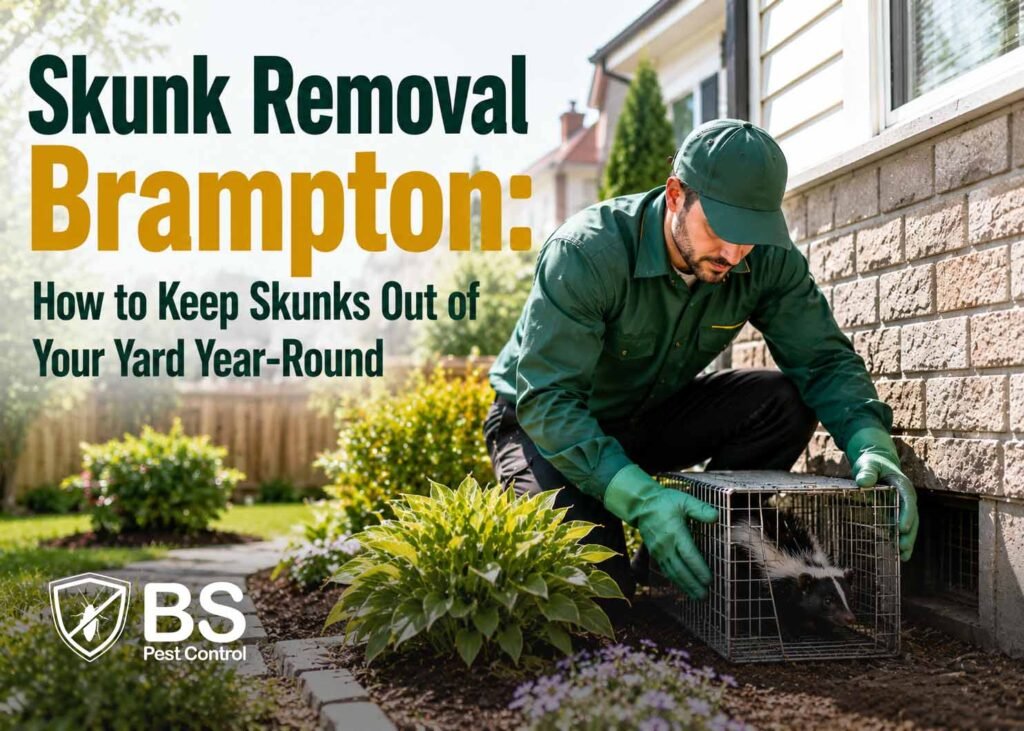
Help Brampton homeowners identify skunk activity, remove common attractants, prevent denning, and understand when professional removal is needed.
Key Takeaways
- Skunks visit yards that provide easy access to food, water, and shelter.
- Shallow lawn holes, strong odours, and movement under decks are common warning signs.
- Garbage management and physical exclusion provide better protection than temporary repellents.
- Never seal an active den before confirming that no skunks or young are inside.
- Professional removal combines inspection, humane removal, exclusion, and prevention.
Table of Contents
- Why Skunks Choose Brampton Yards
- Warning Signs of Skunk Activity
- How to Keep Skunks Out Year-Round
- How Professional Skunk Removal Works
- Professional Removal Versus DIY Methods
- Skunk Removal Cost Factors
- Frequently Asked Questions
You step into your yard one morning and find several small holes scattered across the lawn. A strong musky smell hangs near the deck. By the next evening, your dog refuses to leave the back door.
These signs often mean a skunk has started visiting or denning on the property. Acting early can prevent damaged grass, repeated spraying, and a larger problem beneath a deck or shed.
Professional Skunk Removal Brampton focuses on removing the animal safely and correcting the conditions that attracted it. The goal is not simply to move one skunk. It is to stop the property from drawing skunks back.
Why Skunks Choose Brampton Yards
Skunks are usually searching for three things: food, water, and a protected place to rest. A residential yard can provide all three without the homeowner realizing it.
Common food sources include:
- Unsecured garbage and compost bins
- Pet food left outside overnight
- Fallen fruit and spilled birdseed
- Grubs, insects, and worms in the lawn
- Open garbage bags placed outside before collection day
Decks, sheds, porches, and additions can also provide suitable denning spaces. A small opening near the ground may lead to a dry, sheltered area where a skunk can remain undisturbed.
Skunks are mainly active after dark. A yard may look quiet during the day while regular activity continues each night.
Warning Signs That You Need Skunk Control Brampton
A strong odour does not always mean a skunk lives on your property. The smell may travel from a nearby yard. Look for physical signs before assuming there is an active den.
Shallow Holes Across the Lawn
Skunks dig small, cone-shaped holes while searching for grubs and insects. New holes appearing overnight often indicate repeated feeding activity.
Openings Under Decks or Sheds
Fresh soil, paw prints, or flattened grass near the edge of a structure may indicate a den entrance. Skunks can dig beneath structures that do not have below-ground barriers.
Nighttime Movement and Noise
Scratching or rustling beneath a porch may be easier to hear after sunset. Security cameras may also capture a skunk following the same route each night.
Repeated Spraying Near the Home
Frequent odours near one section of the property may indicate that a skunk feels threatened there. Dogs are a common cause because they may chase or corner the animal.
If these signs continue, arrange an inspection through a company providing Wildlife removal Brampton. An inspection can confirm the animal, locate its den, and identify the safest next step.
How to Keep Skunks Out of Your Yard Year-Round
Skunk prevention works best when it removes attractants and blocks shelter. The following seasonal plan helps reduce activity throughout the year.
| Season | Main Risk | Practical Prevention Steps |
| Spring | Skunks searching for denning sites | Inspect decks and sheds before sealing gaps. Remove outdoor food sources. |
| Summer | Increased feeding and lawn digging | Manage grubs, clean up fallen fruit, and bring pet food indoors. |
| Fall | Skunks preparing for colder weather | Secure garbage, clear yard debris, and repair damaged barriers. |
| Winter | Skunks sheltering beneath structures | Watch for tracks and inspect vulnerable ground-level openings. |
Secure Garbage and Compost
Use bins with tight-fitting lids. Store garbage inside a garage or secured area until collection day when possible.
Keep compost enclosed and avoid placing meat, grease, or strongly scented food scraps in an accessible outdoor pile.
Remove Easy Food Sources
Feed pets indoors and clean up spilled birdseed. Pick up fallen fruit before it begins to rot.
A skunk that finds food several nights in a row is likely to keep returning.
Reduce Lawn Grubs
Frequent digging may indicate that the lawn contains a large grub population. Improving drainage, avoiding excessive watering, and arranging proper lawn treatment can reduce this food source.
Protect Decks, Sheds, and Porches
Ground-level gaps should be secured with suitable exclusion material that extends below the soil. A surface-level barrier alone may not work because skunks can dig beneath it.
Never close an opening until you know the space is empty. Sealing an active den can trap a skunk or separate a mother from her young.
Keep the Yard Clear
Remove unused lumber, dense brush, and debris piles that provide cover. Trim vegetation near sheds, fences, and foundations so signs of digging remain visible.
How Humane Skunk Removal Brampton Works
Effective removal begins with an inspection. The technician checks for tracks, digging, droppings, den entrances, and conditions that may attract wildlife.
The next step depends on the location of the skunk and whether young may be present. A trained professional selects a method that avoids unnecessary contact and reduces the risk of spraying.
Once the skunk has left, accessible entry points can be secured. Exclusion work may involve installing barriers around decks, sheds, porches, or other vulnerable areas.
A complete service should address four areas:
- Confirm the animal and locate its den.
- Remove or encourage the skunk to leave using a humane approach.
- Secure vulnerable openings after confirming the den is empty.
- Recommend changes that reduce future activity.
BS Pest Control uses humane trapping, exclusion, and prevention methods. Its team also provides family- and pet-conscious service for homes dealing with nuisance wildlife.
Professional Removal Versus DIY Skunk Control
Trying to force a skunk out can lead to spraying, injury, or a trapped animal. Repellents and bright lights may disturb the skunk temporarily, but they do not remove food sources or secure the den.
| DIY Approach | Professional Skunk Removal |
| May rely on temporary deterrents | Begins with a full property inspection |
| Can increase the risk of spraying | Uses methods designed to reduce direct contact |
| May overlook young inside a den | Checks the den before completing exclusion |
| Usually leaves entry points unsecured | Includes prevention and entry-point recommendations |
| Can result in repeated activity | Addresses the reason skunks selected the property |
Professional Brampton skunk removal is especially important when a skunk is beneath an occupied structure, trapped inside a garage, or repeatedly encountering pets.
What Affects the Cost of Skunk Removal Services Brampton?
There is no single price for every skunk problem. The cost depends on the animal’s location, the condition of the property, and the work needed to prevent re-entry.
Important cost factors include:
- Number and location of active den entrances
- Accessibility beneath the deck, porch, or shed
- Presence of young skunks
- Amount of exclusion work required
- Damage or contamination around the den
- Need for follow-up visits or monitoring
A low quote that covers removal alone may leave the original opening exposed. That can lead to another skunk using the same space.
A professional inspection provides a clearer scope of work. BS Pest Control offers free quotes and can explain the recommended removal and prevention steps before service begins.
Frequently Asked Questions
Will a Skunk Leave My Yard on Its Own?
A passing skunk may leave once it finishes feeding. A skunk with reliable food or a protected den is more likely to return. Continued digging, odours, or movement beneath a structure should be inspected.
Can I Seal the Opening Under My Deck?
Do not seal the opening until you have confirmed that the den is empty. Closing an active entrance can trap the skunk or leave young inside. Arrange an inspection before installing a permanent barrier.
How Long Does Professional Skunk Removal Take?
Many skunk problems can be resolved within several days to a week. Timing depends on the den location, animal activity, presence of young, and exclusion work required.
Are Skunk Removal Methods Safe for Pets and Children?
Professional removal is planned to limit contact between the skunk, residents, and pets. Children and pets should remain away from the den area until removal and exclusion work are complete.
What Should I Do If My Dog Gets Sprayed?
Move the dog away from the skunk and prevent it from entering the home until the odour is addressed. Check the dog’s eyes and face for irritation. Contact a veterinarian promptly if the dog was bitten, scratched, or sprayed directly in the eyes.
A skunk problem rarely improves while food and shelter remain available. If you notice lawn damage, repeated odours, or activity beneath a structure, contact BS Pest Control for a free quote. The team can inspect the property, provide humane removal, and recommend practical steps to help keep skunks out.